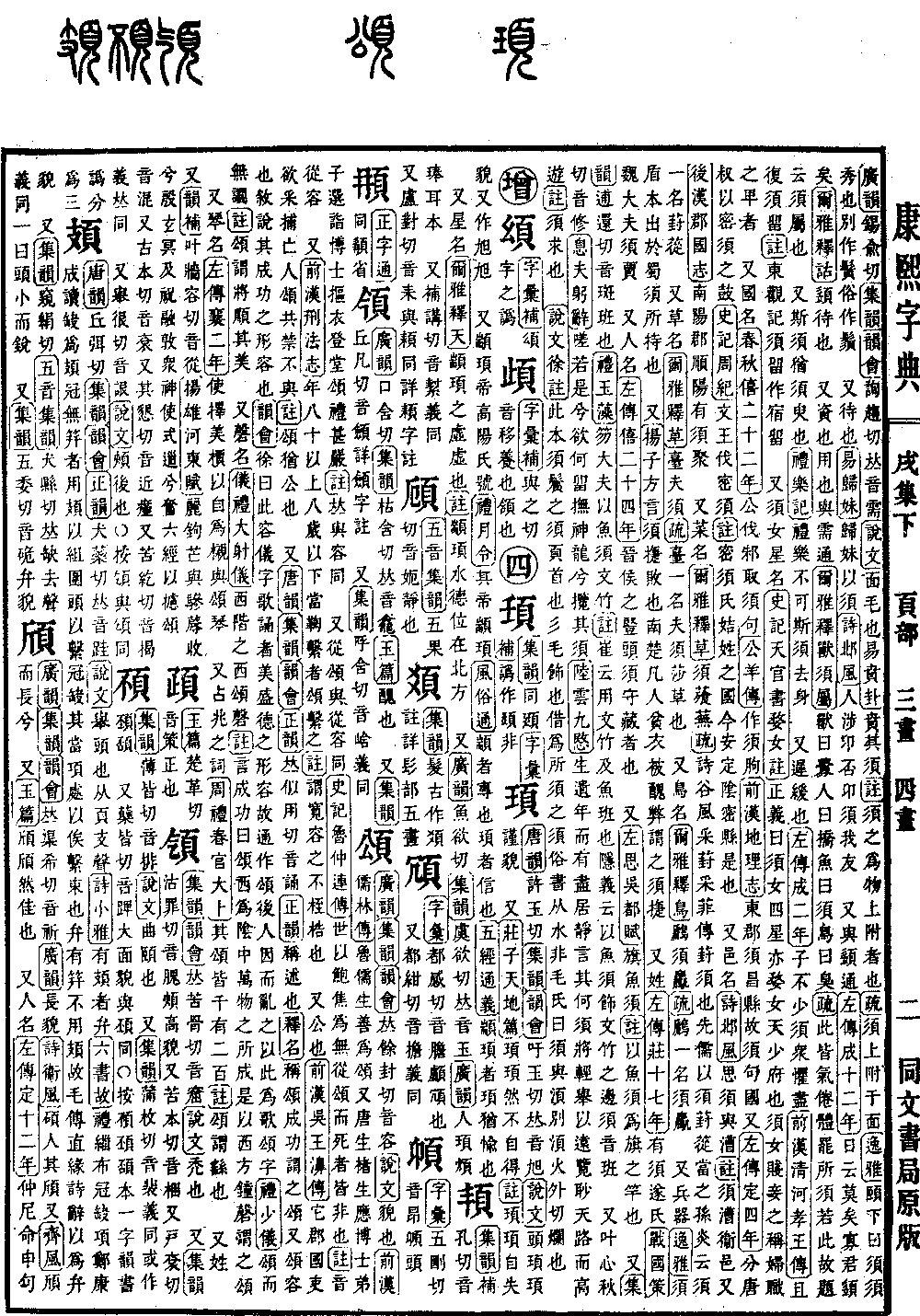
Xu Collection, Lower Volume
Radical: Page (yè)
Kangxi Strokes: 13
Page 1400, Entry 17
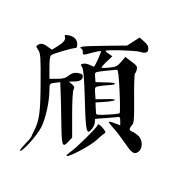
Pronounced qi.
Broad Rimes (Guangyun), Collected Rimes (Jiyun), and Comprehensive Rimes (Yunhui) define it as the appearance of being tall.
Book of Odes (Shijing), Odes of Wei: A tall and beautiful person, tall indeed.
Also, Odes of Qi: Tall and long.
Jade Chapters (Yupian) defines it as qiqi, meaning excellent.
Also used in names. Zuo Commentary (Zuozhuan), 12th year of Duke Ding: Confucius ordered Shen Juxu and Yue Qi to descend and attack. Annotation: A grand officer of Lu, pronounced qi.
Collected Rimes (Jiyun): Pronounced ken. Meaning to reach or arrive.
Book of Rites (Liji), Tan Gong: Bowing with the forehead touching the ground, arriving in a sincere manner.
Explication of Texts (Shiwen): Pronounced ken, the appearance of being sorrowful or empathetic.
Also qidian, the appearance of being firm and enduring.
Rites of Zhou (Zhouli), Winter Officers, Record of Trades (Kaogongji), Wheelwrights: The carriage pole should be firm and enduring. Annotation: The appearance of being firm and enduring. Zheng Sinong states: Read as ken, and the second character as tian.
Also meaning young or small.
Rites of Zhou, Winter Officers, Record of Trades, Master of Woodwork: Annotation for the section on chests and waists: Read as shao. Meaning small. Commentary: Both shao and qi signify smallness.
Explication of Texts: Pronounced qing. Also pronounced ken.