Chen Collection, Middle Volume
Radical: Tree (mù)
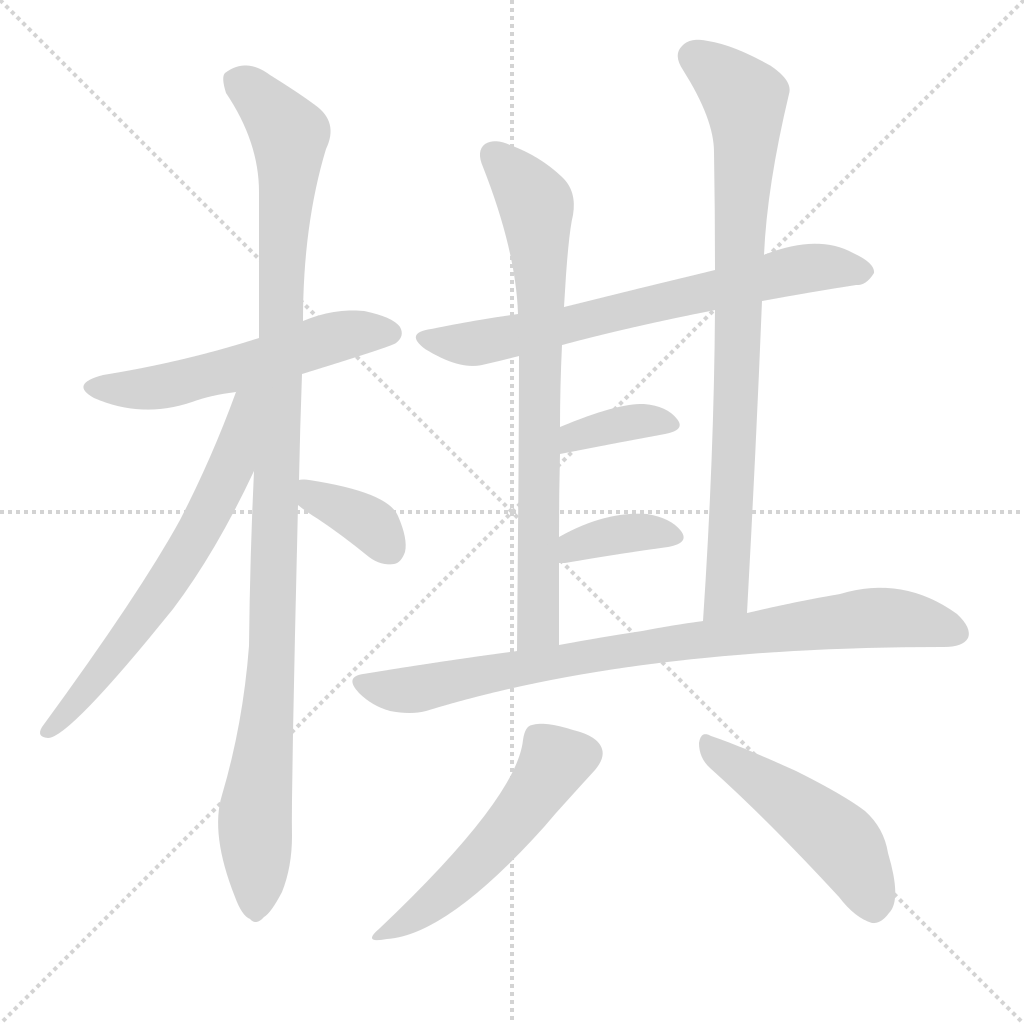
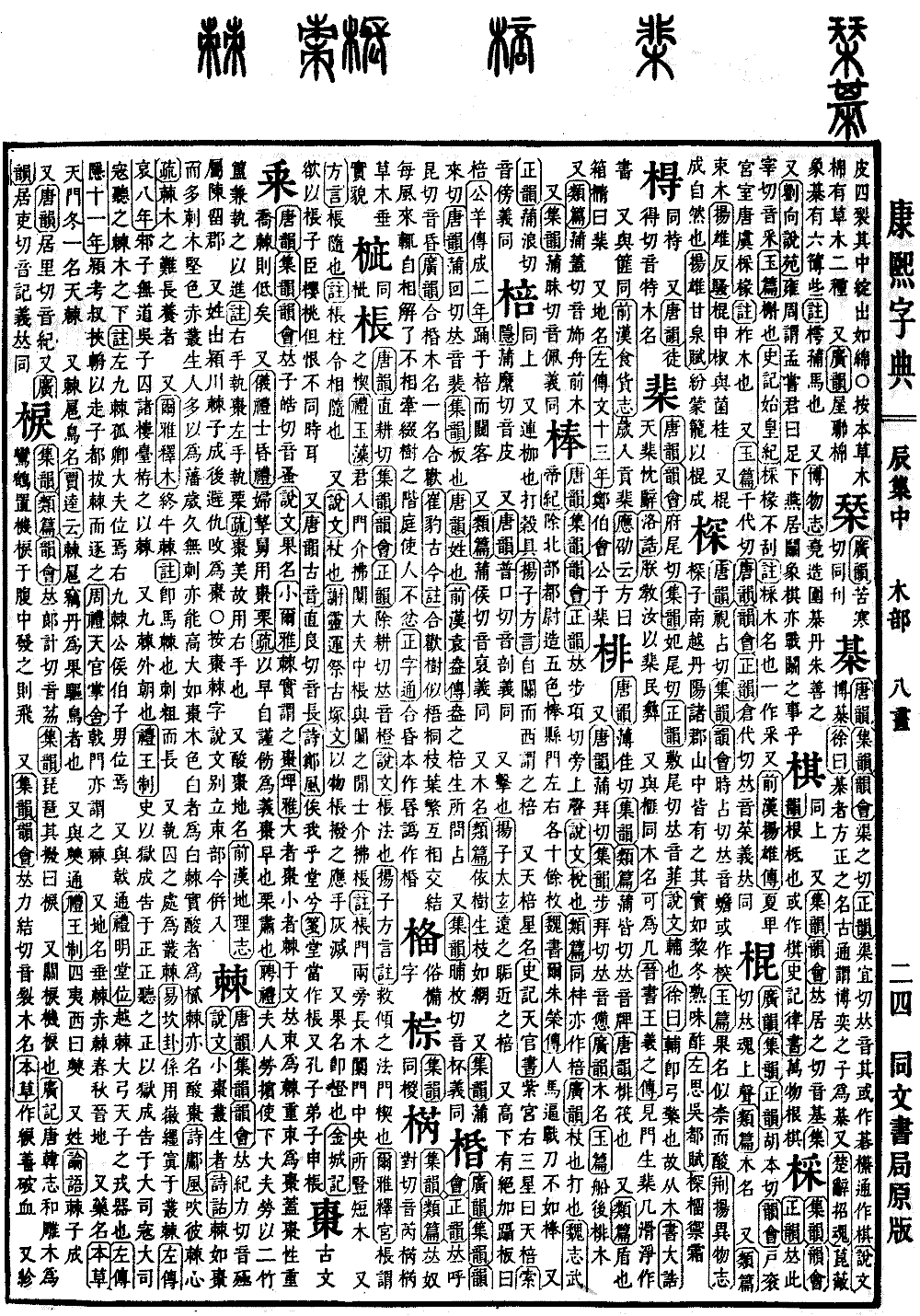
棋
Kangxi Strokes: 12
Page 532, Entry 03
Identical to the character (qí).
Also, according to the Collected Rhymes (Jiyun) and the Rhyme Collection (Yunhui), it is pronounced ji. The Collected Rhymes explains it as meaning root or foundation. Sometimes also written in a variant form (yǐ). The Records of the Grand Historian (Shiji), Book of the Pitch Pipes (Lüshu), records: The roots of all things are set (qí).
(Qí) According to the Tang Rhymes (Tangyun), the Collected Rhymes (Jiyun), and the Rhyme Collection (Yunhui), it is pronounced qi. According to the Corrected Rhymes (Zhengyun), it is pronounced qi. Sometimes also written in variant forms (qí) or (wēi), but it is commonly written as (qí). The Explaining Graphs and Analyzing Characters (Shuowen Jiezi) explains it as pieces used in board games. Xu states: (Qí) is the name for square objects. In ancient times, the pieces used for board games were commonly referred to as (qí).
Also, the Verses of Chu (Chuci), Summons of the Soul (Zhaohun), records: Jade counters, ivory pieces, and the implements for the six-board game. The commentary explains this as the pieces used in the shu-pu gambling game.
Also, the Records of Investigating Things (Bowuzhi) records: Emperor Yao created the game of Go (weiqi), and Danzhu was skilled at playing it.
Also, the Garden of Stories (Shuoyuan) by Liu Xiang records: Yong Zhou said to Lord Mengchang: When you are at leisure, you play chess; is this not also a form of combat?