Hai Collection, Middle Volume
Radical: Bird (niǎo)
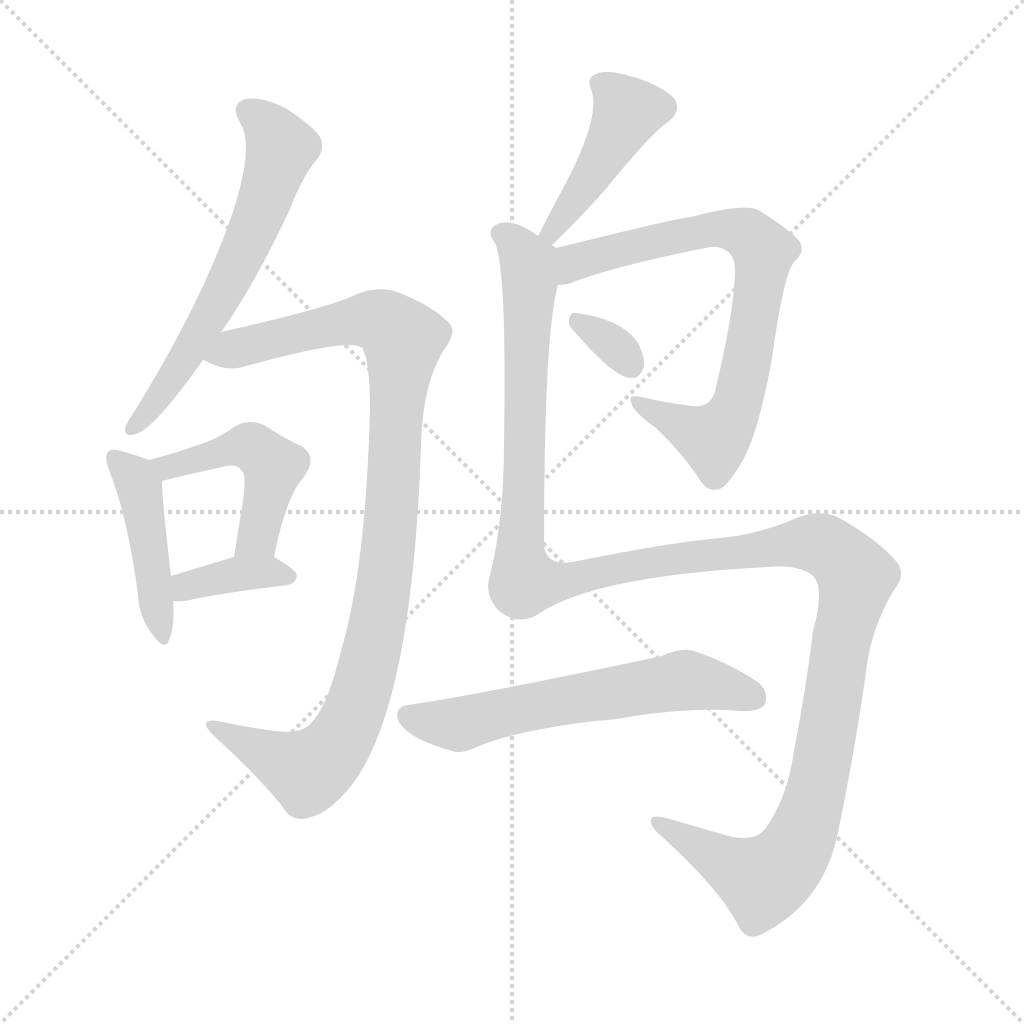
Character: Qú
Kangxi Stroke Count: 16
Page 1486, Entry 01
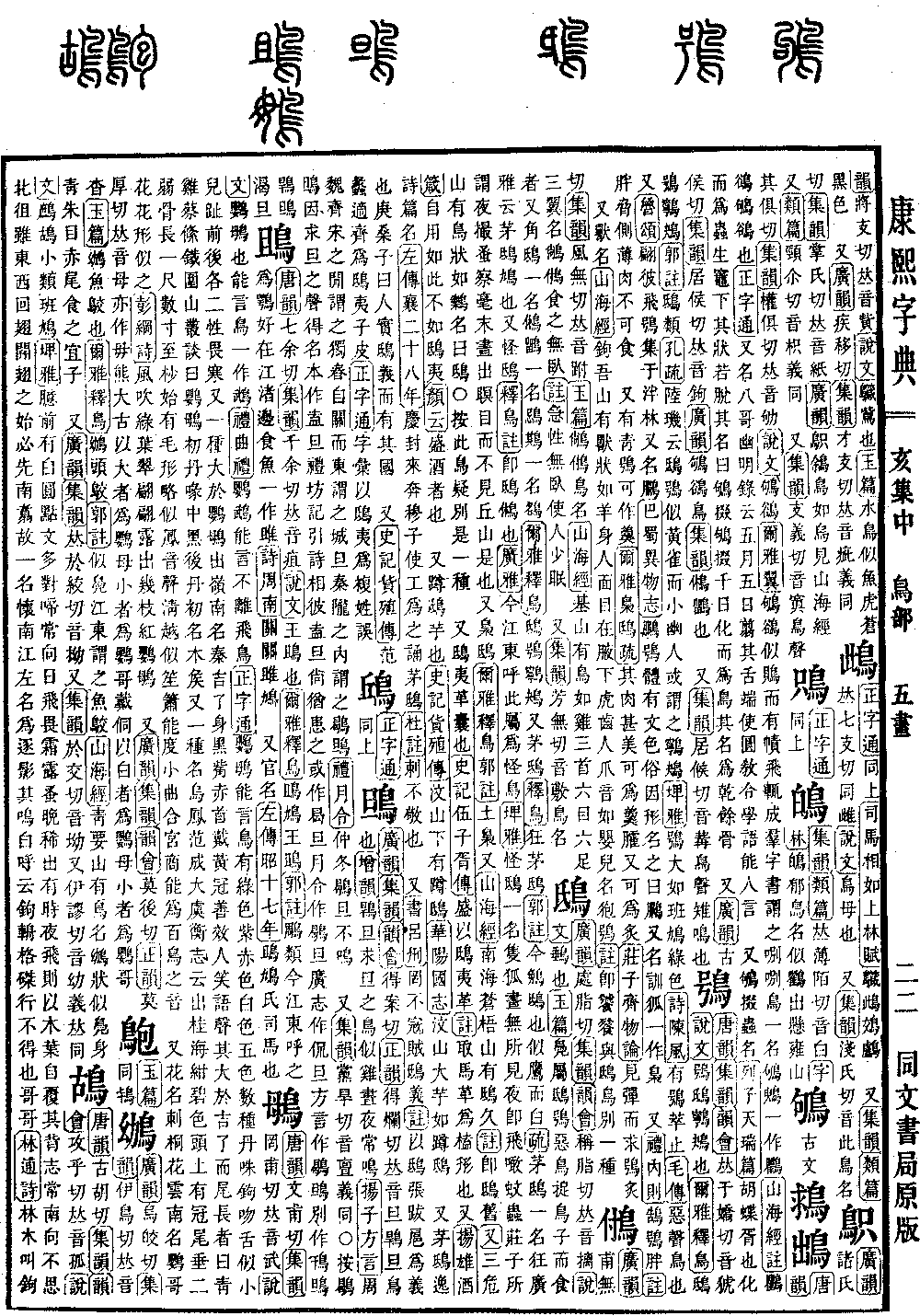
In the ancient script: According to the Tang Rhyme (Tangyun), it is pronounced qu. According to the Collected Rhymes (Jiyun), it is pronounced qu. The sound is qu. According to the Explaining Graphs and Analyzing Characters (Shuowen), it refers to a myna bird. According to the Wings of the Erya (Erya Yi), the myna bird resembles a shrike but has a crest on its head, and it always flies in flocks. Lexical dictionaries refer to it as the babbling bird. Another name for it is qu. It is also written in a variant form (qu). According to the commentary on the Classic of Mountains and Seas (Shanhaijing Zhu), the myna is the same as the qu bird. According to the Correct Meaning Dictionary (Zhengzitong), it is also known as the eight-brother bird. The Records of the Unseen and Seen (Youming Lu) states: On the fifth day of the fifth month, if one clips the tip of its tongue and teaches it to speak, it can imitate human speech. There is also the quduo, which is the name of an insect. According to the Book of Liezi (Liezi), it transforms from a butterfly. It transforms into an insect and is born under the cooking stove; its appearance is like a shed skin, and its name is quduo. After one thousand days, the quduo transforms into a bird, and its name is ganyugu.
Also, according to the Expanded Rhymes (Guangyun), it is pronounced gou. According to the Collected Rhymes (Jiyun), it is pronounced gou. The sound is gou. According to the Expanded Rhymes (Guangyun), it refers to a myna bird. According to the Collected Rhymes (Jiyun), it refers to a type of owl.
Also, according to the Collected Rhymes (Jiyun), it is pronounced gou. It refers to the cry of a bird, specifically the call of a pheasant.