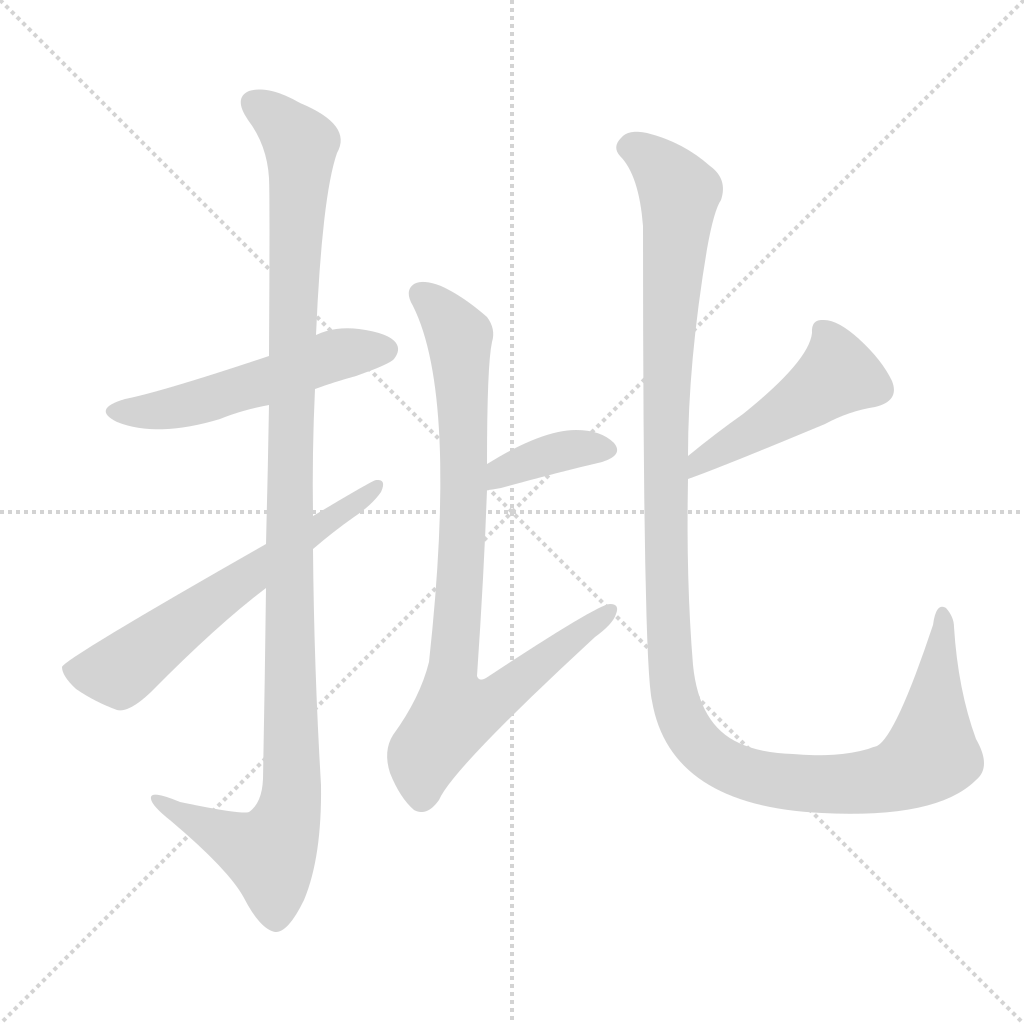
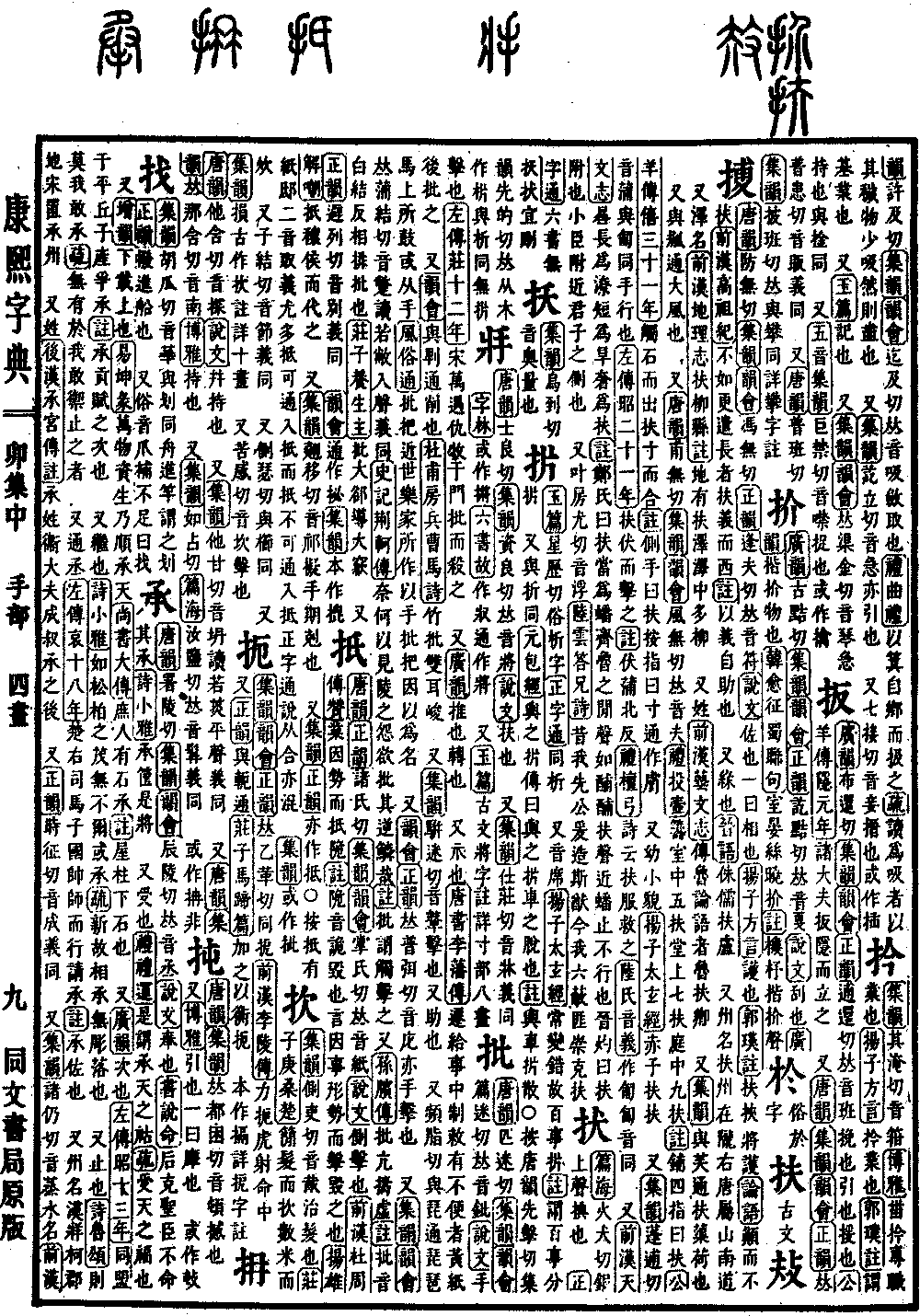
Mao Collection, Middle Volume. Radical: Hand (shǒu). Kangxi strokes: 8. Page 419, Entry 12.
Pronounced pi.
Shuowen Jiezi (Explanation of Graphs and Analysis of Characters) states: To strike with the hand.
Book of Zuo (Zuozhuan), Twelfth Year of Duke Zhuang: Song Wan encountered Qiu Mu at the gate, struck him with his hand, and killed him.
Also, according to Guangyun (Broad Rhymes), it means to push, or to turn. It also refers to making a written comment or instruction.
Book of Tang (Tangshu), Biography of Li Fan: Upon being promoted to the position of Imperial Clerk, if there were improprieties in the imperial edicts, he would write comments on the back of the yellow paper.
According to Rhyme Collection (Yunhui), it is interchangeable with a variant form. It means to pare or sharpen.
Du Fu, Poem on Fang Bingcao’s Horse: The horse’s two ears stand erect like sharpened bamboo.
According to Jiyun (Collection of Rhymes), pronounced pi. It means to strike. It also means to assist.
Also, pronounced pi. Interchangeable with the character for the lute-like instrument known as the pipa. Some write it with the hand radical.
Customs and Traditions (Fengsutong): The pipa is an instrument made by modern musicians; one uses the hand to piba (strum and pluck), hence the name.
According to Rhyme Collection (Yunhui) and Correct Rhymes (Zhengyun), pronounced pi. It also means to strike with the hand.
According to Jiyun (Collection of Rhymes) and Rhyme Collection (Yunhui), pronounced bie. Read as the entering tone of bi. The meaning is the same.
Records of the Grand Historian (Shiji), Biography of Jing Ke: How can one, because of the resentment of being insulted, wish to touch the dragon’s inverted scale?
Commentary: Pi refers to touching, offending, or attacking.
Biography of Sun Bin: To attack the vital points and drive directly into the empty gaps.
Commentary: Pi is pronounced as a combination of b and ie. It refers to mutual jostling or attacking.
Zhuangzi, Nourishing the Lord of Life: To split open large fissures and guide the blade into the large empty spaces.
According to Correct Rhymes (Zhengyun), pronounced bie. The meaning is the same.
Rhyme Collection (Yunhui) states it is commonly written as a variant form. Jiyun (Collection of Rhymes) states this is the original form.