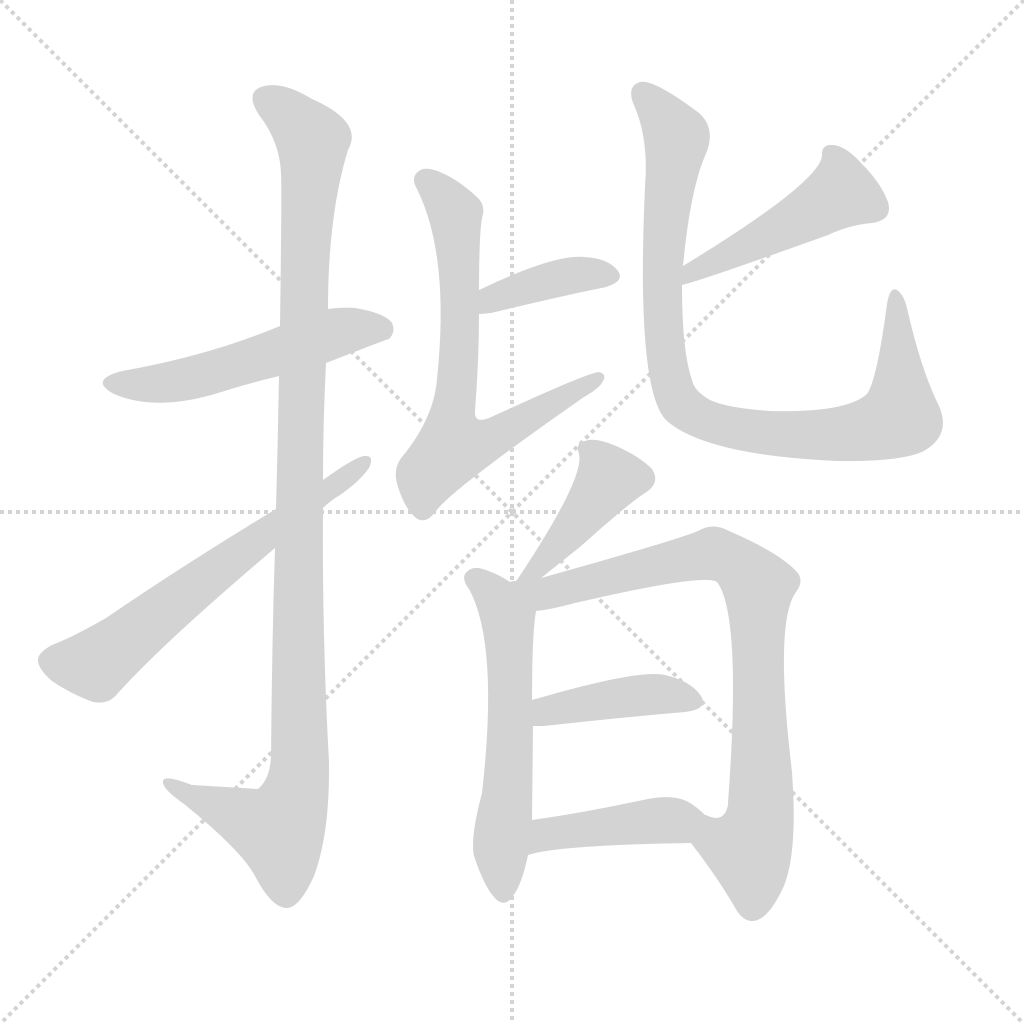
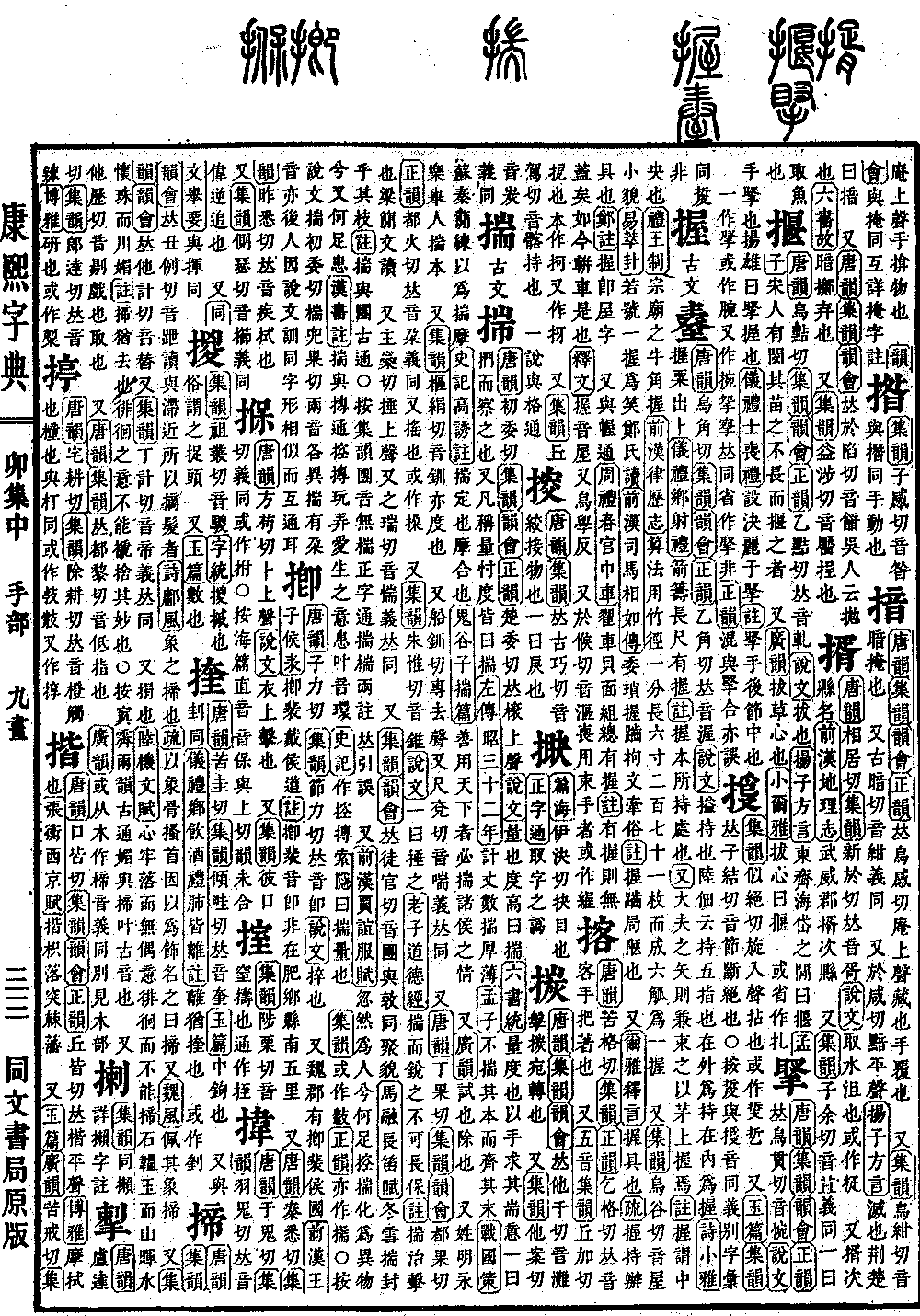
Mao Collection, Middle Volume
Radical: Hand (shǒu)
Kangxi stroke count: 13
Page 443, Entry 25
Pronounced kai (level tone).
Gloss: To rub or grind.
Citation: Rubbing against the thorns of the thicket and pushing through the thorny hedge — Western Capital Rhapsody (Xijing Fu).
Pronounced kai (falling tone).
Gloss: To jostle or push; to force one's way through. Also used interchangeably with the character for a type of drum.
Citation: The Kucha department possesses the jie drum, the kai drum, and the waist drum — Book of Tang (Tangshu), Record of the Southern Barbarians and the Pyu Kingdom.
Pronounced jia (entering tone).
Gloss: A percussion instrument made of wood used to cease musical performance.
Citation: Striking the jade chimes and percussion instruments — Book of Rites (Liji), The Office of the Hall of Distinction (Mingtangwei).
Note: The percussion instrument mentioned refers to the wooden percussion vessels known as zhu and yu.
Textual note: The original text of the Erya (Boya) states to rub or wipe; this has been corrected here to read to grind.