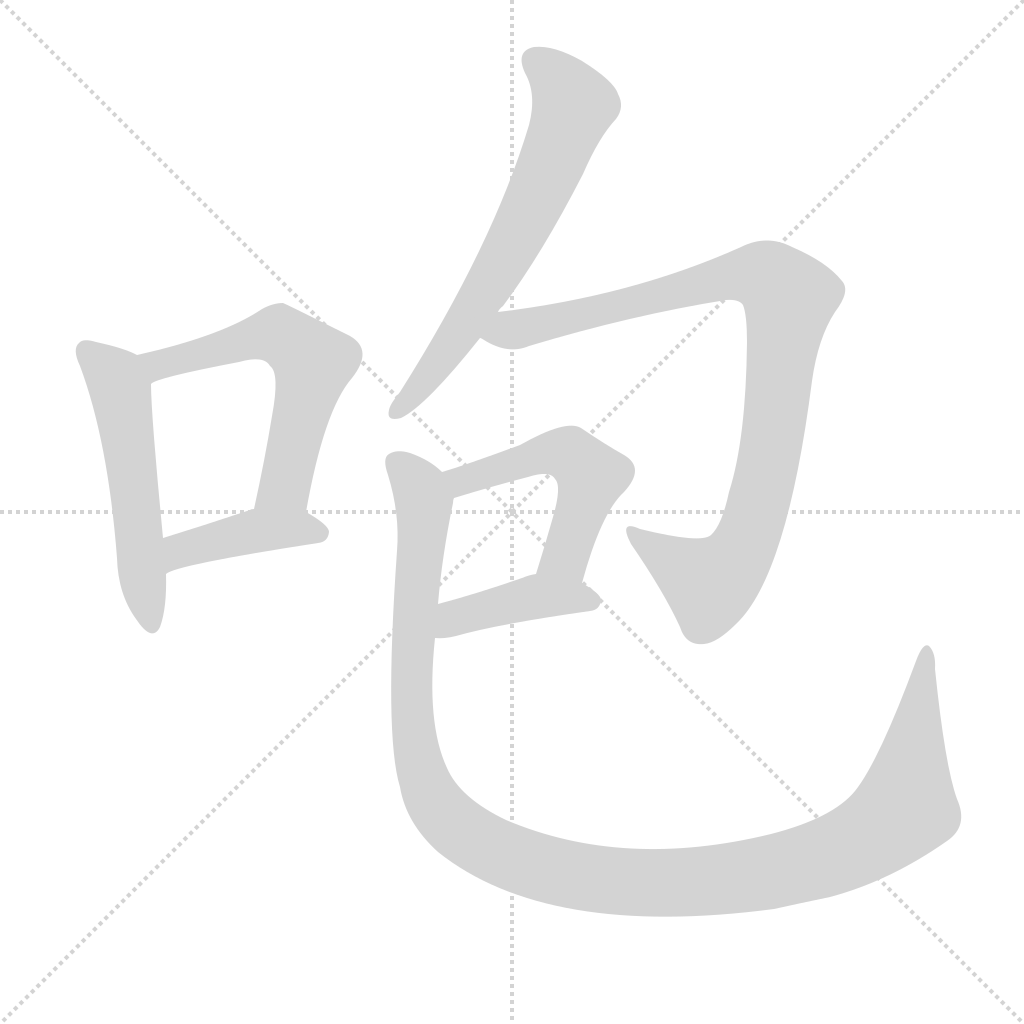
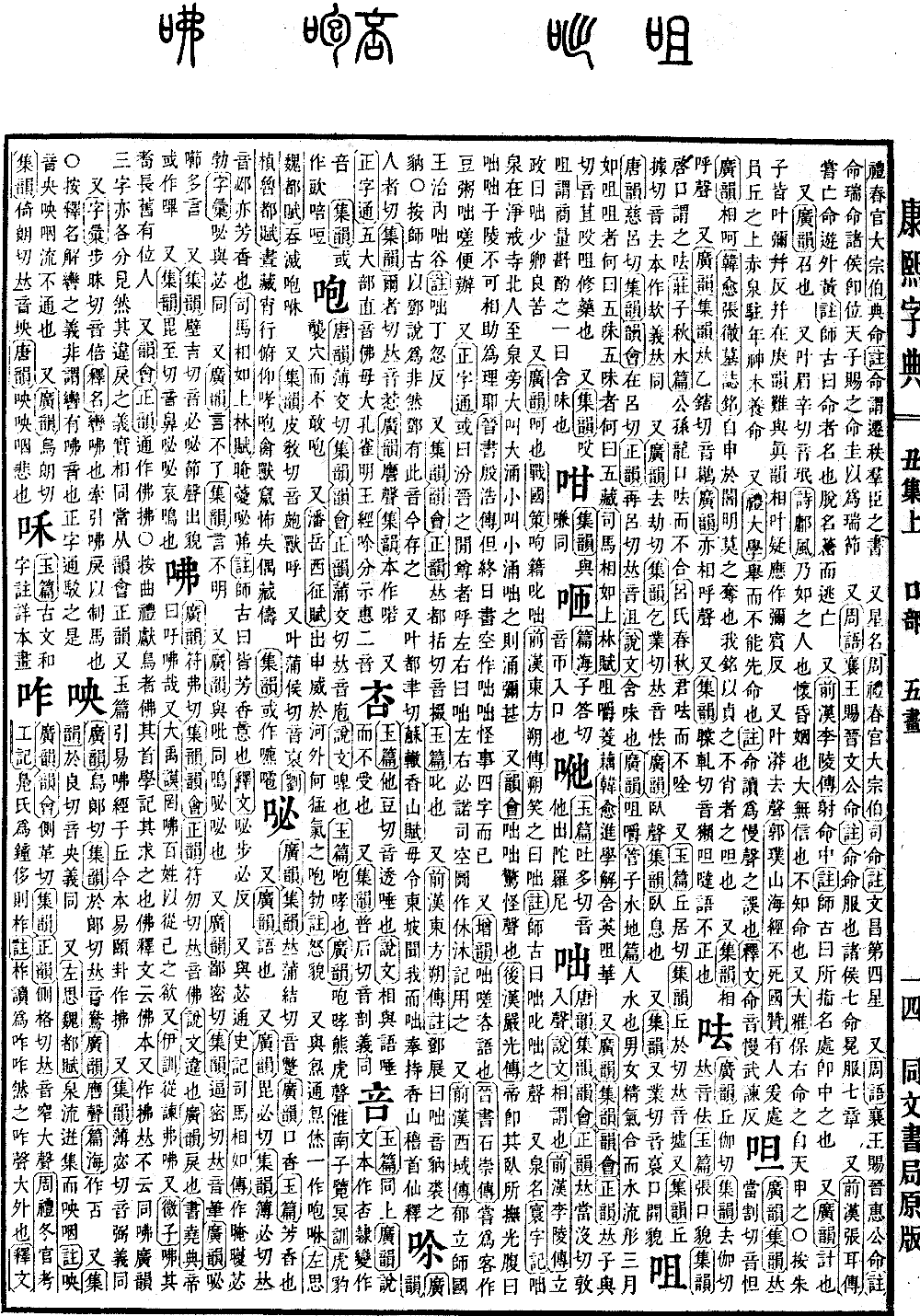
Chou Collection, Upper Volume
Radical: Mouth (kǒu)
Pao
Kangxi stroke count: 8
Page 184, Entry 11
Tang Rhymes (Tangyun): Pronounced bao.
Collected Rhymes (Jiyun), Rhyme Compilation (Yunhui), and Orthodox Rhymes (Zhengyun): Pronounced bao, with a reading identical to the word for kitchen (pao).
Explanation from Analytical Dictionary of Characters (Shuowen Jiezi): To roar.
Jade Chapters (Yupian): Defined as roaring.
Broad Rhymes (Guangyun): Defined as roaring; refers to the roar of a bear or tiger.
Master of Huainan (Huainanzi), Chapter on Surveying the Obscure (Lanming Xun): Tigers and leopards hide in their dens and dare not roar.
Also, Pan Yue, Western Expedition Rhapsody (Xizheng Fu): Displaying majesty beyond the Yellow River, what a fierce and majestic display of anger.
Annotation: The appearance of fury.
Also interchangeable with the character meaning to roast (pao). The term paoxiu is also written as paoxiu.
Zuo Si, Rhapsody on the Wei Capital (Wei Du Fu): Swallowing and destroying with roaring and clamor.
Also, in Collected Rhymes (Jiyun): Pronounced pao, identical to the word for blister (pao). Refers to the cries of wild beasts.
Also, phonetically shifted to be pronounced pou, identical to the word for gather (pou).
Liu Zhen, Rhapsody on the Lu Capital (Lu Du Fu): Hiding by day and traveling by night, roaring in fury between looking down and looking up. Birds and beasts are terrified, losing their mates and hiding from their companions.
Collected Rhymes (Jiyun): Sometimes written in a variant form.