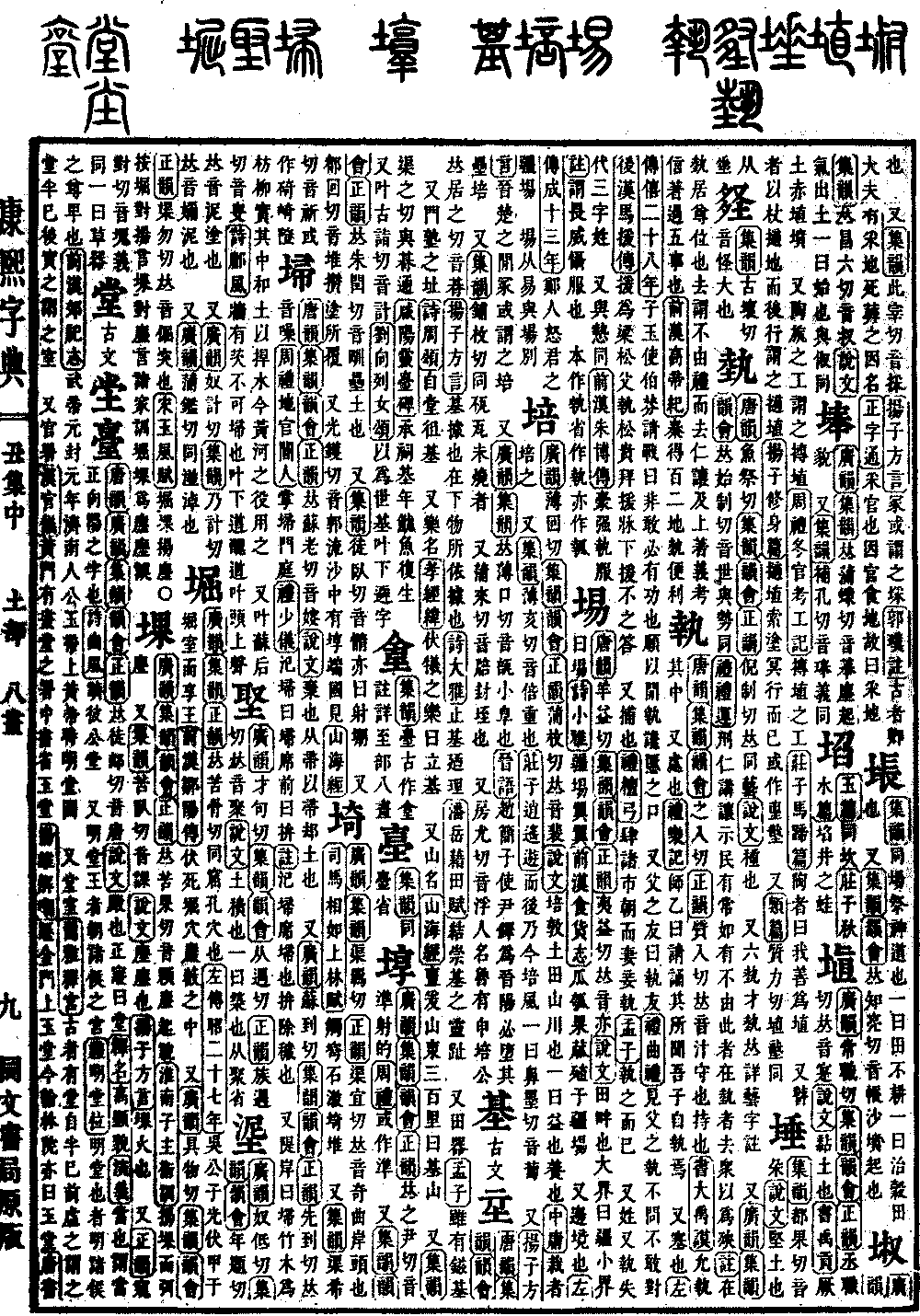
Chou Collection, Middle Volume
Radical: Earth (tǔ)
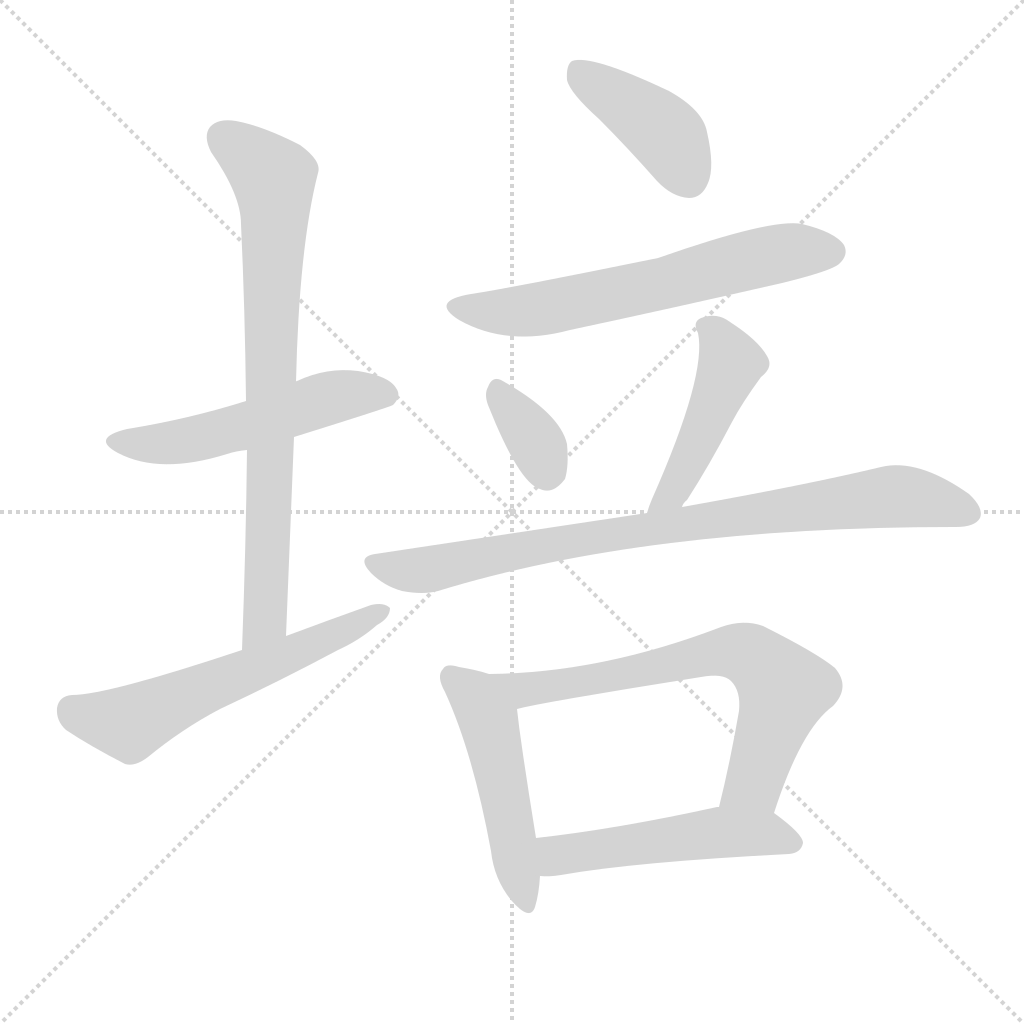
培
Kangxi strokes: 11
Page 231, Entry 11
According to Broad Rimes (Guangyun), pronounced pei. According to Collected Rimes (Jiyun), Rimes of the Classics (Yunhui), and Orthodox Rimes (Zhengyun), pronounced pei. According to Explaining Graphs and Analyzing Characters (Shuowen), it means to mound up earth on fields or mountains. It also means to increase or to nourish. In the Doctrine of the Mean (Zhongyong), it says: Those who are planted are nourished.
According to Collected Rimes (Jiyun), pronounced bei. It means heavy. In the Zhuangzi, it refers to mounting upon the wind. One source suggests it is pronounced bu.
According to Dialect (Fangyan), in the regions of Jin and Chu, a tomb is sometimes called a pei.
According to Broad Rimes (Guangyun) and Collected Rimes (Jiyun), pronounced bu. It refers to a small mound. In the Discourses of the States (Jinyu), Zhao Jianzi sent Yin Duo to Jinyang, ordering him to demolish the fortifications and mounds.
According to Collected Rimes (Jiyun), it is a variant form for unbaked clay tiles.
Also pronounced lai. It refers to an ant hill or a small mound of earth.
Also pronounced fu. Used in personal names; in the state of Lu there was a Shen Peigong.