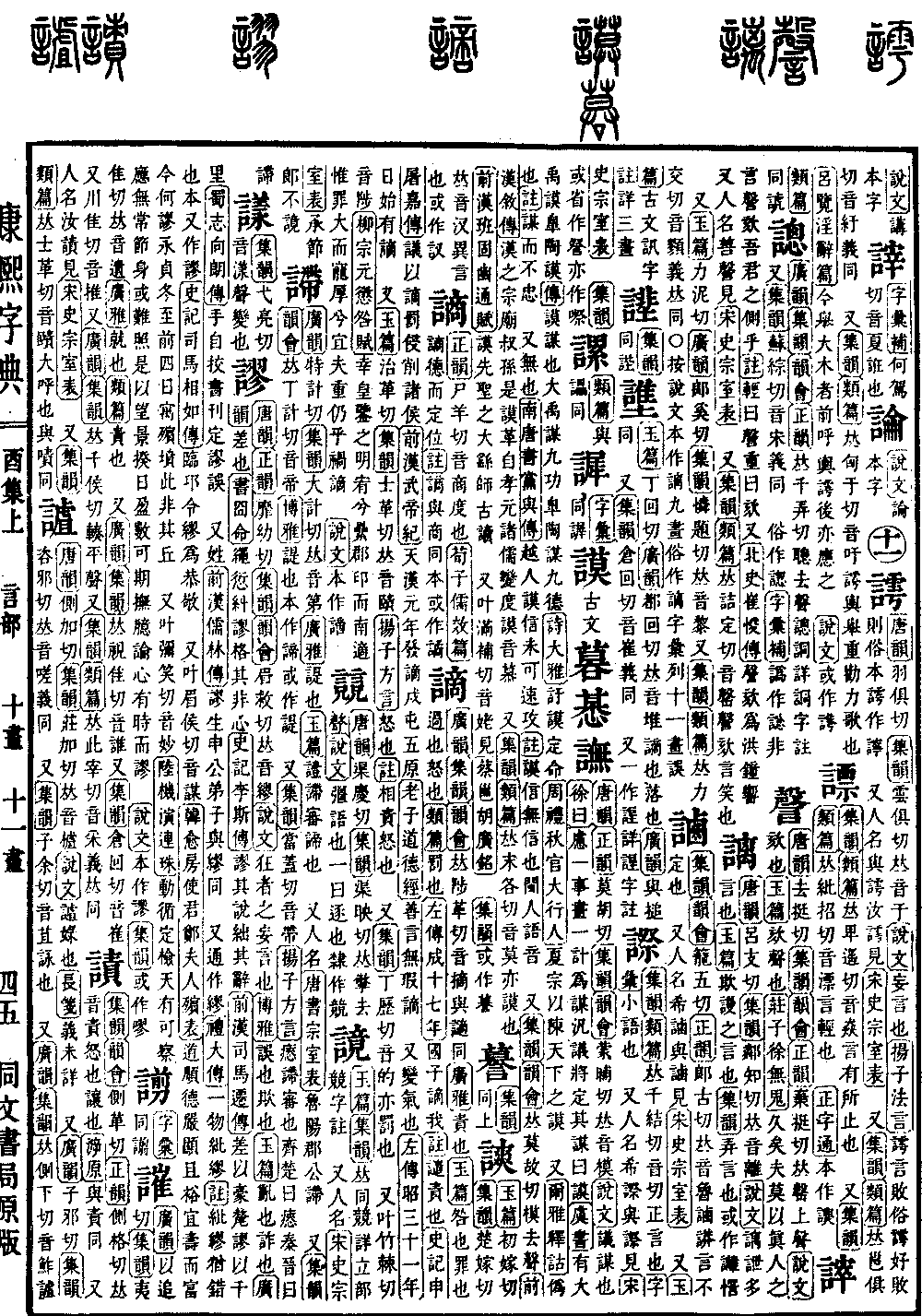
You Collection, Upper Volume
Radical: Speech (yán)
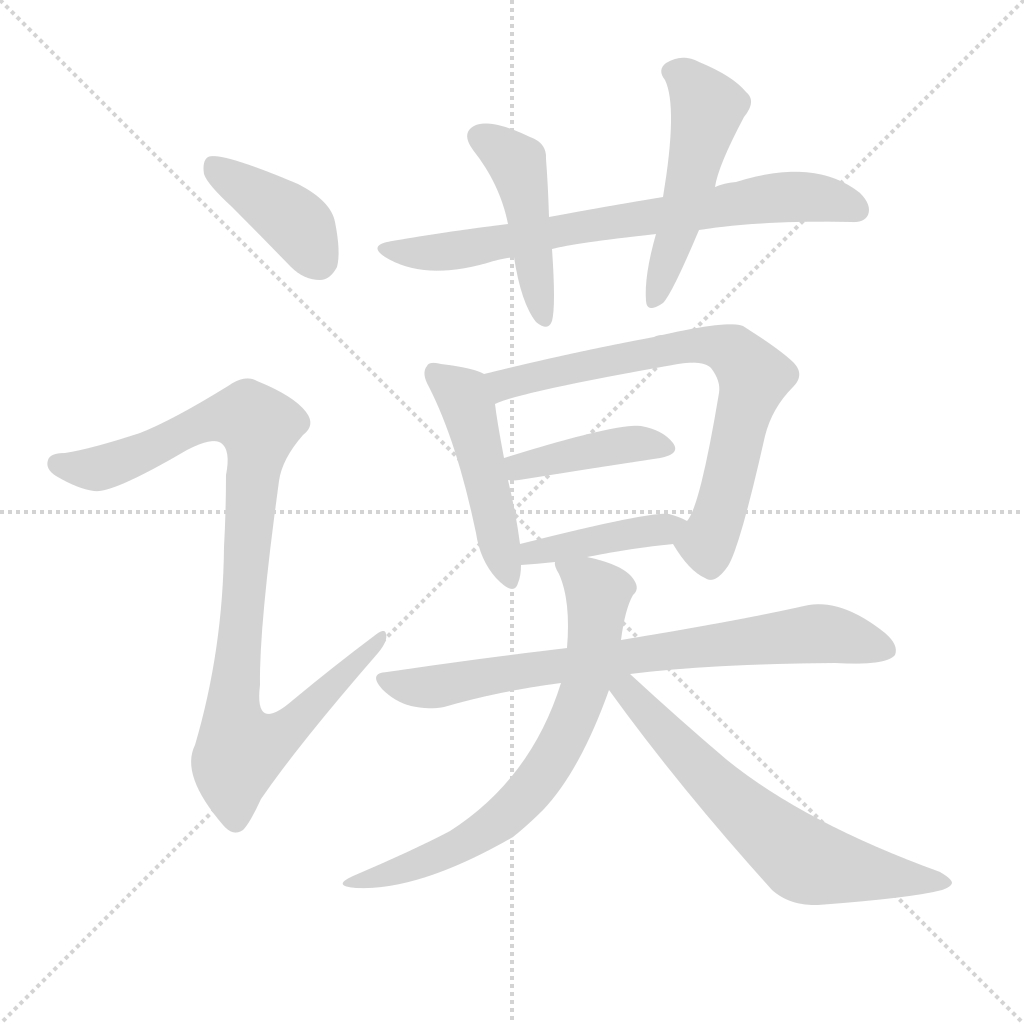
Mo
Kangxi Strokes: 18
Page 1177, Entry 06
Ancient form: Wu
Tangyun, Zhengyun: Pronounced mo. Jiyun, Yunhui: Pronounced mou. Pronounced mo.
Shuowen: To deliberate or plan.
Xu says: To consider a matter and devise a plan is called mou; to broadly discuss and settle upon a plan is called mo.
Book of Documents (Yushu): Contains the Great Plan of Yu (Dayu Mo) and the Plan of Gaoyao (Gaoyao Mo).
Commentary: Mo means to plan. The Great Yu planned the nine achievements, and Gaoyao planned the nine virtues.
Book of Odes (Shijing), Deya: Vast plans settle the mandate.
Rites of Zhou (Zhouli), Autumn Offices, Great Minister: In the summer, the ancestral temples oversee the plans of the world.
Also, Erya, Explanations of Ancient Words: To be false.
Commentary: To plan without loyalty.
Also: None.
History of the Southern Tang (Nantangshu), Biographies of Cliques: The Yue people have no faith, it is not yet time for a quick attack.
Commentary: No faith. This is a dialectal pronunciation from Min.
Also, Jiyun, Yunhui: Pronounced mo (departing tone).
History of the Former Han (Qianhanshu), Narrative Biography: The ancestral temples of the Han, Shusun was the planner. Reforming since the time of Emperor Yuan, the scholars changed the measures. Pronounced mu.
Also, Jiyun, Leipian: Pronounced mo. Also means to plan.
History of the Former Han (Qianhanshu), Ban Gu, You Tong Fu: To plan the great principles of the former sages. Shigu read it as such.
Also, rhyming with mu, pronounced mu.
See Cai Yong, Inscription for Hu Guang.
Jiyun: Sometimes written in a variant form (mo).