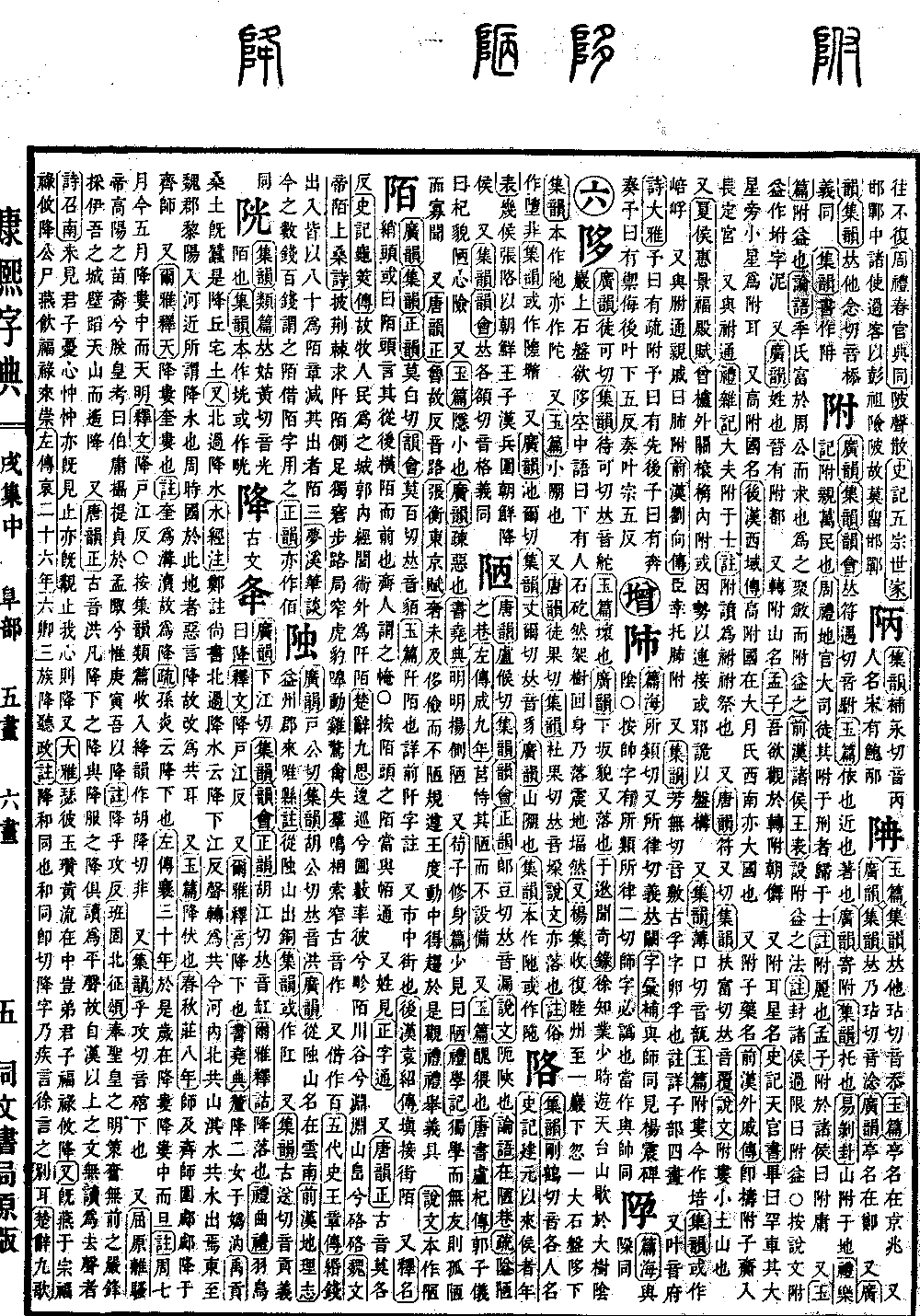
Xu Collection, Middle Volume. Radical: Mound (fù). Mo; Kangxi Stroke Count: 14; Page Number: Page 1349, Number 09.
In the Broad Rimes (Guangyun), Collected Rimes (Jiyun), and Correct Rimes (Zhengyun), the pronunciation is indicated by the fanqie characters mo and bai. In the Rime Assemblage (Yunhui), the pronunciation is indicated by the fanqie characters mo and bai. The pronunciation is the same as the character pronounced mò.
The Jade Chapters (Yupian) explains this as a path between fields, similar to the word qiān. For a detailed explanation, refer to the previous entry for the character qiān.
It also refers to streets within a marketplace. The Book of the Later Han (Hou Hanshu) in the Biography of Yuan Shao records, "Filling and connecting the streets and paths."
Also, the Explanation of Names (Shiming) mentions a type of headscarf called a mòtóu, meaning it wraps horizontally from back to front. People of the Qi region call it a lián. Note: The character mò used here is interchangeable with the character pronounced mò meaning headscarf.
It is also a surname, as recorded in the Correct Character Mastery (Zhengzitong).
Also, the Corrections to Tang Rimes (Tangyun Zheng) notes the ancient pronunciation as the fanqie characters mo and ge. The Records of the Grand Historian (Shiji) in the Treatise on Turtle and Milfoil Divination records: Therefore, in governing the people, cities and walls were built for them; within were the gates and alleys, and without were the paths between fields.
The Nine Longings (Jiusi) within the Songs of Chu (Chu Ci) contains: Hesitating by the gardens and marshes, following those paths and boundaries. The river valleys are deep and vast, the mountain mounds are rocky and cragged.
Emperor Wen of Wei in the poem Mulberries on the Path (Moshang Sang) wrote: Parting the thorns and brambles to find the field paths, treading sideways in distress, the road being narrow and cramped. Tigers and leopards howl and stir, chickens are startled and birds are lost, crying out to find their kind. Here, the word for narrow was anciently pronounced as zuò.
It is also used as a phonetic loan for the word for hundred. The History of the Five Dynasties (Wudaishi) in the Biography of Wang Zhang records: In the transaction of strings of coins, eighty was counted as a hundred; Zhang reduced the outgoing count by three per hundred.
The Dream Pool Essays (Mengxi Bitan) mentions: In the current counting of coins, one hundred coins is called a mò. This uses the character mò to represent one hundred. The Correct Rimes also writes it in the form pronounced bǎi.