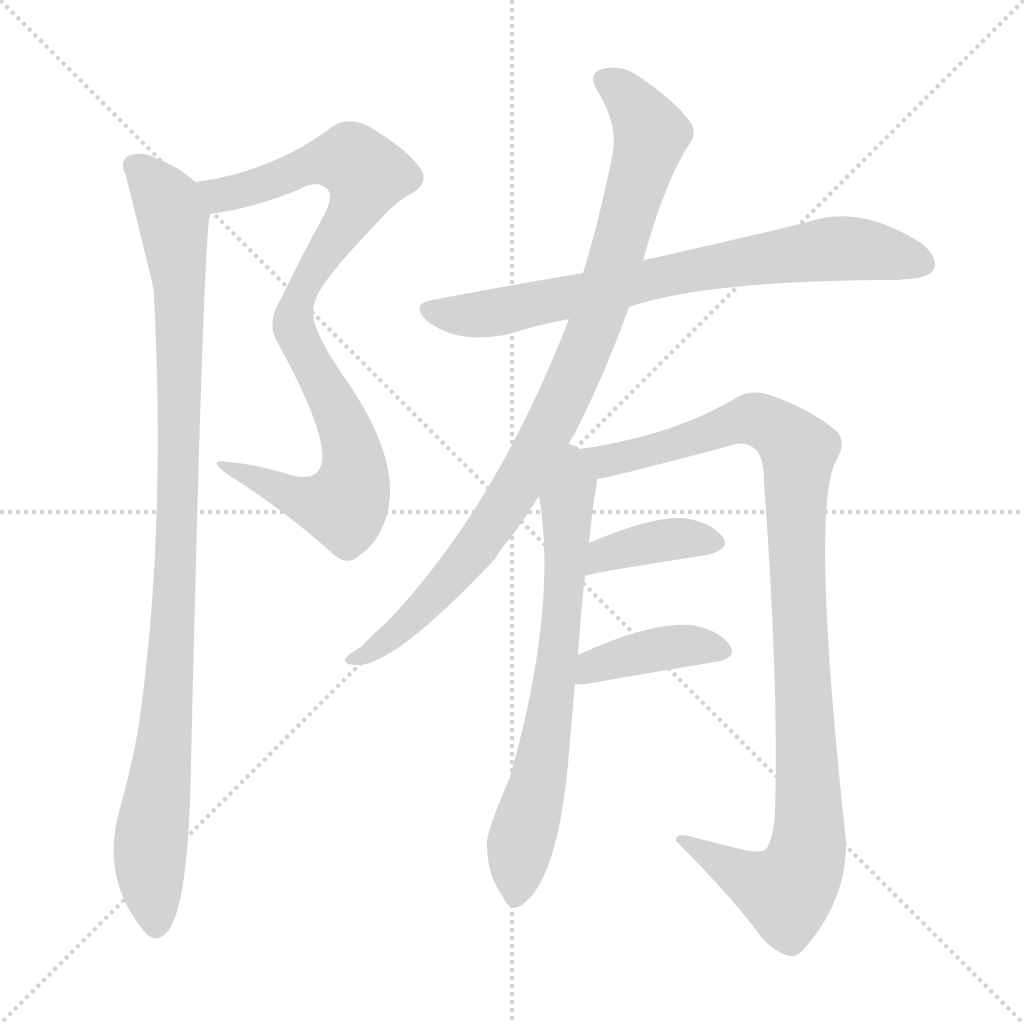
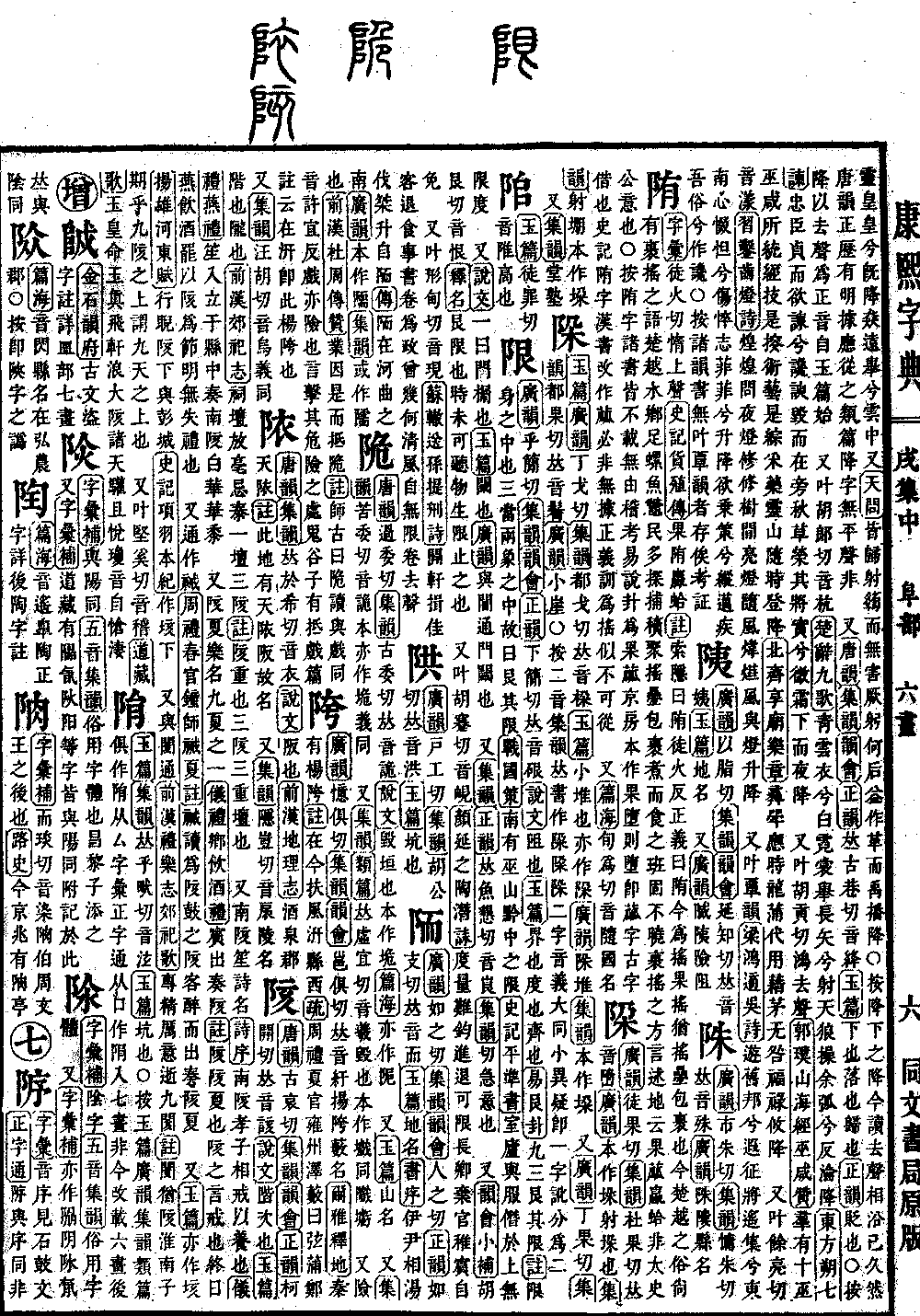
Xu Collection, Middle Volume, Radical: Mound (fù)
14 strokes
Page 1350, Entry 03
Pronounced duo (rising tone) — Zihui (Zihui)
"Fruits and mollusks" — Records of the Grand Historian (Shiji), Treatise on the Economy (Huozhi)
Notes: Suoyin states: 陏, pronounced tu huo fan. Zheng Yi states: 陏, currently explained as "to shake." "Guo duo" is like shaking a bundle. In the customs of Chu and Yue regions today, there is still the saying "guo yao." Chu and Yue are water towns, rich in snails, fish, and shrimp. The people often collect and catch them, accumulate them, shake their bundles (meaning to tidy bundles), and cook and eat them. Ban Gu did not understand the dialect of "guo yao," and when narrating geography, he said "guo luo luo ha," which is not the original intention of the Grand Historian (Sima Qian).
Commentary: The character 陏 is not recorded in various books, and cannot be verified. In the "Book of Changes" (Yi), it is written as "guo luo." The Jing Fang version is written as "guo duo." Therefore, "duo" is a phonetic loan for the character "luo," which is a common substitution in ancient texts. The character "陏" in the "Records of the Grand Historian" was changed to "luo" in the "Book of Han" (Hanshu), and it must not be without basis. The explanation of "yao" (to shake) in Zheng Yi seems unreliable.
Furthermore, Pianhai (Pianhai) notes the pronunciation as xun wei qie, pronounced sui. It is the name of a country.