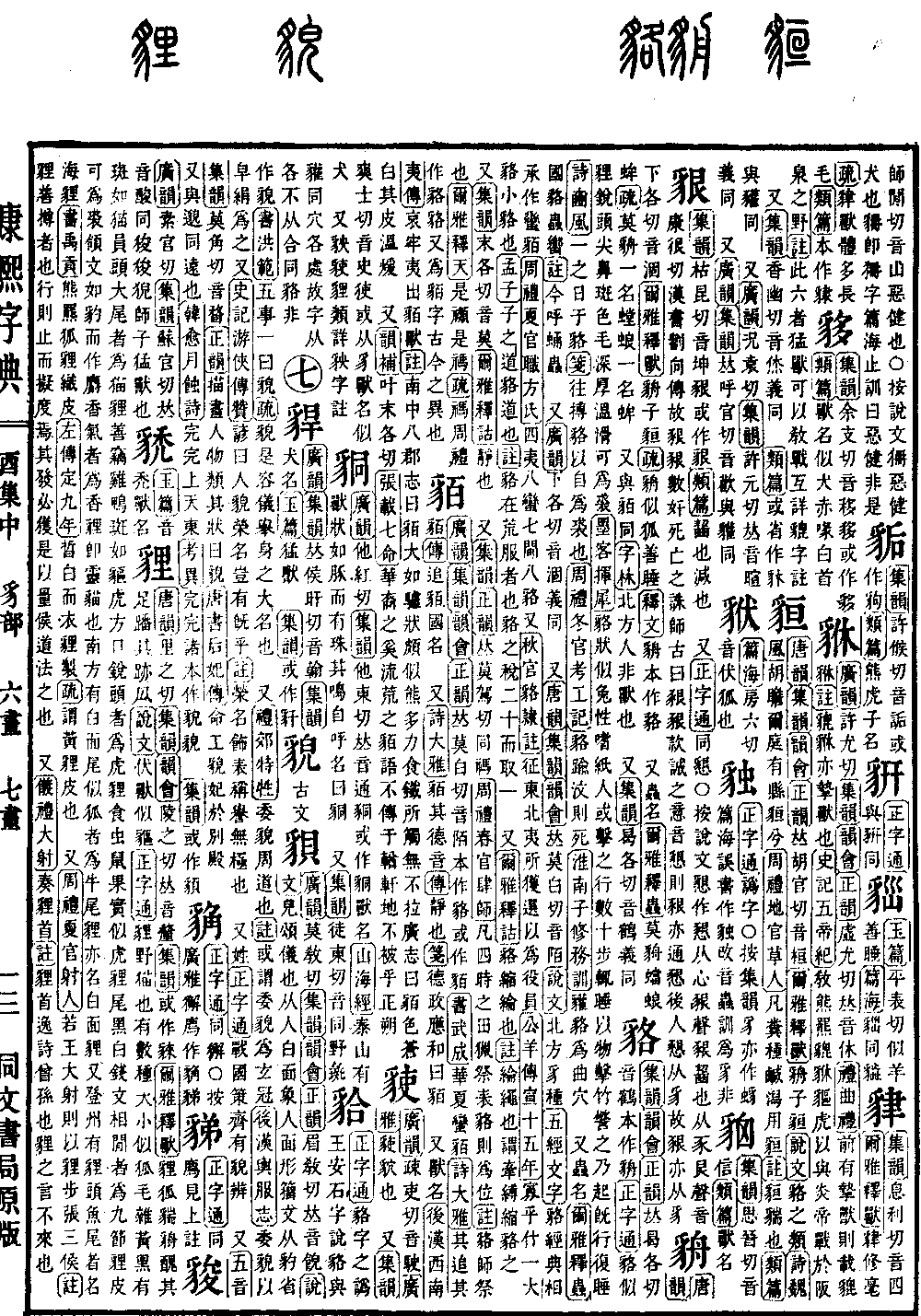
You Collection, Middle Volume
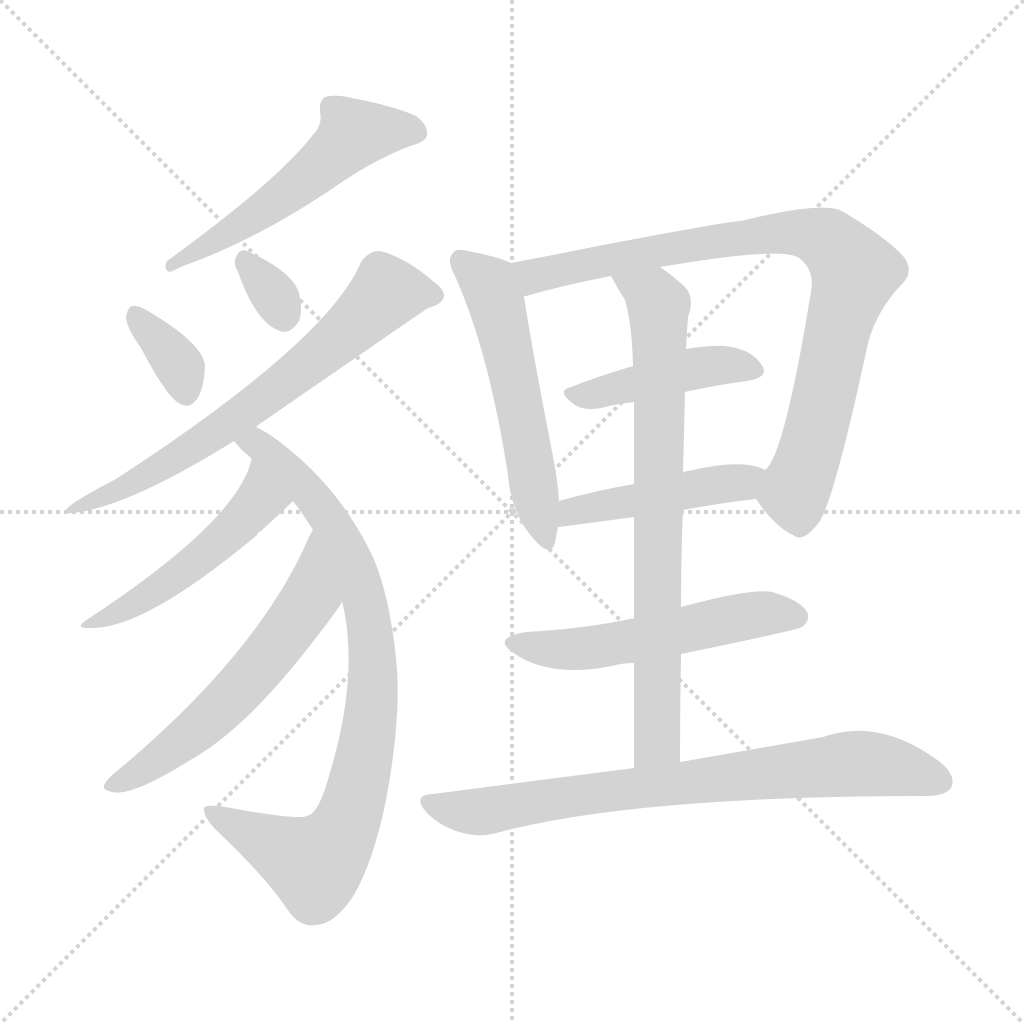
Radical: Badger (zhì)
Kangxi Strokes: 14
Page 1201, Entry 25
Pronounced li.
Sometimes also written in a variant form.
Erya, Explanation of Animals: The badger, fox, swine-badger, and raccoon-dog are of one group; their feet are padded, and their tracks are rounded.
Shuowen Jiezi (Explanation of Graphs and Analysis of Characters): A crouching beast resembling a leopard-cat.
Zhengzitong (Comprehensive Dictionary of Characters): The badger is a wild cat. There are several kinds: those that are similar in size to a fox, with fur mixed yellow and black and spots like a cat, and with round heads and large tails, are called cat-badgers, which are skilled at stealing chickens and ducks. Those with spots like a leopard-cat or tiger, with square mouths and pointed heads, are called tiger-badgers, which eat insects and fruits. Those similar to the tiger-badger, but with tails featuring alternating black and white coin-shaped patterns, are called nine-jointed badgers; their pelts can be used for fur collars. Those with patterns like a leopard that emit a musk scent are called fragrant badgers, which are the civet cats. In the south, there is one with a white face and a tail like a fox, called the ox-tail badger, also known as the white-faced badger. Additionally, in Dengzhou, there is an animal with the head of a badger and the tail of a fish, called a sea-badger.
Classic of History (Shangshu), Tribute of Yu: Bear, brown bear, fox, and badger pelts.
Zuo Tradition (Zuozhuan), Ninth Year of Duke Ding: Wearing white and dressed in badger skins.
Commentary: This refers to the yellow badger pelt.
Also, Rites of Zhou (Zhouli), Summer Official, Archer: If the King holds a great archery ceremony, then the badger-step is used to measure the three targets.
Annotation: The badger is an animal that excels at crouching. When it walks, it stops to measure and deliberate; when it strikes, it is sure to capture. Thus, the way of measuring the path to the target is modeled after it.
Also, Book of Etiquette and Ceremonial (Yili), Great Archery: Perform the Badger Head.
Annotation: The Badger Head is a lost poem from the Book of Odes (Shijing), known as The Great-Grandson. The term badger refers to not coming.
Also, Book of Rites (Liji), Tan Gong: The variegation of the Badger Head.
Annotation: The patterned colors resemble the head of a badger.
Also, Pronounced mai. Originally written as burying.
Lunheng (Discourses in the Balance): Petty thieves bury their tracks while stealing.
Also, sometimes written as buried.
Five Classics Characters (Wujing Wenzi): Badger is sometimes used in the classics as a loan for the character meaning to bury.
Also, Rites of Zhou (Zhouli), Heavenly Official, Turtle Official: Use the seasons to spear fish, turtles, and shellfish, and all things that are hidden.
Annotation: This refers to those that hide and lie dormant in the mud.
Also, Spring Official, Great Director of Ancestors: Use the badger-submersion to sacrifice to mountains, forests, rivers, and marshes.
Also, Pronounced mei. The meaning is the same.
Also, Pronounced yu. It means odor.
Rites of Zhou (Zhouli), Heavenly Official, Inner Cook: The birds are discolored and sandy-sounding, and are foul-smelling.
Guangyun (Broad Rimes): Commonly written as the character for raccoon-dog.