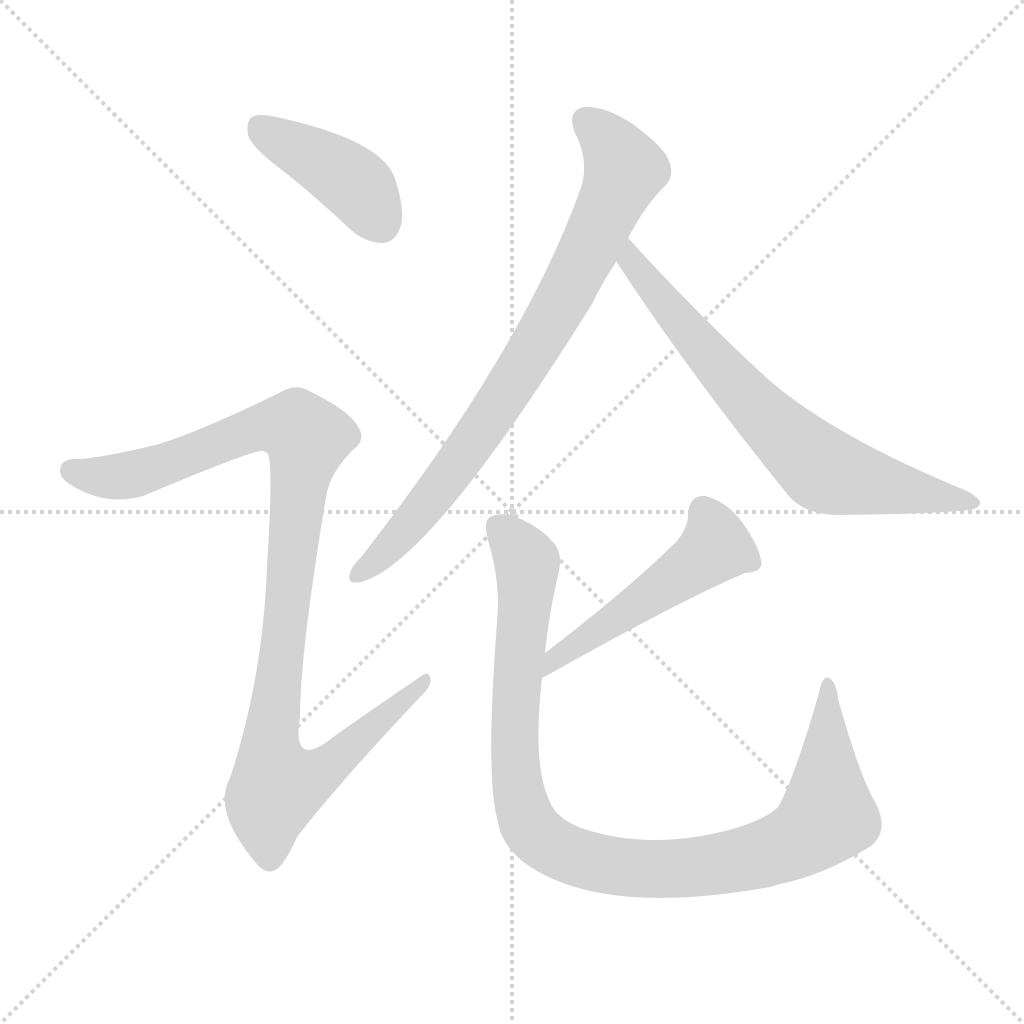
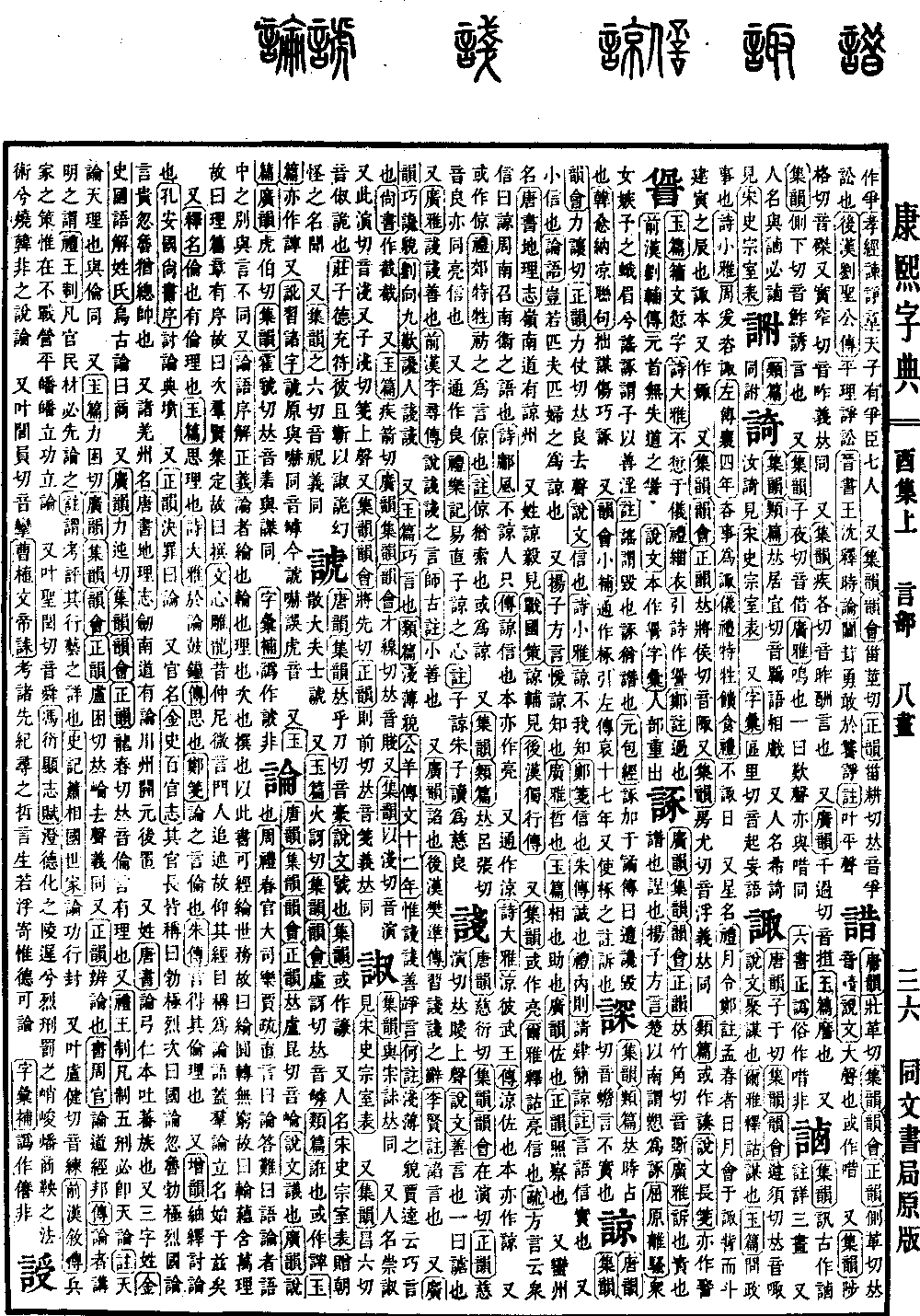
You Collection, Upper Volume
Radical: Speech (yán)
Kangxi Strokes: 15
Page 1168, Entry 01
Pronounced lun.
According to the Explaining Graphs and Analyzing Characters (Shuowen Jiezi), it means to discuss.
According to the Broad Rhymes (Guangyun), it means to explain.
According to the commentary on the Office of the Grand Musician in the Rites of Zhou (Zhouli): To state directly is called lun; to answer an interrogation is called yu. Lun is a form of language, distinct from ordinary speech.
According to the Preface to the Analects (Lunyu), the term lun implies regulating, rotating, ordering, sequencing, and compiling. It is called lun because it regulates world affairs, is infinitely versatile like a wheel, contains inherent principles, is organized into chapters, and was compiled by many sages.
According to The Literary Mind and the Carving of Dragons (Wenxin Diaolong): Confucius once made profound statements, which his disciples later recalled and recorded; thus, they honored this classic as the Analects (Lunyu). The practice of establishing titles for treatises likely began here.
According to the Definitions of Names (Shiming): Lun is equivalent to lun (the principle or order of things), implying ethics.
According to the Jade Chapters (Yupian): It means to contemplate principles.
According to the Book of Odes (Shijing): In the stanza mentioning the beating of drums, the commentary interprets this as to reflect. The Zheng commentary adds that lun here means principle. The Zhu commentary states it means to conform to its ethical principle.
According to the Supplemented Rhymes (Zengyun): It means to deduce and deliberate.
According to the Preface to the Book of Documents (Shangshu) by Kong Anguo: To discuss the Three Vaults and Five Canons.
According to the Rectified Rhymes (Zhengyun): To adjudicate criminal guilt is called lun.
Regarding official titles: According to the History of Jin (Jinshi), their chiefs were titled Bojilie, and the next in rank was called Guolun Hulu Bojilie. Guolun means honorable, and Hulu means supreme commander.
Regarding the name of a prefecture of the Qiang people: According to the Geography section of the Old Book of Tang (Tangshu), the prefecture of Lun was established in the Jiannan Circuit after the Kaiyuan era.
Regarding surnames: According to the Old Book of Tang (Tangshu), there was a person named Lun Gongren, originally of the Tibetan people.
Regarding three-character surnames: According to the History of Jin (Jinshi), the name Wugulun translates into Chinese as merchant.
Pronounced lun. It means speech that possesses principle.
According to the Book of Rites (Liji): In matters concerning the establishment of the five punishments, one must conform to tianlun (Heavenly principle). The note explains that tianlun is the same as the principle of nature (tianli), which is identical to the character for social order (lun).
Pronounced lun (in the falling tone). The meaning is the same.
According to the Rectified Rhymes (Zhengyun): It means to argue.
According to the Book of Documents (Shangshu): To discuss the way and order the state. The commentary states that lun means to clarify.
According to the Book of Rites (Liji): Whenever selecting talent from the populace, one must first evaluate them. The note explains this refers to a detailed examination of their virtue and skills.
According to the Records of the Grand Historian (Shiji): To evaluate merits and bestow rewards.
Rhyming with lian: From the Preface to the Book of Han (Hanshu): The strategies of military experts focus on avoiding battle. Yingping Hou (referring to Zhao Chongguo) had white hair and established great merit, making his final assessment.
Rhyming with shun: From the Fu on Expressing Aspirations by Feng Yan: Heartbroken by the decline of moral teachings and the severity of punishments, burning the legalist doctrines of Shang Yang, and discarding the arguments of Han Fei.
Rhyming with luan: From the Eulogy for Emperor Wen by Cao Zhi: Investigating the records of previous generations and following the discourse of the sages. Life is like floating duckweed in the world; only virtue can be judged.
According to the Supplement to Character Collections (Zihui Bu): The form appearing here is an incorrect variant.