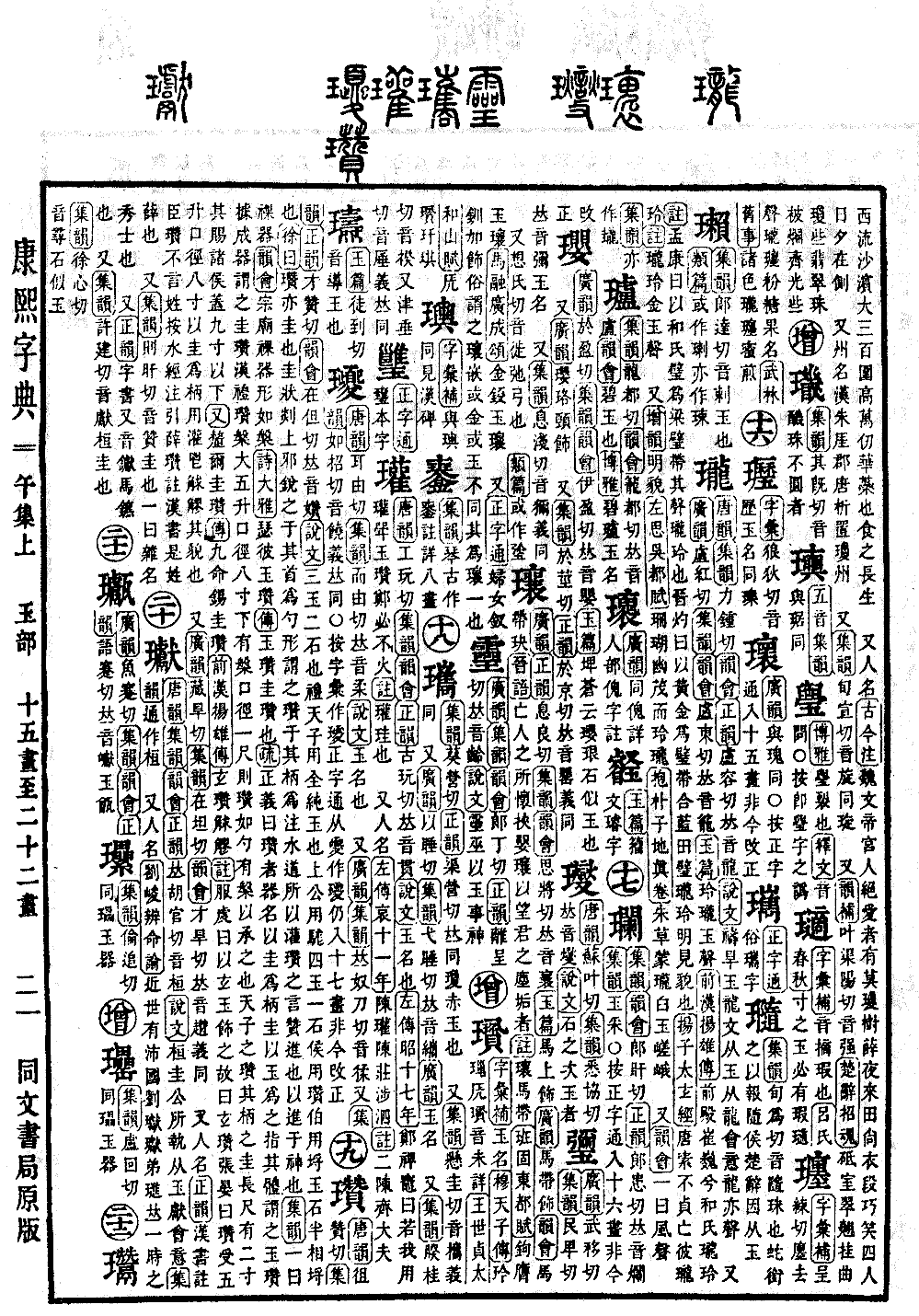
Wu Collection, Upper Volume
Radical: Jade (yù)
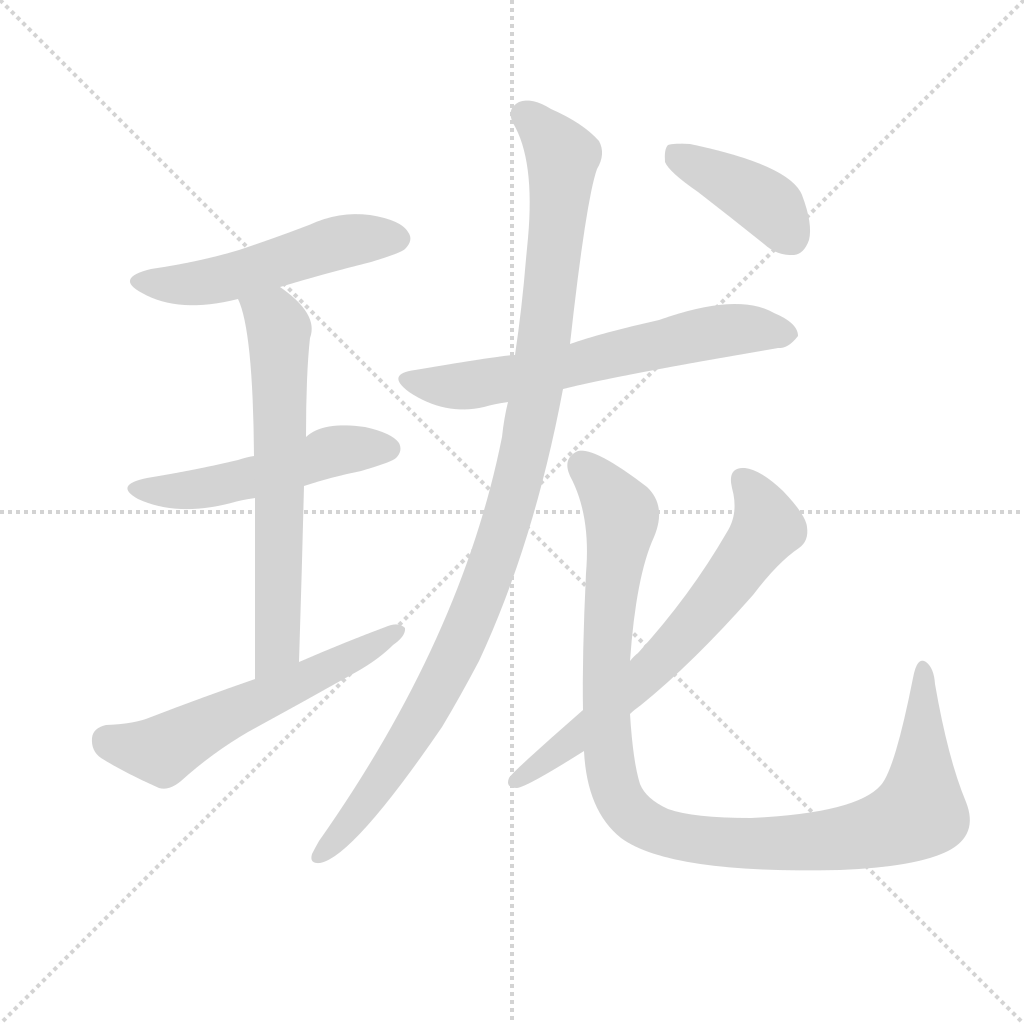
Long
Kangxi strokes: 21
Page 745, Entry 01
According to Tang Rhymes (Tangyun) and Collected Rhymes (Jiyun), it is pronounced long. According to Rhyme Compilation (Yunhui) and Correct Rhymes (Zhengyun), it is pronounced long.
In Explaining Simple and Analyzing Compound Characters (Shuowen), it is defined as jade used to pray for rain, featuring dragon patterns. It is a compound ideograph consisting of the elements for jade and dragon; dragon also serves as a phonetic component.
According to Broad Rhymes (Guangyun), it is pronounced long. According to Collected Rhymes (Jiyun) and Rhyme Compilation (Yunhui), it is pronounced long.
According to Jade Chapters (Yupian), it refers to the sound of jade, called linglong.
In the Biography of Yang Xiong in the History of the Former Han (Qianhan Shu), it states: The front palace halls are towering, adorned with the He family jade, linglong. The commentary by Meng Kang says: Using the He family jade disk to make a beam-belt, its sound is linglong. The commentary by Jin Zhuo says: Using gold to make a jade-belt, combined with Lantian jade. Linglong describes a bright and visible appearance. In the Great Mystery (Taixuanjing) by Yangzi, it states: Tang Su is not upright, losing that linglong appearance. The commentary states: Linglong is the sound of metal and jade.
According to Expanded Rhymes (Zengyun), it also describes a bright appearance.
In Zuo Si's Rhapsody on the Capital of Wu (Wu Du Fu), it states: The coral is secluded and luxuriant, and linglong. In the Earthly Truth Scroll of the Master Who Embraces Simplicity (Baopuzi), it states: The vermilion grass is dense and lush, and the white jade is rugged and towering.
According to Rhyme Compilation (Yunhui), it also refers to the sound of wind.
According to Collected Rhymes (Jiyun), it is also written in a variant form.