Chen Collection, Middle Volume
Radical: Tree (mù)
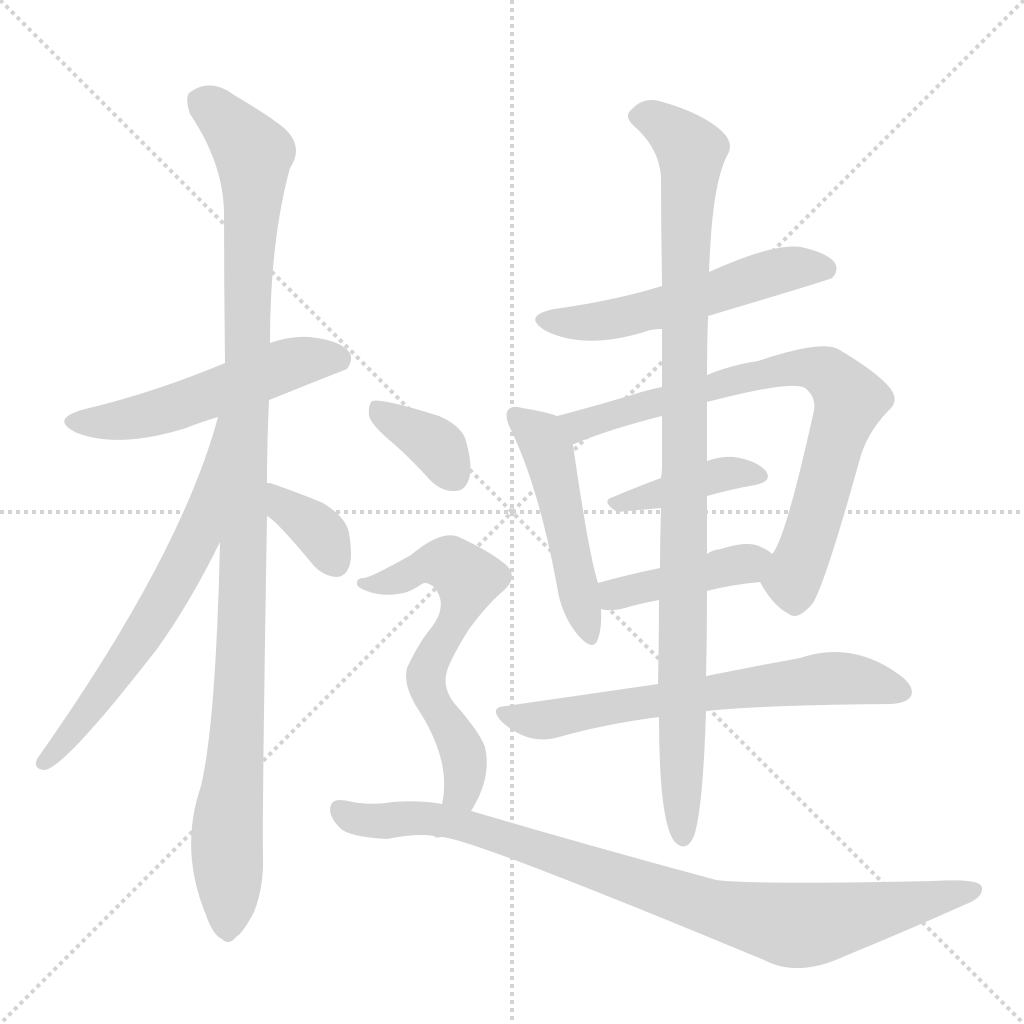
Lian
Kangxi strokes: 15
Page 546, Entry 28
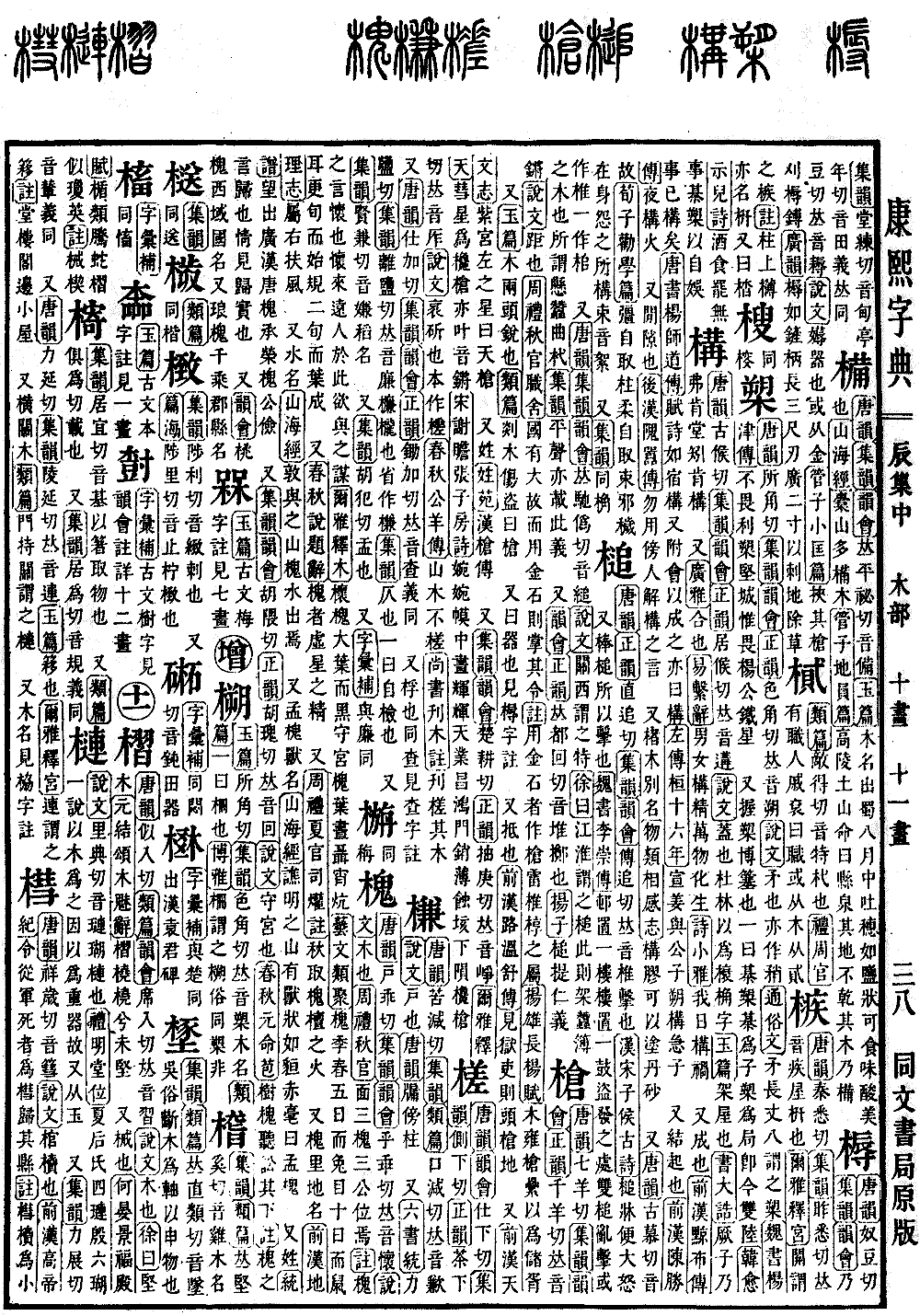
According to the Explaining and Analyzing Characters (Shuowen Jiezi), it is pronounced lian. It refers to ritual vessels of the type known as hu and lian. The Book of Rites (Liji), specifically the section on the Hall of Distinction (Mingtang Wei), records that the Xia dynasty used four lian, while the Shang dynasty used six hu. One interpretation suggests that because they were crafted from wood and served as important ritual vessels, the character is sometimes written with the jade radical.
According to the Collected Rhymes (Jiyun), it is pronounced nian. The meaning is the same.
According to the Tang Rhymes (Tangyun) and the Collected Rhymes (Jiyun), it is pronounced lian. According to the Jade Chapters (Yupian), it refers to a small room beside a storied building or pavilion. The Erya: Interpretation of Palaces (Erya: Shigong) notes that the term lian refers to a side room, specifically an auxiliary chamber situated beside a main hall or pavilion. It also refers to a door bolt. According to the Categorized Dictionary (Leipian), the horizontal wooden bar used on a door to secure the bolt is called a lian.
It is also the name of a type of tree. For further details, see the entry for the character li.