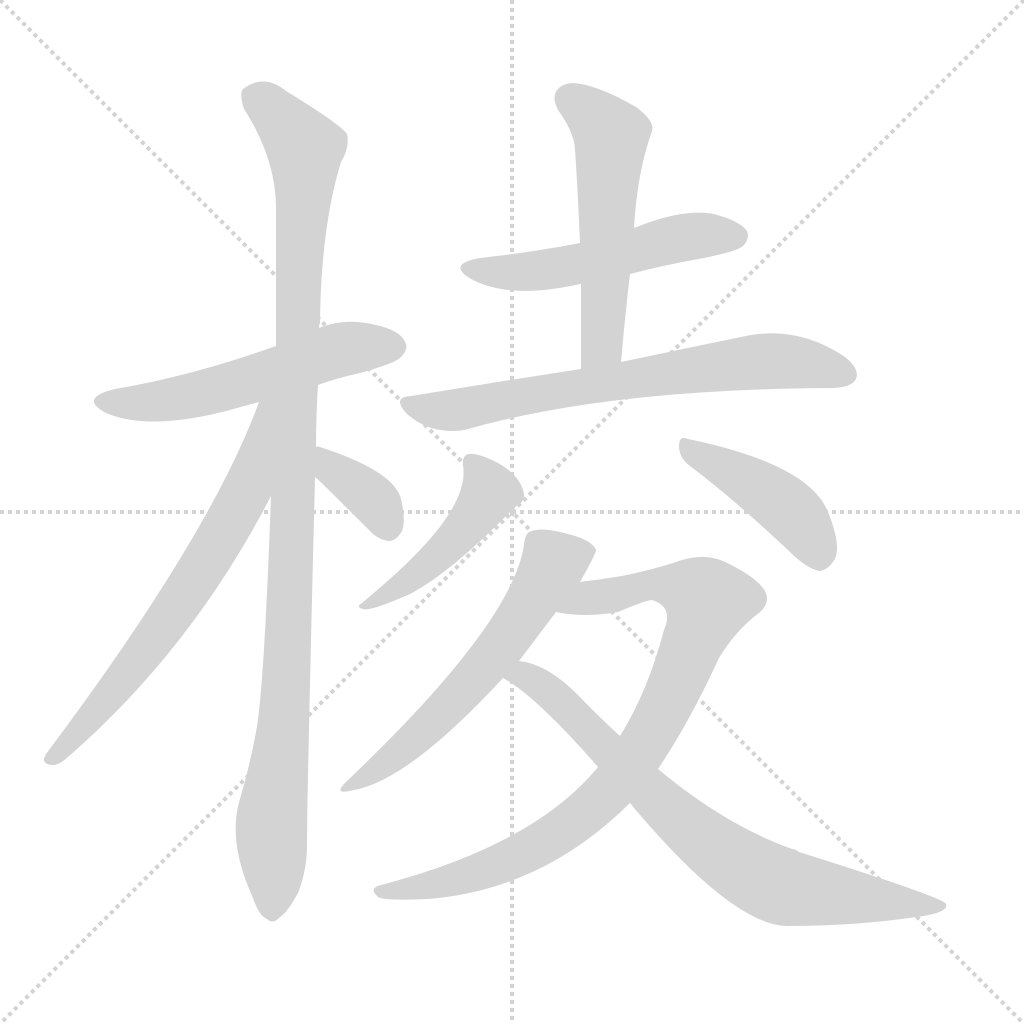
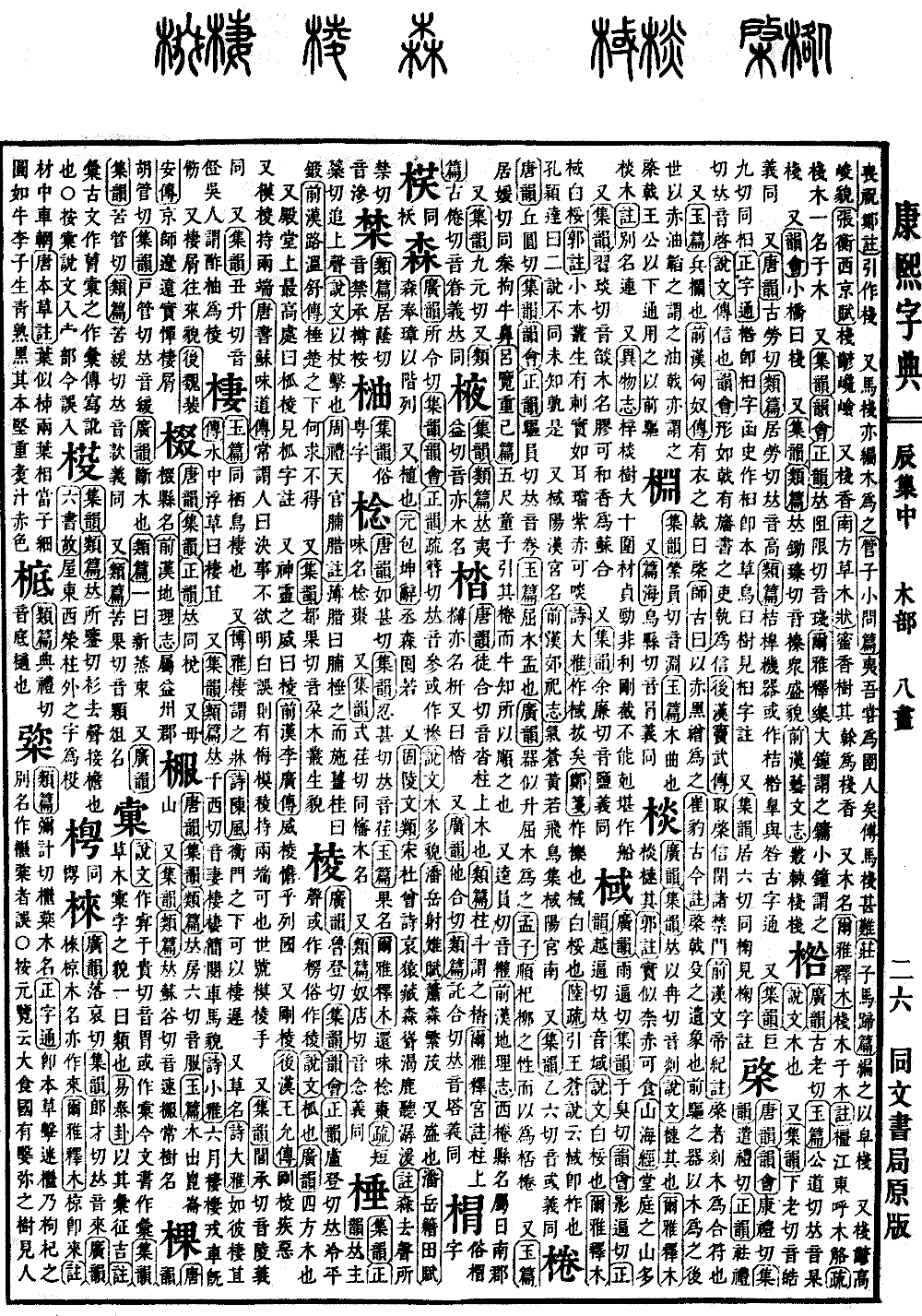
Chen Collection, Middle Volume. Radical: Wood (mù). Kangxi stroke count: 12. Page 534, Entry 16.
Guangyun (Guangyun): Pronounced leng (level tone). Jiyun (Jiyun), Yunhui (Yunhui), Zhengyun (Zhengyun): Pronounced leng (level tone). Sometimes written in a variant form (leng), and commonly written in a variant form (leng).
Shuowen (Shuowen): Refers to square-cut timber.
Guangyun (Guangyun): Refers to four-sided timber. Also refers to the highest point of a palace hall, known as the fuleng. See the entry for the character fu for further details.
Also refers to divine or majestic authority, known as leng.
History of the Former Han (Qian Hanshu), Biography of Li Guang: His majestic authority shook the various states.
Also refers to upright and majestic conduct.
History of the Later Han (Hou Hanshu), Biography of Wang Yun: Upright and majestic, he detested evil.
Also refers to the concept of moleng, meaning an ambiguous or non-committal attitude.
Book of Tang (Tangshu), Biography of Su Weidao: He often told others that in handling affairs, one should not be too explicit, for mistakes lead to regret; maintaining a non-committal and ambiguous attitude is sufficient. People of his time called him the Master of Ambiguity.
Jiyun (Jiyun): Pronounced ling (rising tone). The meaning is the same.
Jiyun (Jiyun): Pronounced deng (rising tone). In the Wu region, people call sour pomelos leng.