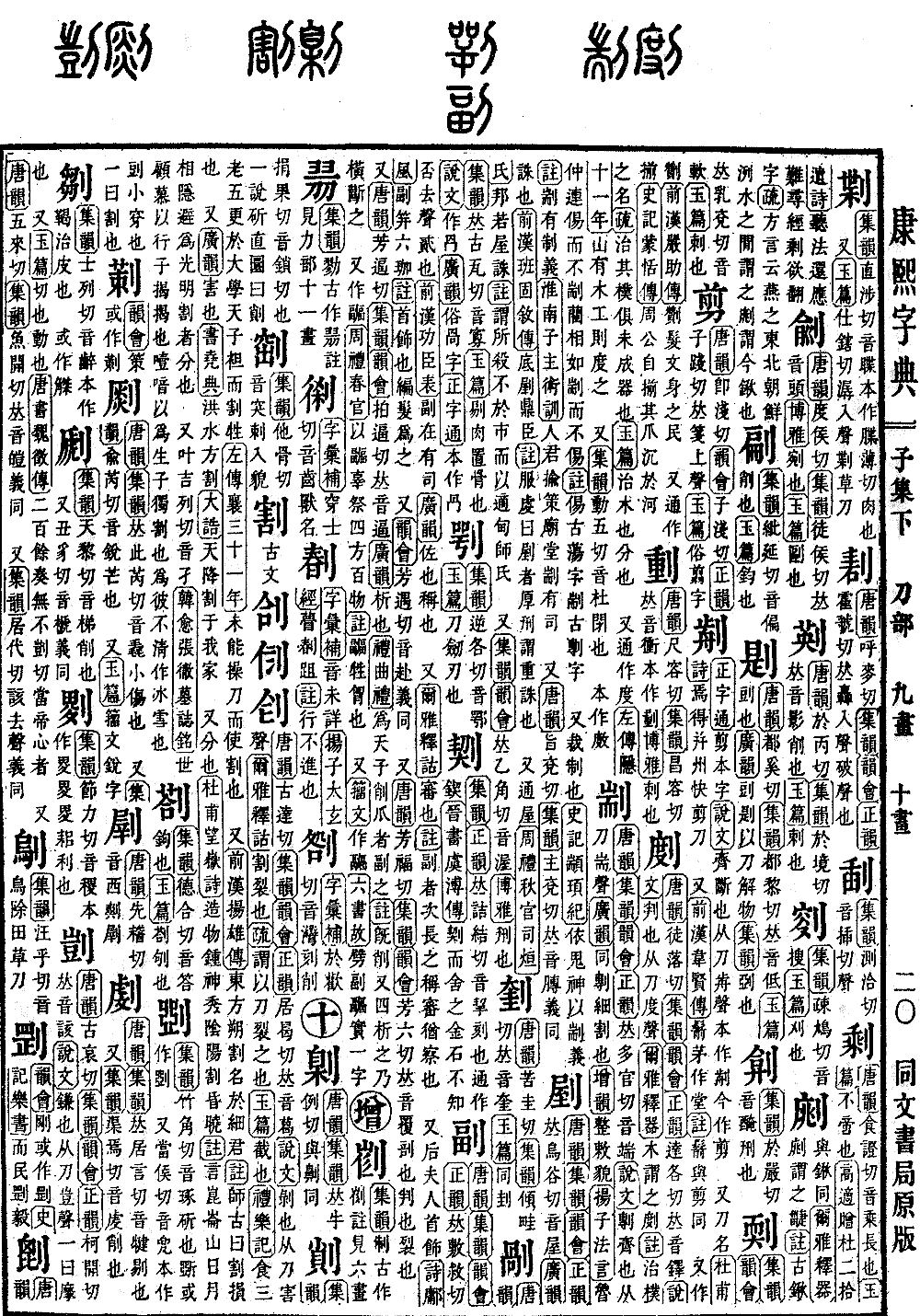
Zi Collection, Page Position: Lower. Radical: Knife (dāo). Kangxi Dictionary stroke count: 12 strokes. Page: 142.
In the Tang Rhymes (Tangyun), the fanqie pronunciation is given as gǔ and āi. In the Collected Rhymes (Jiyun), the Rhyme Assembly (Yunhui), and the Correct Rhymes (Zhengyun), the fanqie pronunciation is given as kē and kāi, sounding the same as gāi.
In the Explaining Graphs and Analyzing Characters (Shuowen Jiezi), it is defined as a sickle. The character structure follows the Radical: Knife (dāo), with qǐ serving as the phonetic component. Another explanation defines it as meaning to rub or friction.
Furthermore, in the Jade Chapters (Yupian), it is explained as meaning to cut or to move.
In the Biography of Wei Zheng in the Book of Tang (Tangshu), it is recorded that among Wei Zheng's more than two hundred memorials to the throne, there was not one that was not incisive and apt, matching the Emperor's intentions.
Additionally, the Tang Rhymes (Tangyun) provides a fanqie pronunciation of wǔ and lái, and the Collected Rhymes (Jiyun) provides a fanqie pronunciation of yú and kāi, sounding the same as ái. The meaning is the same.
The Collected Rhymes (Jiyun) also provides a fanqie pronunciation of jū and dài, pronounced as the word gāi in the departing tone (qùshēng). The meaning is the same.