Xu Collection, Upper Volume
Radical: Metal (jīn)
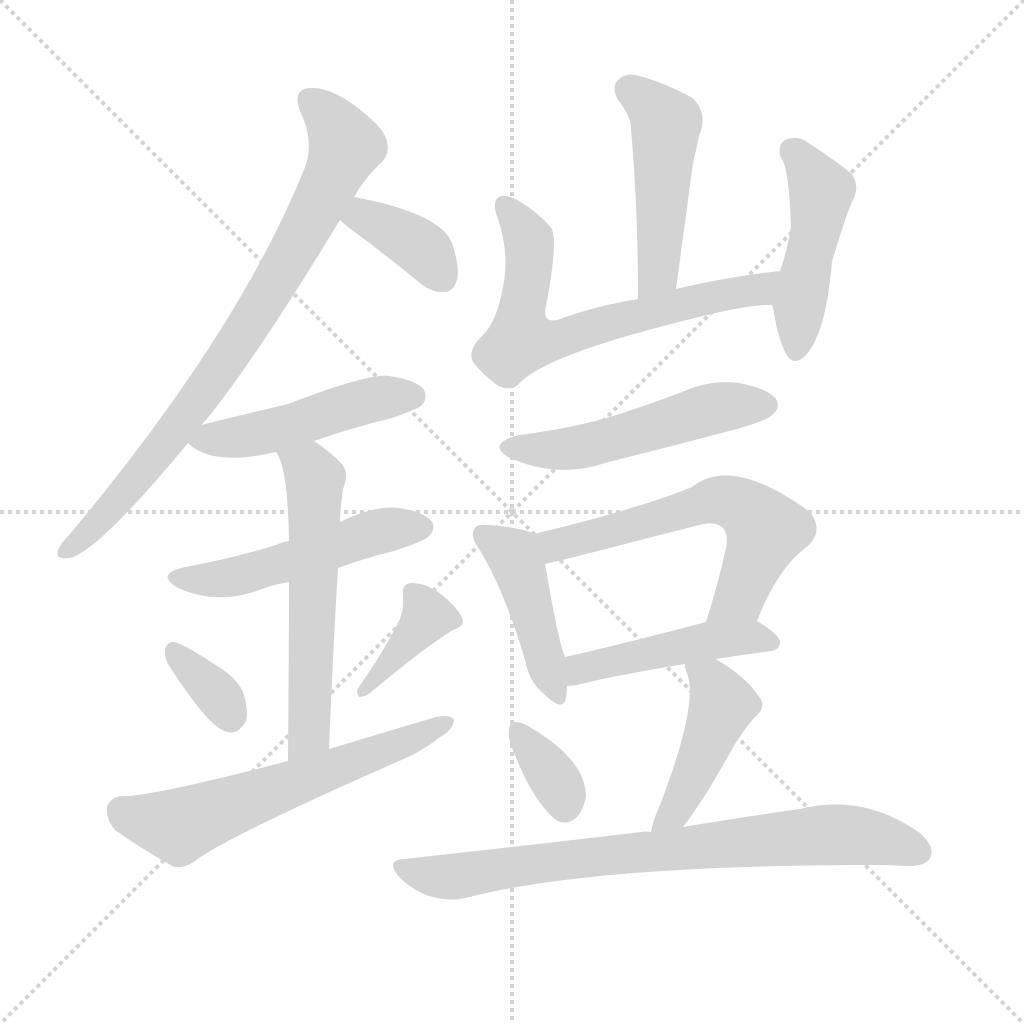
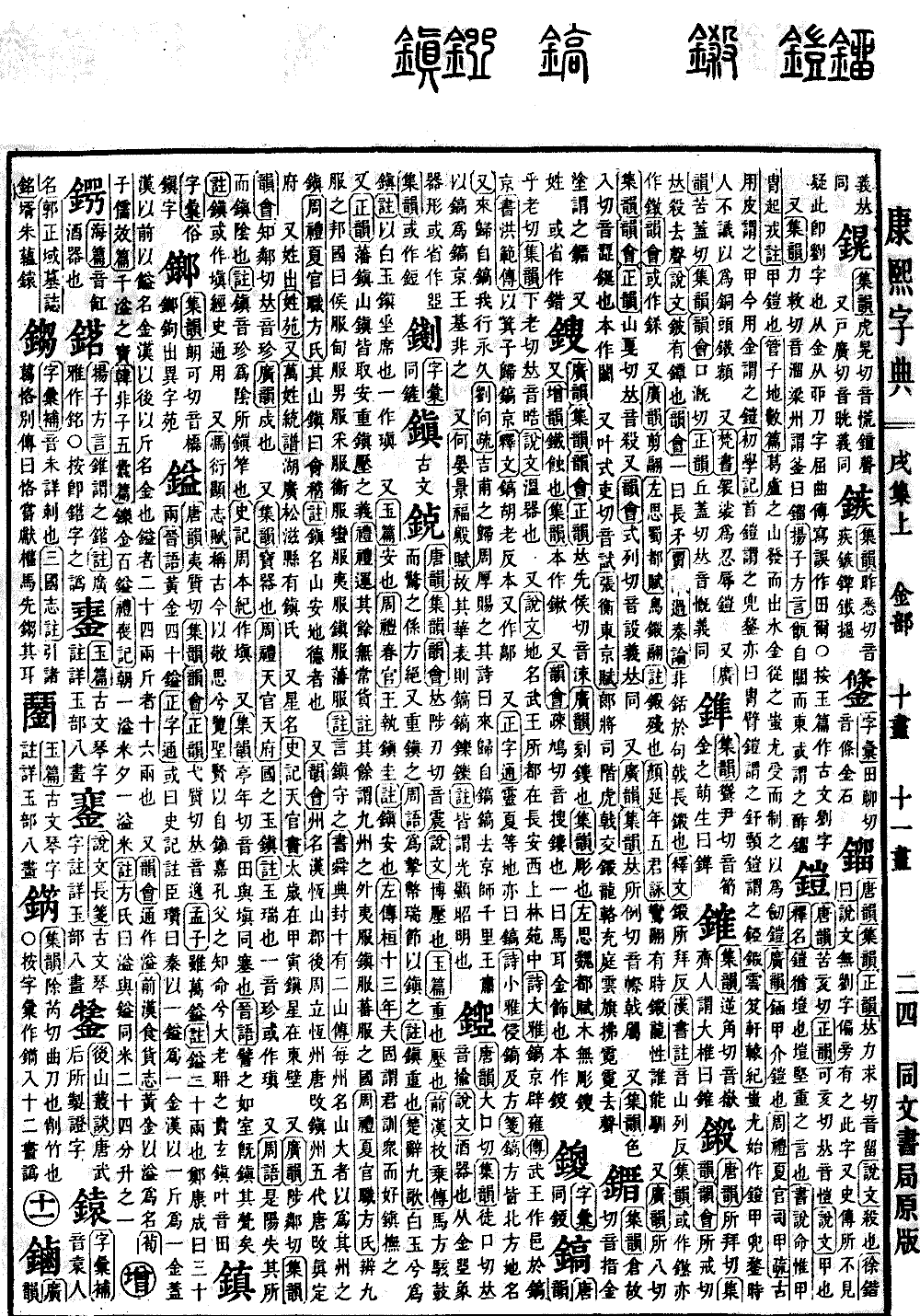
Armor
Kangxi strokes: 18
Page 1318, Entry 05
Pronounced kai (rising tone).
In the Shuowen Jiezi (Explaining Graphs and Analyzing Characters): It means armor.
In the Shiming (Explanation of Names): Kai means the same as kai. Kai is a word for something solid and heavy.
In the Book of Documents (Shujing), Commentary on the statement regarding armor and helmets initiating warfare: Armor is kai.
In the Guanzi (Guanzi), chapter on Earth's Numbers: From Mount Gelu, where springs emerge, metal follows; Chiyou obtained it and fashioned it into swords and armor.
In the Guangyun (Guangyun): Jia means armor or protective gear.
In the Rites of Zhou (Zhouli), Commentary on the Ministry of Summer, Division of Armor: In ancient times, hide was used, which was called jia. Now metal is used, which is called kai.
In the Chuxue Ji (Record of Initial Studies): Head armor is called a helmet, also known as zhou. Arm armor is called a bracer. Neck armor is called a gorget.
In the Yunji (Yunji), Record of the Yellow Emperor: Chiyou first created armor and helmets; people at the time did not recognize them and thought they were bronze heads and iron foreheads.
Also, in Buddhist texts: The kashaya robe is referred to as the armor of patience.
Also, pronounced kai (falling tone). The meaning is the same.