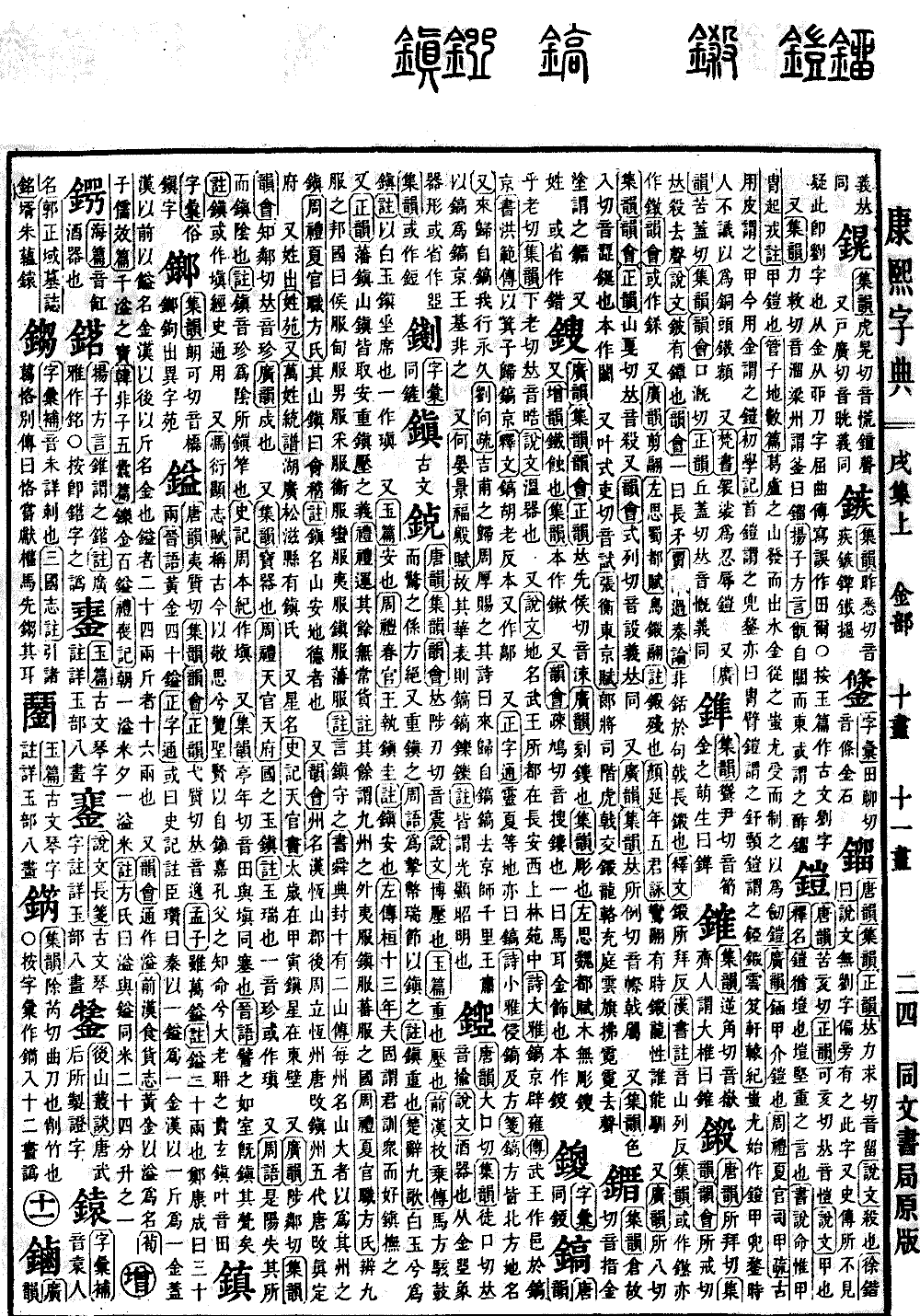
Xu Collection, Upper Volume
Radical: Metal (jīn)
Armor; Kangxi stroke count: 18; Page 1318
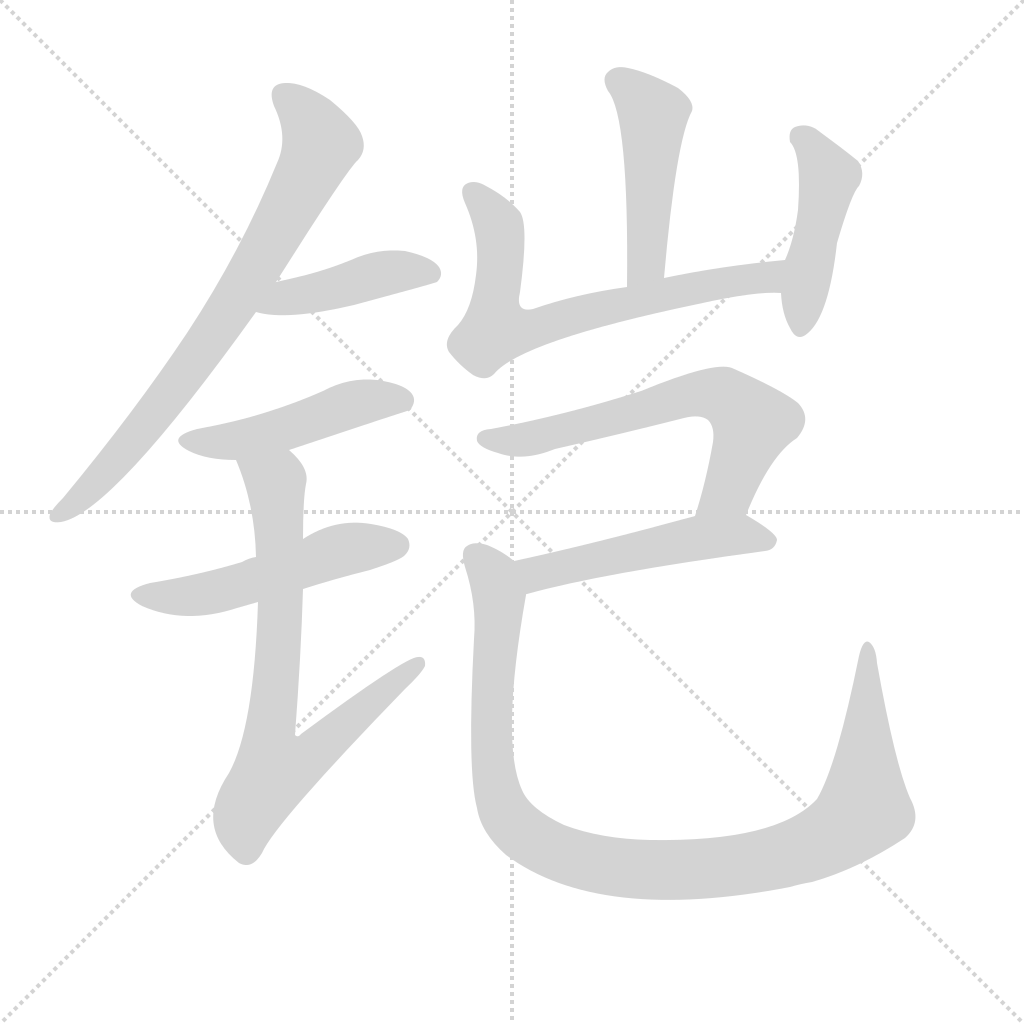
Pronounced kai.
Shuowen Jiezi (Shuowen): Armor.
Shiming (Explication of Names): Armor is like a highland. A highland implies something solid, thick, and heavy.
Book of Documents (Shangshu), Sayings of Yue: Only armor and helmets give rise to warfare. The commentary notes that armor is equivalent to personal protection.
Guanzi (Guanzi), Earth Numbers Chapter: At Mount Gelu, water flows from the mountains and metal emerges with it. Chiyou obtained this and fashioned it to create swords and armor.
Guangyun (Guangyun): Armor is the same as protective covering.
Rites of Zhou (Zhouli), Summer Officials, Administrator of Armor commentary: In ancient times, those made of leather were called armor. Today, those made of metal are called armor.
Chuxueji (Chuxueji): The armor that protects the head is called a helmet, also known as a zhou. Armor that protects the arms is called a han. Armor that protects the neck is called an ya-xia.
Yunji (Yunji), Records of the Yellow Emperor: Chiyou was the first to make armor and helmets. People at that time did not recognize them and thought he had a copper head and iron forehead.
Also, in Buddhist texts, a kasaya robe is the armor of patience.
Also, pronounced kai. The meaning is the same.