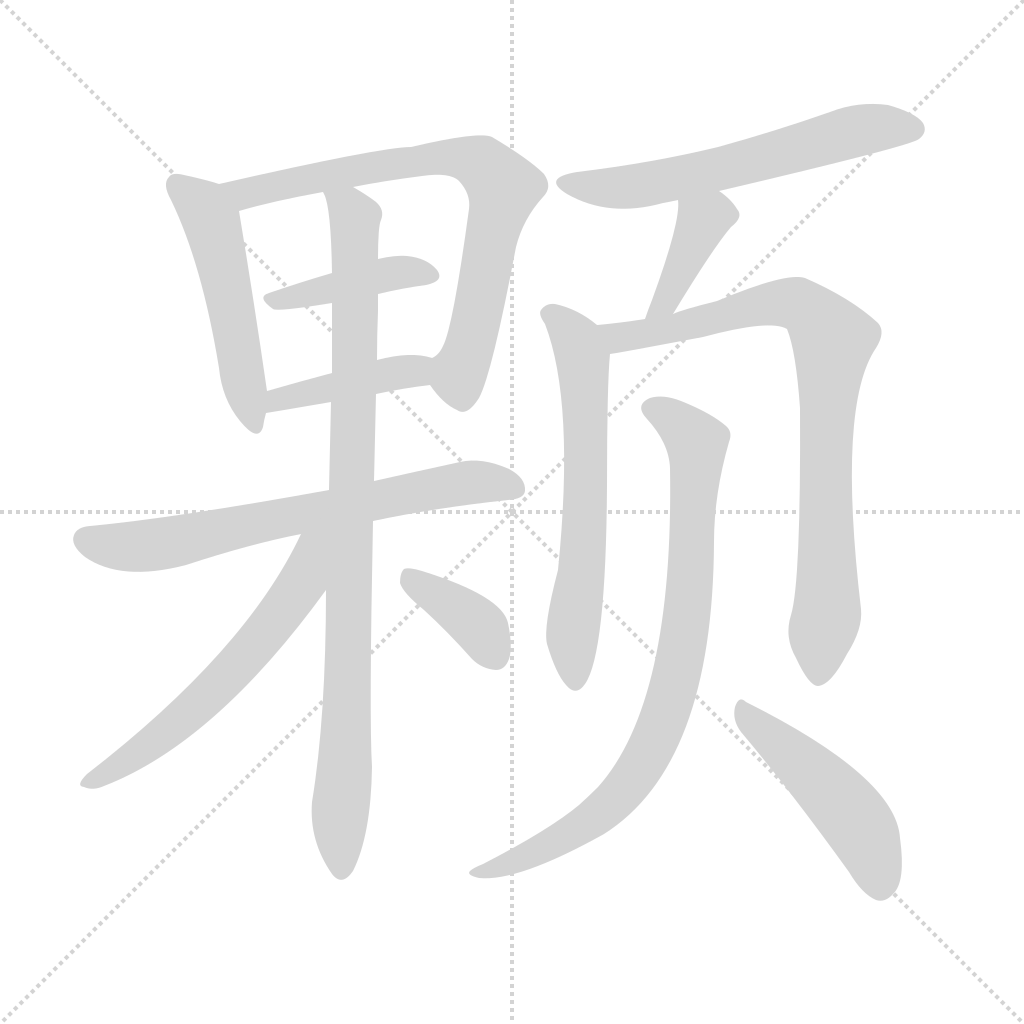
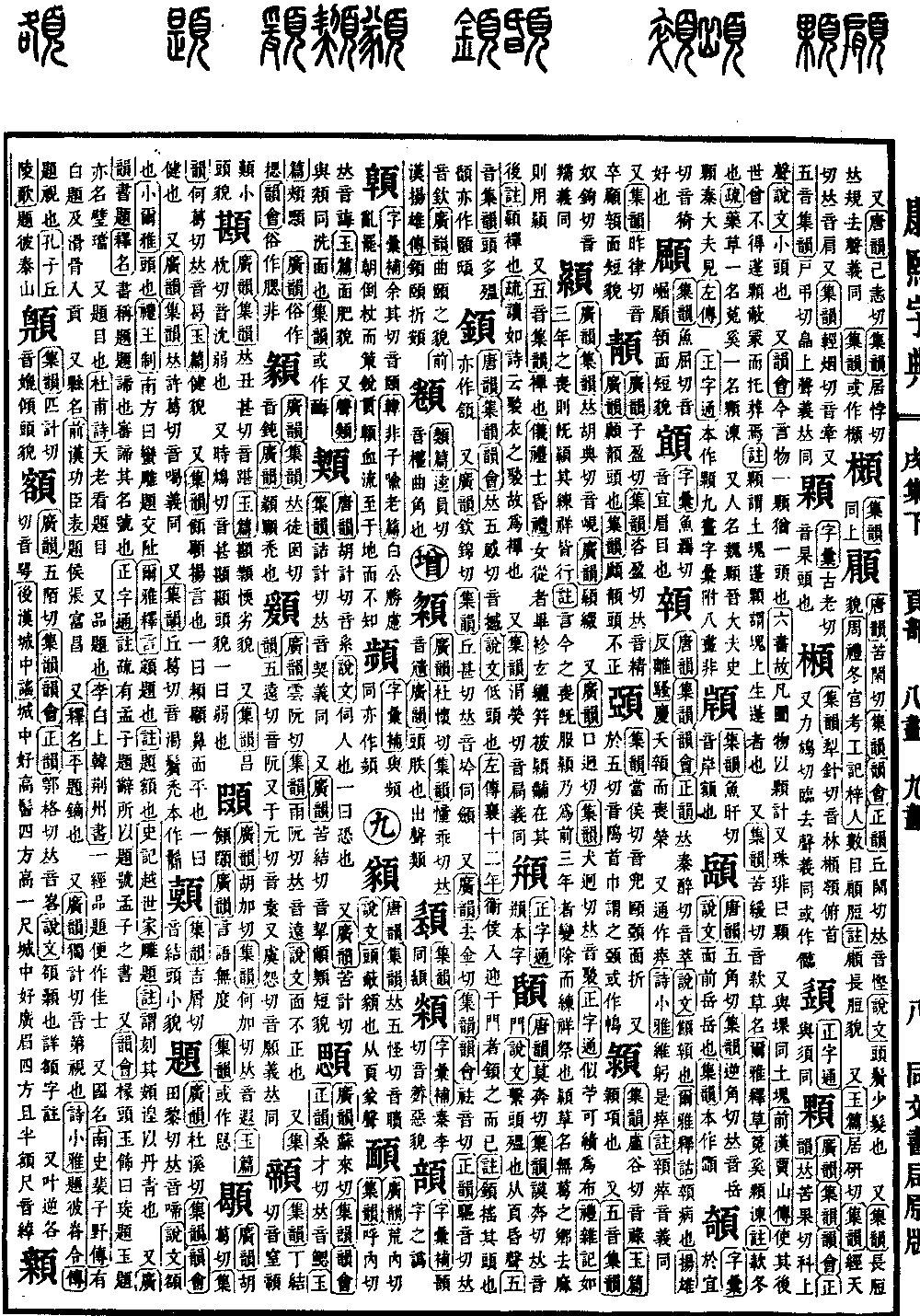
Xu Collection, Lower Volume
Radical: Leaf (yè)
Kangxi Strokes: 17
Page 1406, Entry 03
Pronounced ke (rising tone).
Shuowen Jiezi (Dictionary of Explaining Graphs and Analyzing Characters): Indicates a small head.
Yunhui (Collection of Rhymes): Used for counting individual items, similar to the word for a head.
Liushu Gu (Refinements of the Six Writings): Used to count all round objects. Also used to describe strings of pearls.
Same as the variant form (ke). Refers to a clod of earth.
Book of Han (Hanshu), Biography of Jia Shan: His descendants could not obtain even a clod of earth covered in weeds to cover a grave.
Commentary: The term indicates a clod of earth. The phrase overgrown clod refers to a clod of earth with weeds growing upon it.
Jiyun (Collection of Rhymes): Pronounced kuan (rising tone). Name of a plant.
Erya (Approaching Elegance), Interpretation of Plants: The plant known as tu-xi is also called ke-dong.
Commentary: This is coltsfoot.
Sub-commentary: A type of medicinal herb. Also known as tu-xi or ke-dong.
Personal names: Wei Ke, a grandee of the State of Jin. Shi Ke, a grandee of the State of Qin. Both appear in the Zuo Commentary (Zuozhuan).
Zhengzitong (True Meaning of Characters): The character was originally written as a different form with nine strokes. The Dictionary of Characters (Zihui) incorrectly categorizes it under eight strokes. The original form of the character featured a field symbol above a wood symbol on the left side.