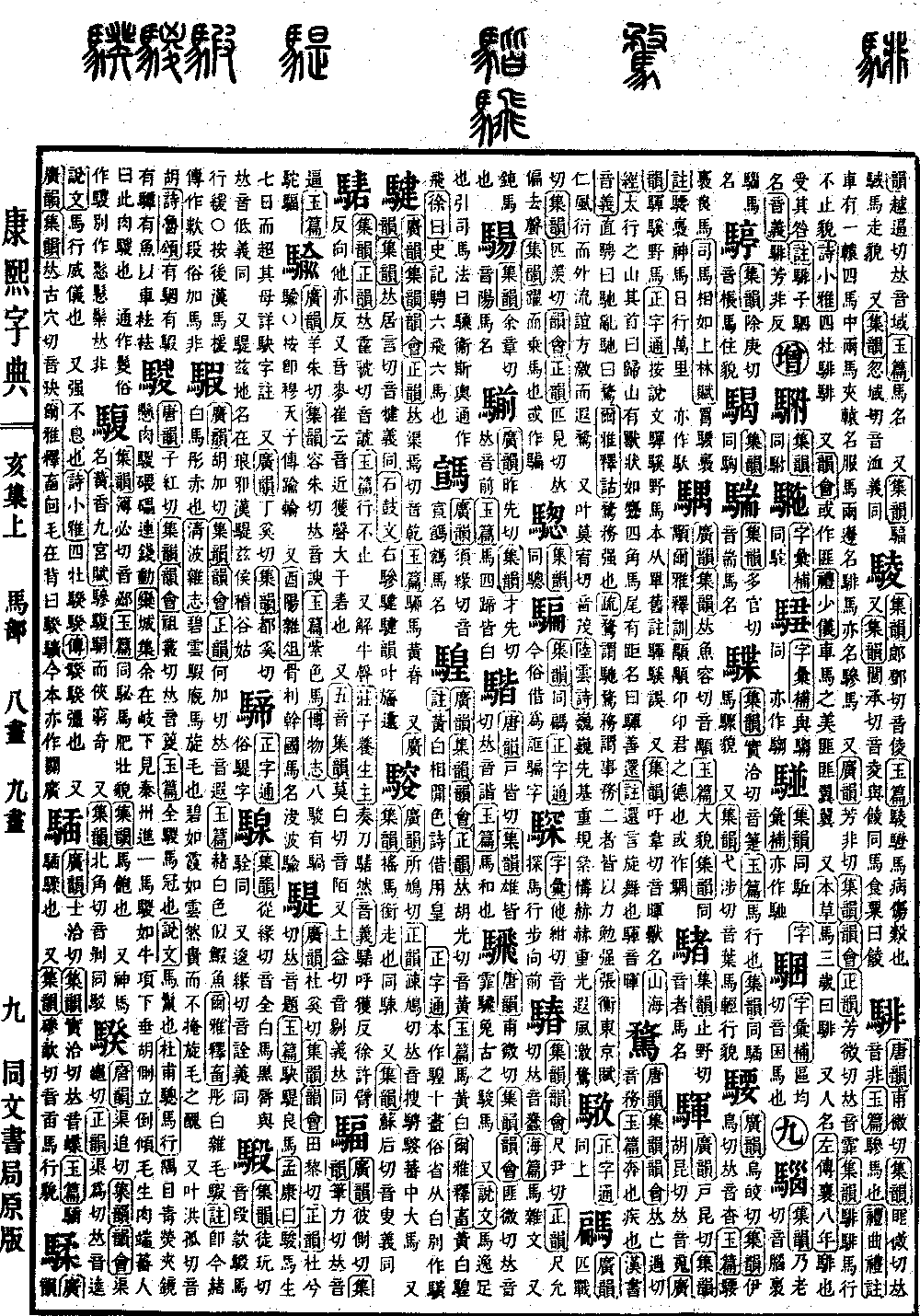
Hai Collection, Upper Volume
Radical: Horse (mǎ)
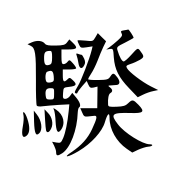
kui
Kangxi strokes: 19
Page 1441, Entry 42
Tang Dynasty Rhymes (Tangyun): Pronounced kui. Collected Rhymes (Jiyun) and Rhyme Anthology (Yunhui): Pronounced kui. Correct Rhymes (Zhengyun): Pronounced kui.
Explaining Graphs and Analyzing Characters (Shuowen): The appearance of a horse moving with martial dignity and solemnity. It also refers to strength and ceaseless movement.
Book of Odes (Shijing), Lesser Odes (Xiaoya): Four public horses, strong and vigorous.
Commentary (Zhuan): Kui-kui means strong.
Wide Rhymes (Guangyun) and Collected Rhymes (Jiyun): Pronounced jue.
Approaching the Standard (Erya), Explaining Domestic Animals (Shichu): A horse with a whorl of hair on its back is called kui. Current versions are also written in a variant form (que).