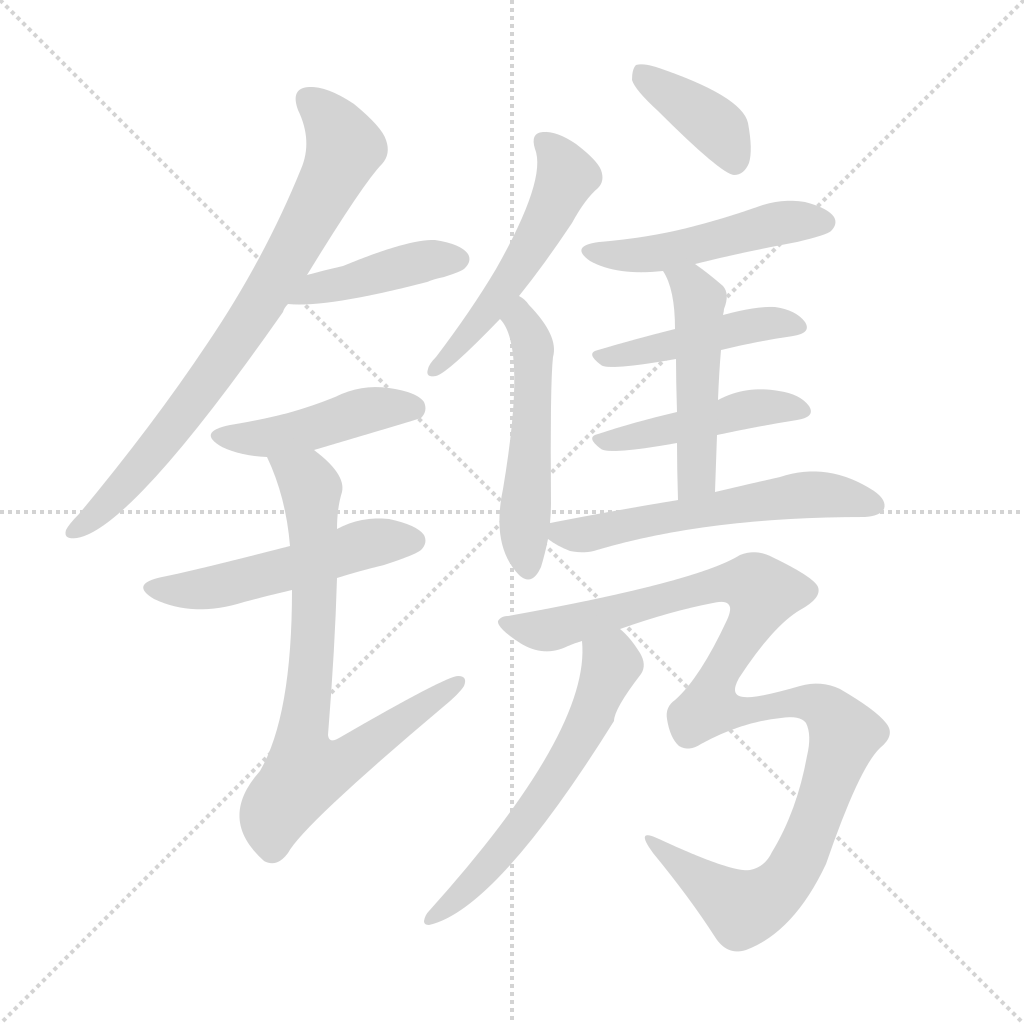
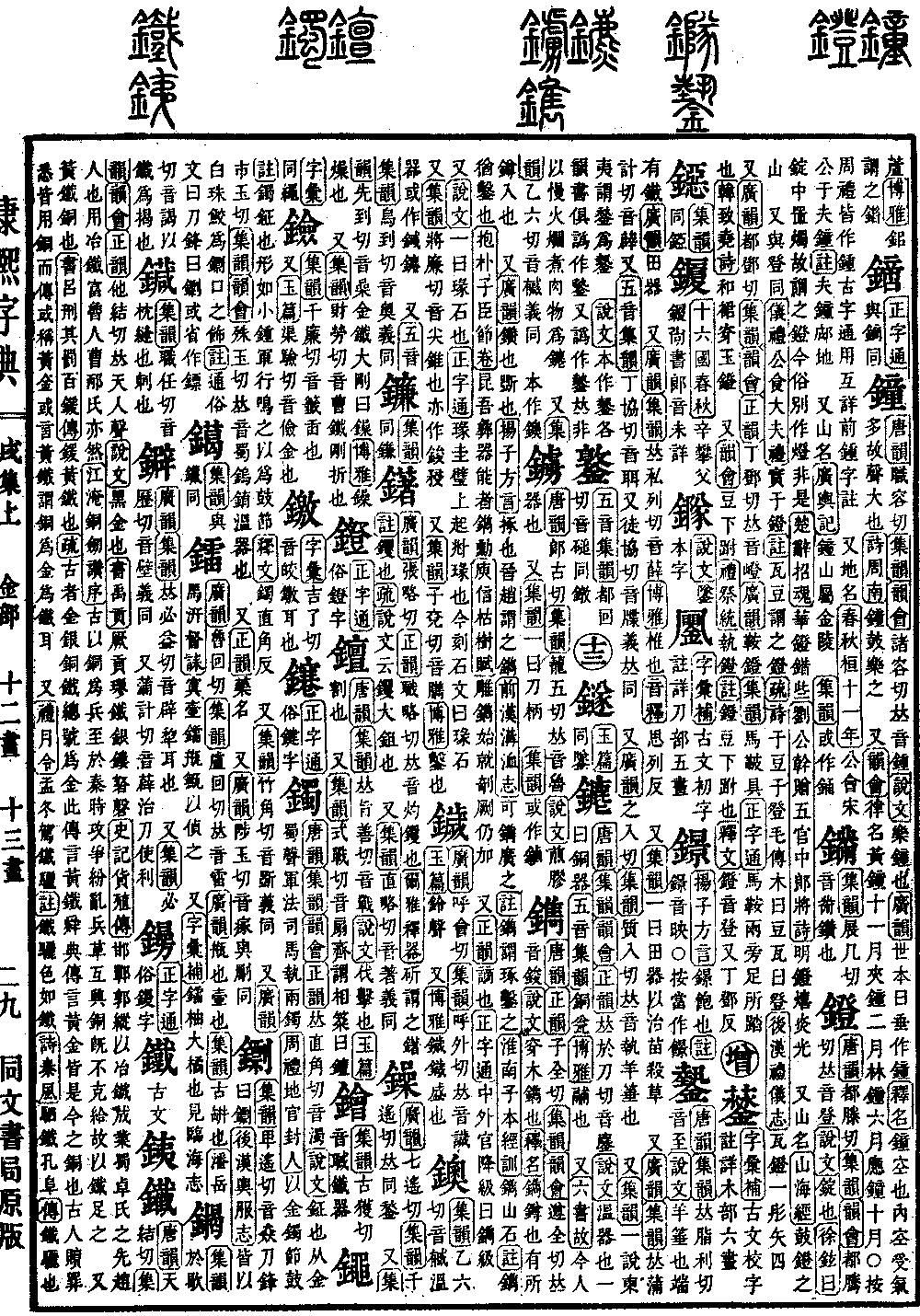
Xu Collection, Upper Volume
Radical: Metal (jīn)
Kangxi strokes: 21
Page 1323, Entry 01
Pronounced juan (level tone). In the Dictionary of Tang (Tangyun) and Correct Rhymes (Zhengyun), it is pronounced juan (level tone); in the Collected Rhymes (Jiyun) and Rhyme Anthology (Yunhui), it is pronounced juan (level tone).
According to the Explanation of Graphs and Analysis of Characters (Shuowen Jiezi), it means to carve into wood. In the Explanation of Names (Shiming), it states that this term refers to carving or incising something into an object. According to the Extensive Rhymes (Guangyun), it means to drill or to hew.
In the Dialects (Fangyan) by Yang Xiong, it means to engrave. In the state of Zhao during the Jin period, this term was used for engraving. In the History of the Former Han (Qianhan Shu), Records of Canals and Irrigation, it states that it can be engraved and widened. The commentary notes that this refers to chiseling and carving. In the Huainanzi, Records of the Fundamental Principles, it mentions carving into mountain stone. The commentary notes that this is synonymous with chiseling. In the Baopuzi, Volume on Ministerial Conduct, it mentions that the skilled can engrave meritorious deeds onto bronze vessels. In the Poem on the Withered Tree by Yu Xin, it notes that carving and chiseling had just been completed, and the tools were still being applied.
It also means to demote. The Zhengzitong states that when civil or military officials are demoted in rank, it is called juan.
According to the Explanation of Graphs and Analysis of Characters (Shuowen Jiezi), another definition is to carve stone. The Zhengzitong states that a raised pattern on a jade tablet is called zhuan. Today, carving text into stone is called zhuan.
It is also pronounced jian (level tone). It means to chisel. It is also written in a variant form.
It is also pronounced juan (rising tone). According to the Guangya, it means to chisel.