Si Collection, Upper Volume
Radical: Water (shuǐ)
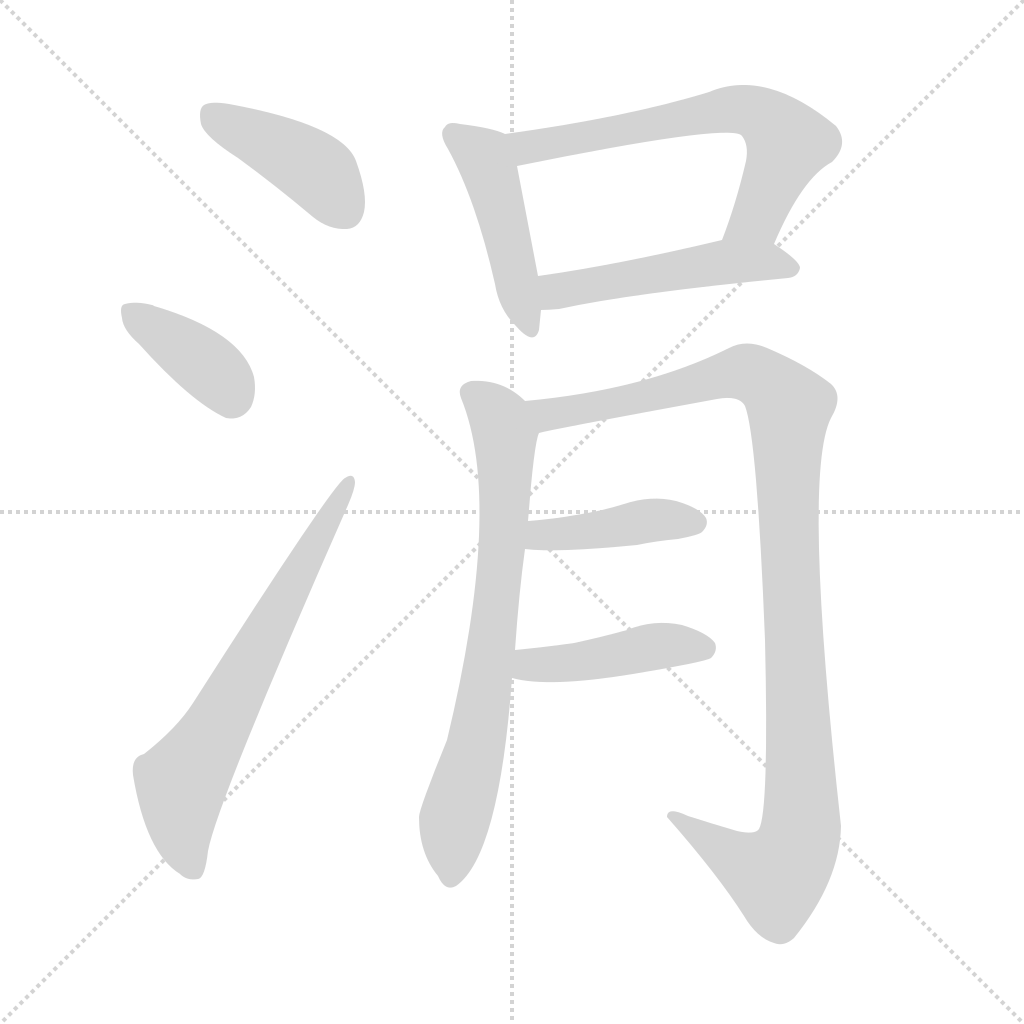
涓
Kangxi Strokes: 11
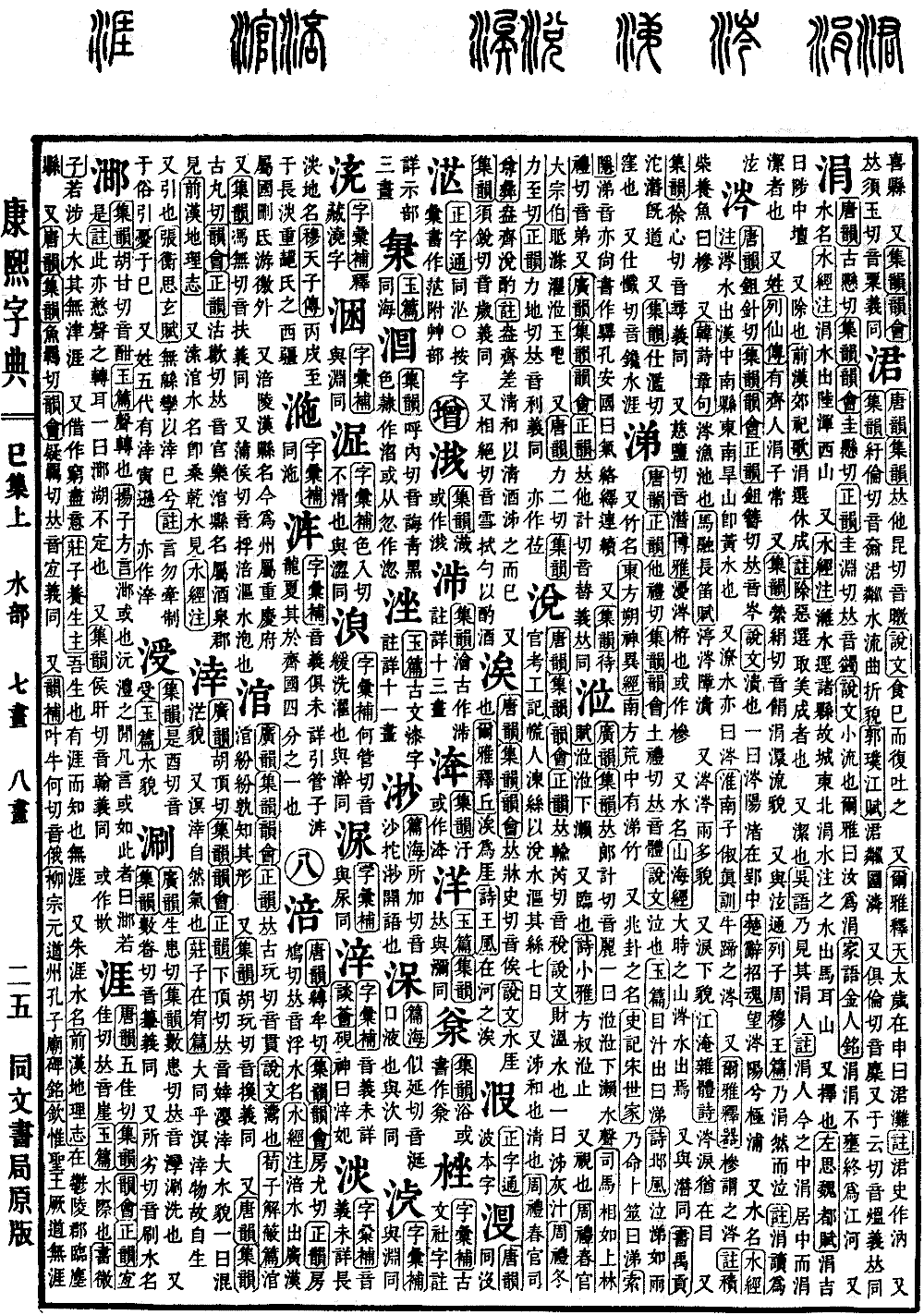
Page 627, Entry 02
Pronounced juan.
According to the Explaining Graphs and Analyzing Characters (Shuowen), it refers to a small stream. The Progressing Odes (Erya) states that the Ru River is called a Juan. The Family Sayings of Confucius (Kongzi Jiayu), Inscription on the Metal Man, states: Small trickles if not obstructed, eventually become rivers and seas.
Also, the name of a river. According to the Commentary on the Water Classic (Shuijing Zhu), there is a Juan River. It originates from the western mountains of Luhun. Also, according to the Commentary on the Water Classic, the Wei River passes the old city of Zhu County, and to the northeast, the Juan River flows into it; the water originates from Ma'er Mountain.
Also, to select. Zuo Si in his Rhapsody on the Capital of Wei (Wei Du Fu) writes: Selecting an auspicious day, he ascended the central altar.
Also, to remove. In the Han Dynasty's Songs for Suburban Sacrifices (Jiaosi Ge), it says: Selecting and weeding out the bad to choose the beautiful and accomplished. The commentary explains: This means to remove the evil and select the beautiful and accomplished.
Also, to be clean. In the Discourses of the States (Guoyu), Records of Wu, it says: Then he saw his clean attendant. The commentary explains: A clean attendant, or zhongjuan, is one who dwells in the center and is clean and pure.
Also, a surname. In the Biographies of Immortals (Liexian Zhuan), there is a Qi man named Juan Ziqu.
Also, according to the Collected Rhymes (Jiyun), pronounced xuan. Juanhuan describes the appearance of flowing water.
Also, interchangeable with xuan. In the Liezi, Zhou Wang Chapter, it states: Then he wept xuanran. The commentary notes: Juan is to be read as xuan.