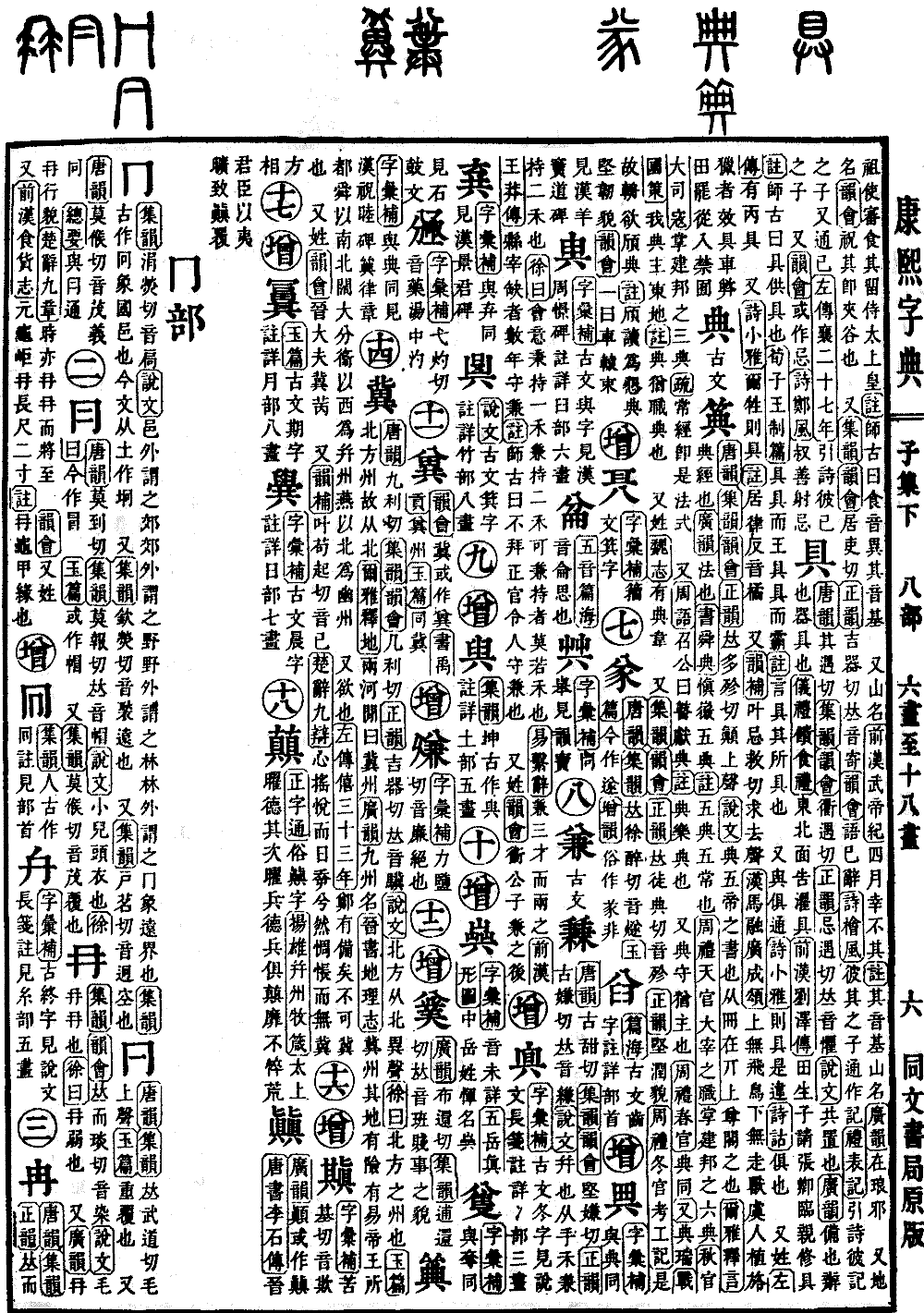
Zi Collection, Page Position: Lower
Radical: Eight (bā)
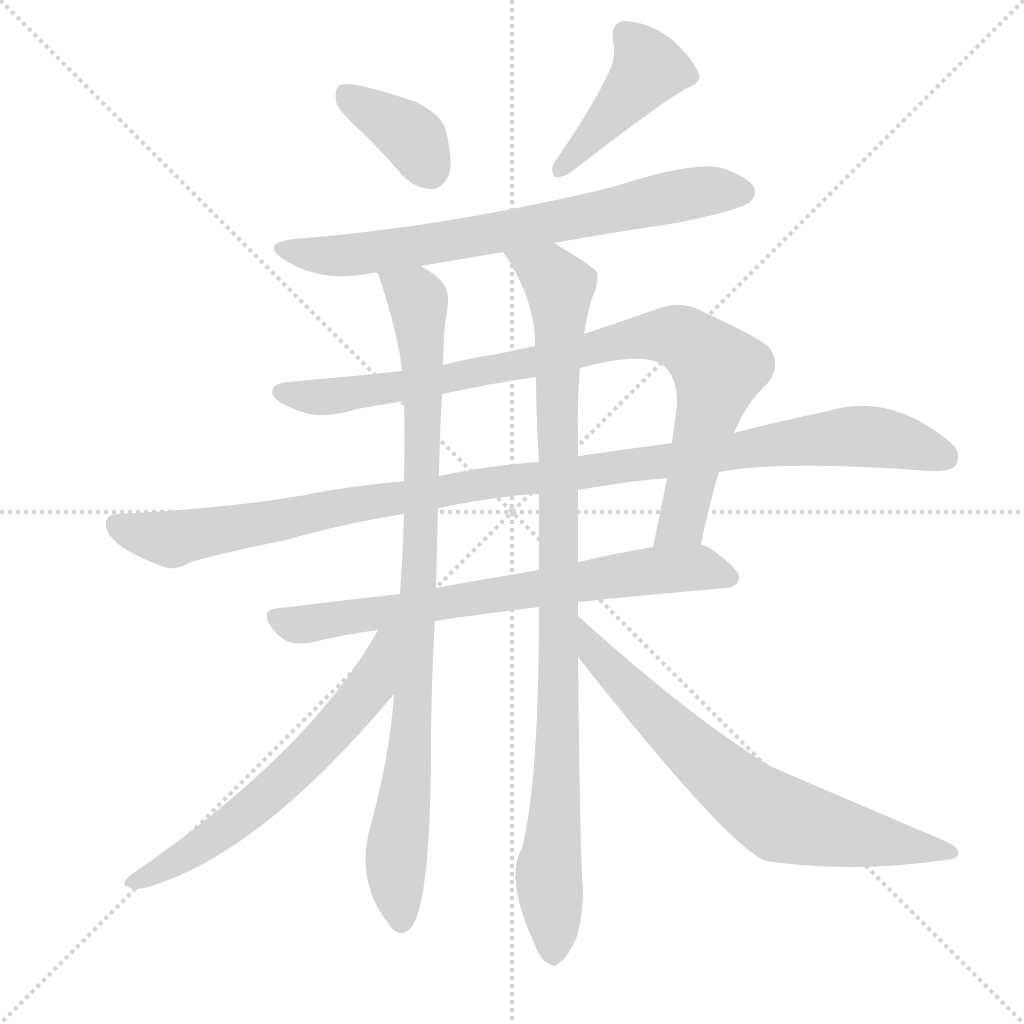
jiān; Kangxi stroke count: 10; Page number: 128, entry 11
Ancient text. According to Tang Rhymes (Tángyùn), pronounced gǔtiánqiè. According to Collected Rhymes (Jíyùn), Rhyme Compendium (Yùnhuì), and Correct Rhymes (Zhèngyùn), pronounced jiānxiánqiè. The sound is jiān.
From Explanations of Graphs (Shuōwén Jiězì): To combine. The character is formed from the components hand (shǒu) and grain (hé). It depicts holding two stalks of grain simultaneously. Xu Kai (Xú Kǎi) says: It is an associative compound character. Bǐng means to hold one stalk of grain, while jiān means to hold two stalks of grain. Among things that can be held simultaneously, none are better than grain.
From the Great Treatise (Xì Cí) of the Book of Changes (Yìjīng): "It combines the three powers (heaven, earth, and humanity) and makes them two."
From the Biography of Wang Mang (Wáng Mǎng Zhuàn) in the Book of Han (Hànshū): "When a county magistrate position was vacant, for several years, a superintendent would act concurrently." The commentary by Yan Shigu (Yán Shīgǔ) states: "One was not appointed to a regular official position but was made to supervise concurrently."
Also a surname. According to Rhyme Compendium: Descendants of Gongzi Jiān of Wey.