You Collection, Upper Volume
Radical: Speech (yán)
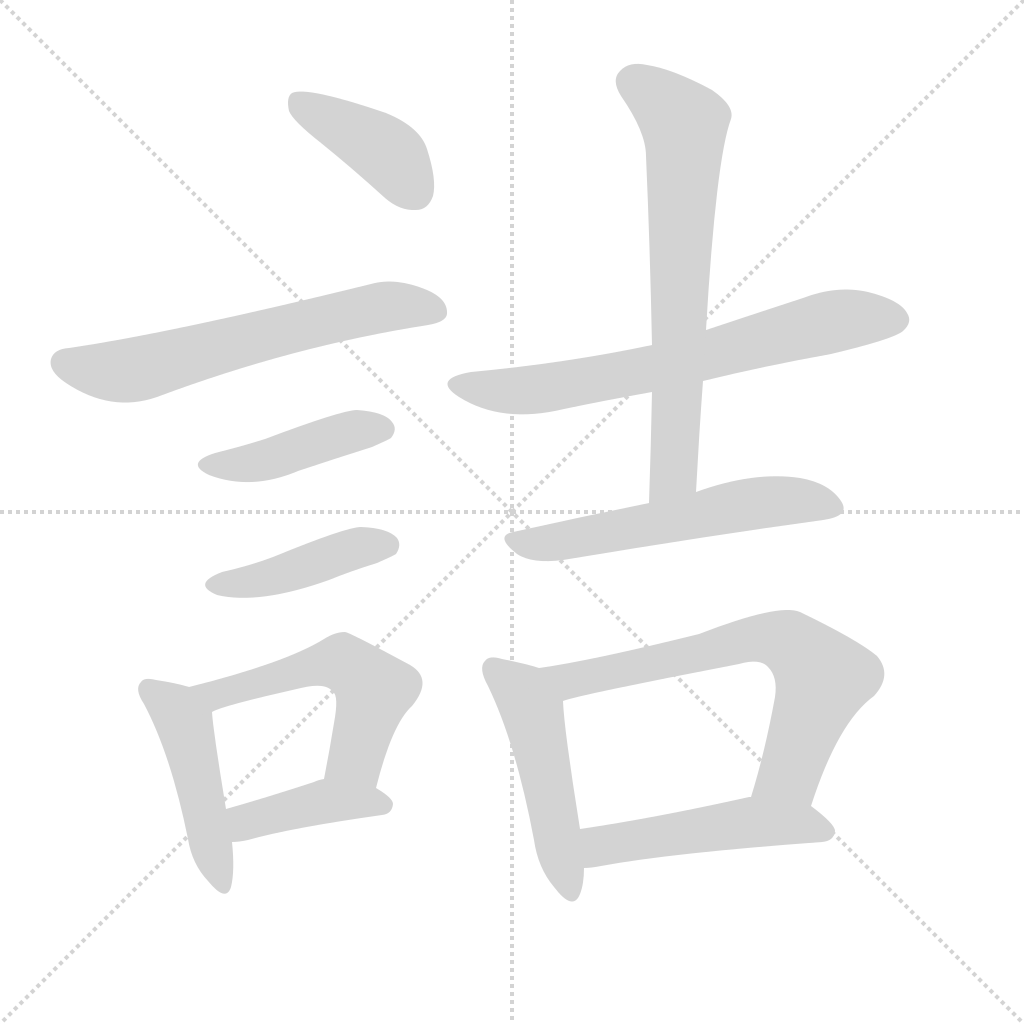
詰
Kangxi strokes: 13
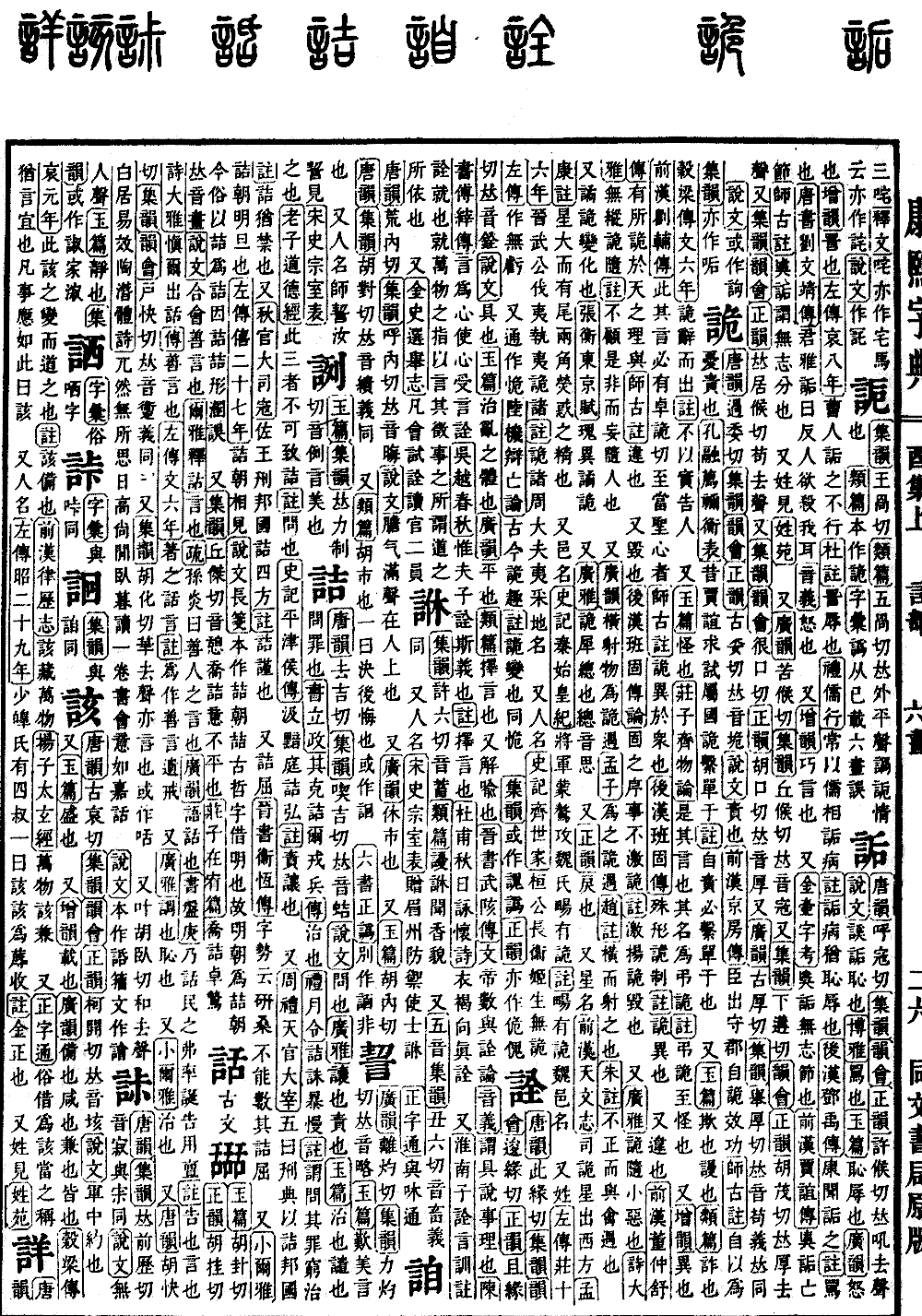
Page 1158, Entry 09
Tang Rhymes (Tangyun): Pronounced jie
Collection of Rhymes (Jiyun): Pronounced jie
Shuowen Jiezi: To interrogate.
Broad Elegant (Guangya): To blame, to rebuke.
Jade Chapters (Yupian): To manage, to reprimand, to question regarding a crime.
Book of Documents (Shujing): He can manage your weapons and troops. Commentary: To manage.
Book of Rites (Liji): Interrogate and punish the violent and the slow. Commentary: This means to question their crimes and punish them thoroughly.
Laozi: Dao De Jing: These three things cannot be pressed for an answer. Commentary: To question.
Records of the Grand Historian (Shiji): Ji An rebuked Hong in the courtyard. Commentary: To blame and rebuke.
Rites of Zhou (Zhouli): The fifth is the codes, used to restrict the states. Commentary: Jie means to prohibit.
Rites of Zhou (Zhouli): Assist the king in the states, and warn the four quarters. Commentary: Jie means to be cautious.
Also, convoluted. Jin History (Jinshu): The Form of Characters says: Yan and Sang could not count its convoluted strokes.
Little Erya: Jie zhao means the next morning.
Zuo Tradition (Zuo Zhuan): We shall meet tomorrow morning.
Shuowen Changjian: Originally written as zhe zhao. Zhe is an ancient character for wise. It borrows the meaning of bright. Therefore, the next morning is called zhe zhao. Modern customs use jie for zhe, due to the confusion of the shapes of zhe and jie, which is an error.
Collection of Rhymes (Jiyun): Pronounced qi
Qiao jie: A feeling of resentment.
Zhuangzi: Qiao jie zhuo zhi.