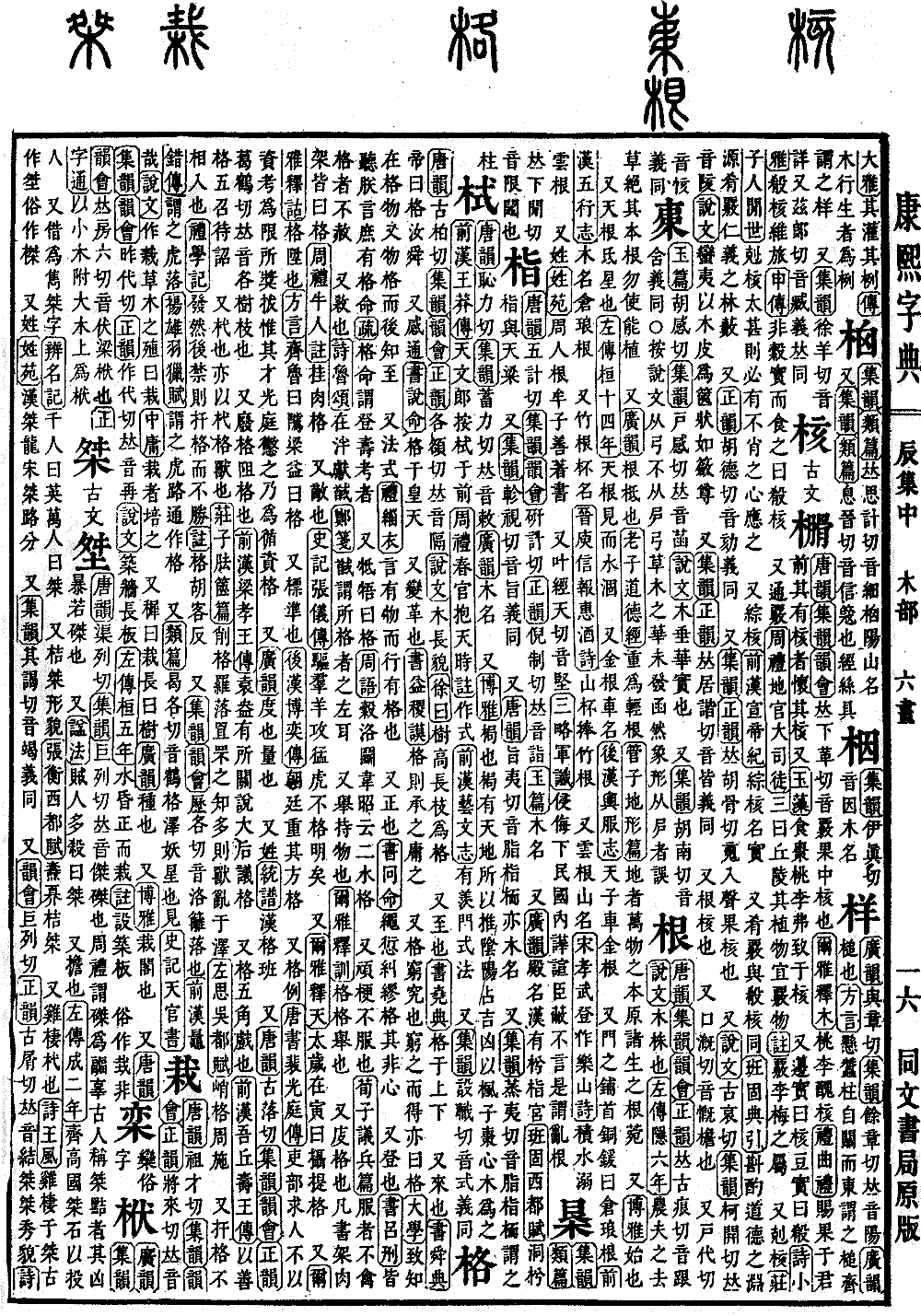
Chen Collection, Middle Volume
Radical: Tree (mù)
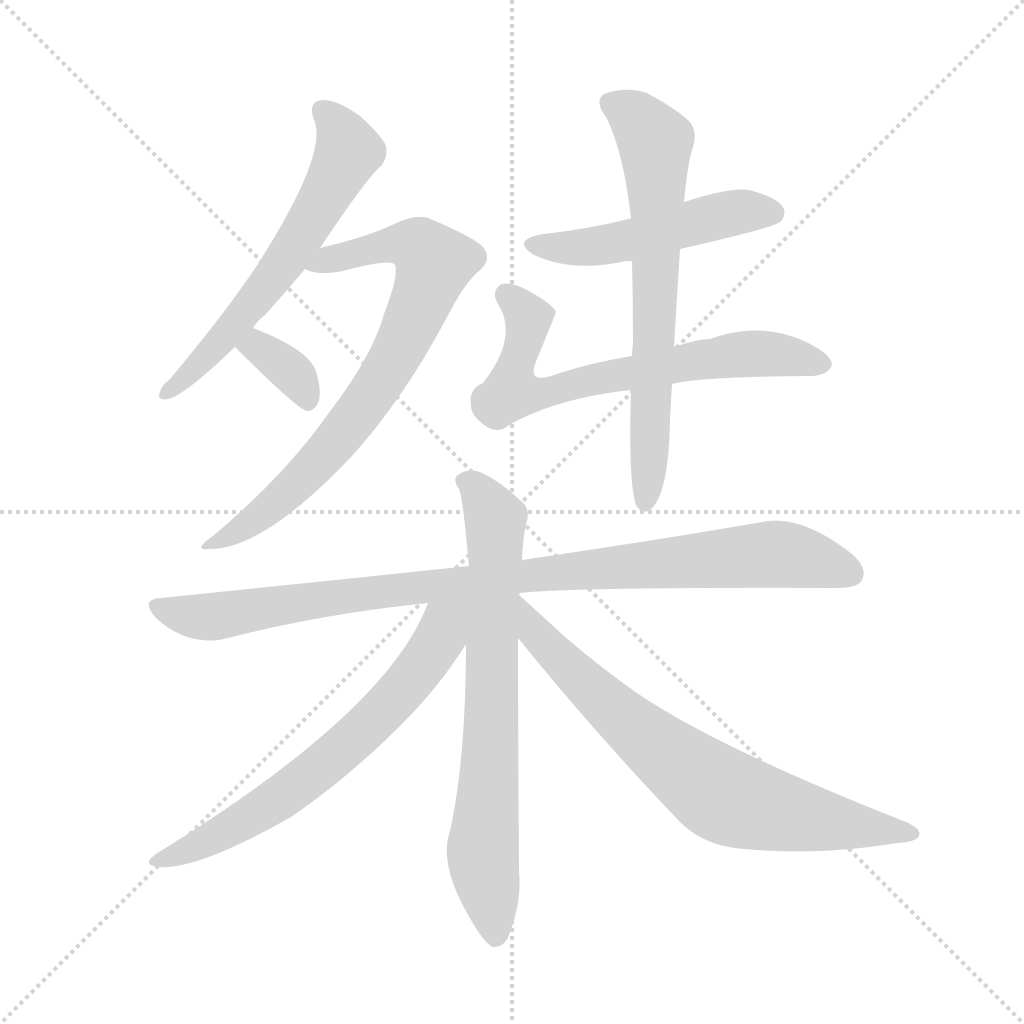
桀
Kangxi strokes: 10
Page 524, Entry 15
Pronounced jie. Refers to a cruel punishment involving the dismemberment of the body. In the Rites of Zhou (Zhouli), this punishment is referred to as "pigu" (an ancient punishment involving the splitting of the body). Ancients referred to cruel and cunning people as "jie" because their cruelty was likened to this dismemberment. Additionally, according to the Posthumous Titles Law (Shifa), killing many innocent people is referred to as "jie." It also carries the meaning of "to lift" or "to hold up." In the Commentary of Zuo (Zuozhuan), during the second year of Duke Cheng, Gao Gu of the State of Qi lifted a stone to throw at the enemy. It is also used as a loan character for the "jie" in "junjie" (outstanding talent). The Bianmingji records: one who stands out among a thousand is called "ying," while one who stands out among ten thousand is called "jie." It also appears as "jujie," describing an appearance that is tall and protruding. Zhang Heng's Western Metropolis Rhapsody (Xijing fu) contains the phrase "taoa jujie." It also refers to a wooden perch where chickens roost. The Book of Odes (Shijing), in the Odes of Wang, contains the line "chickens roost on the perch." The ancient form was written as (variant form), and it is commonly written as (variant form). It is also used as a surname. The Surname Garden (Xingyuan) records that there were individuals named Jie Long in the Han dynasty and Jie Lufen in the Song dynasty. Also, according to the Collected Rhymes (Jiyun), it is pronounced jie (falling tone), with the same meaning. According to the Rhyme Meetings (Yunhui) and Correct Rhymes (Zhengyun), it is pronounced jie (entering tone). "Jiejie" describes the lush appearance of vegetation. The Book of Odes (Shijing), in the Odes of Qi, contains the line "the foxtail millet is lush and tall."
Textual research: In the Commentary of Zuo (Zuozhuan), second year of Duke Cheng, the original text "Qi Gao Guo jie shi yi tou ren" has been corrected to "Qi Gao Gu" based on reliable editions. In Zhang Heng's Western Metropolis Rhapsody (Xijing fu), the title has been corrected from "Western Capital Rhapsody" to "Western Metropolis Rhapsody" based on reliable editions.