Zi Collection, Page Position: Lower
Radical: Strength (lì)
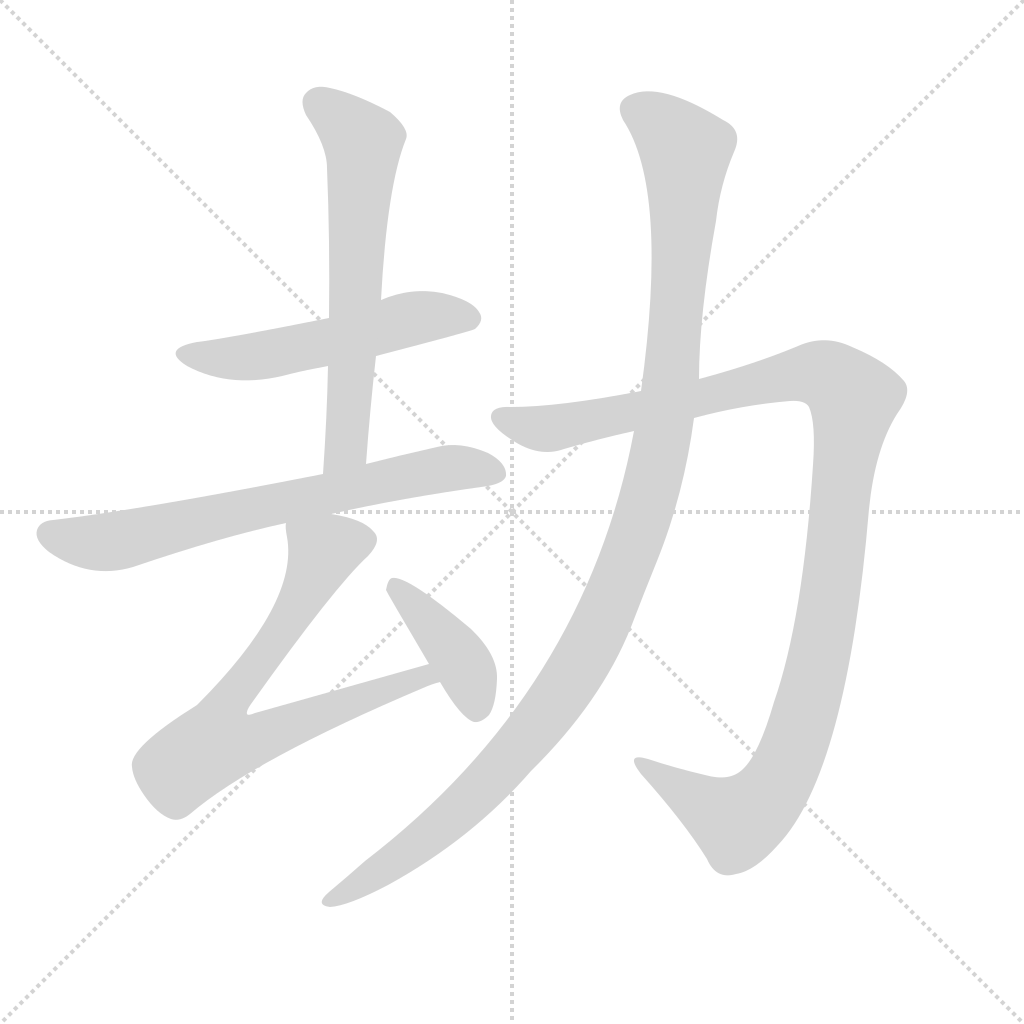
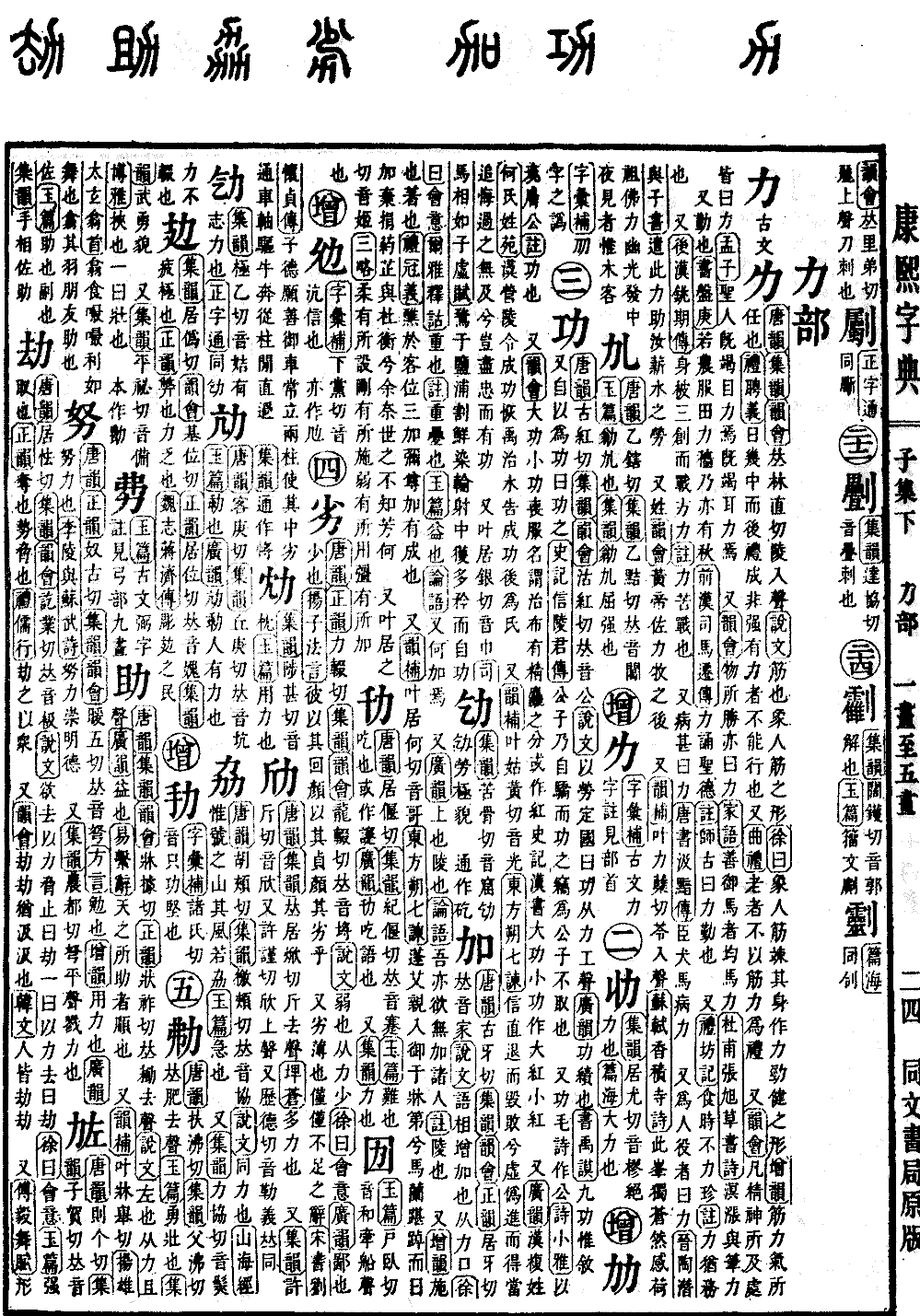
Character: 劫; Kangxi stroke count: 7; Page: 146, 30th entry
Tang Rhyme (Tángyùn): jù qiè qiè. Collection of Rhymes (Jíyùn), Rhyme Compendium (Yùnhuì): qì yè qiè. Sound: jí.
Shuowen Jiezi (Shuōwén): To want to leave but be coerced and prevented by force is called jié. Another explanation is that to compel someone to leave by force is called jié.
Xu (Xú Xuán) says: This is an associative compound character.
Jade Chapters (Yùpiān): To seize by force.
Correct Rhymes (Zhèngyùn): To plunder and coerce with power.
Book of Rites (Lǐjì), Conduct of the Scholar: To use the multitude to coerce him.
Also, Rhyme Compendium (Yùnhuì): jiéjié, like an urgent appearance.
Han Yu's Works (Hán Wén): People were all anxious and uneasy.
Also, Rhapsody on Dance (Wǔfù) by Fu Yi: The forms are harmonious, the spirits are coordinated, leisurely and self-content, without coercion. The commentary says: It describes being graceful and unconstrained by each other.
Also, hào jié refers to the grand staircase of a palace. Du Fu's "Poem on Jade Terrace Pavilion": The grand staircase was built by the king; on the flat terrace, I visit ancient sites.
Rhyme Compendium (Yùnhuì): Also written in a variant form pronounced jié. Also written in another variant form pronounced jié.