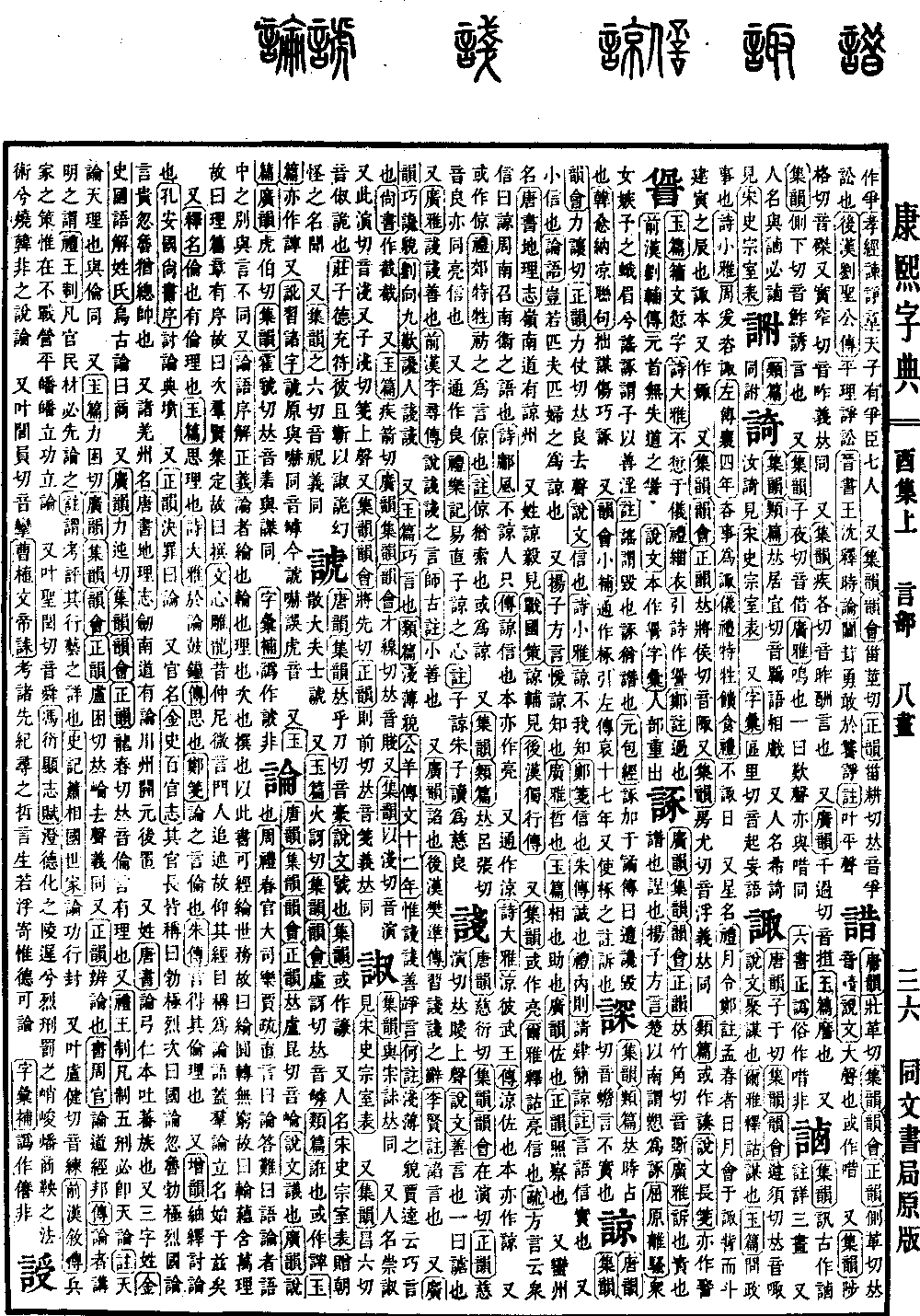
You Collection, Upper Volume
Radical: Speech (yán)
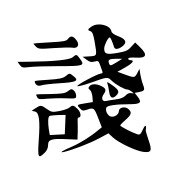
Jian
Kangxi strokes: 15
Page 1168, Entry 10
Pronounced jian (rising tone).
According to the Explaining Graphs and Analyzing Characters (Shuowen jiezi), it refers to being skilled in speech. One source suggests it refers to jesting.
Also, according to the Expanded Elegant (Guangya), jian jian denotes beauty.
In the Biography of Li Xun in the History of the Former Han (Qianhan shu), it mentions the words of jian jian. The commentary by Shigu notes this refers to minor merits.
Also, according to the Expanded Rhymes (Guangyun), it refers to sycophancy.
In the Biography of Fan Zhun in the History of the Later Han (Houhan shu), it mentions the rhetoric of jian jian. The commentary by Li Xian notes this refers to flattering words.
Also, according to the Expanded Rhymes, it describes the appearance of being skilled at slandering. In the Nine Laments (Ji tan) by Liu Xiang, it mentions the slanderer is jian jian.
Also, according to the Jade Chapters (Yupian), it refers to flowery speech.
According to the Classified Chapters (Leipian), it describes a superficial appearance.
In the Commentary of Gongyang (Gongyang zhuan) for the twelfth year of Duke Wen, it states: only jian jian and good at calming words. The commentary by He notes it means a superficial appearance. Jia Kui states: it refers to artful speech. In the Classic of History (Shangshu), it is written as jie jie.
Also pronounced jian (falling tone).
Also pronounced yan (rising tone).
Also pronounced qian (rising tone).
Also pronounced jian (rising tone).
Also pronounced jian (flat tone).
The meanings are the same.