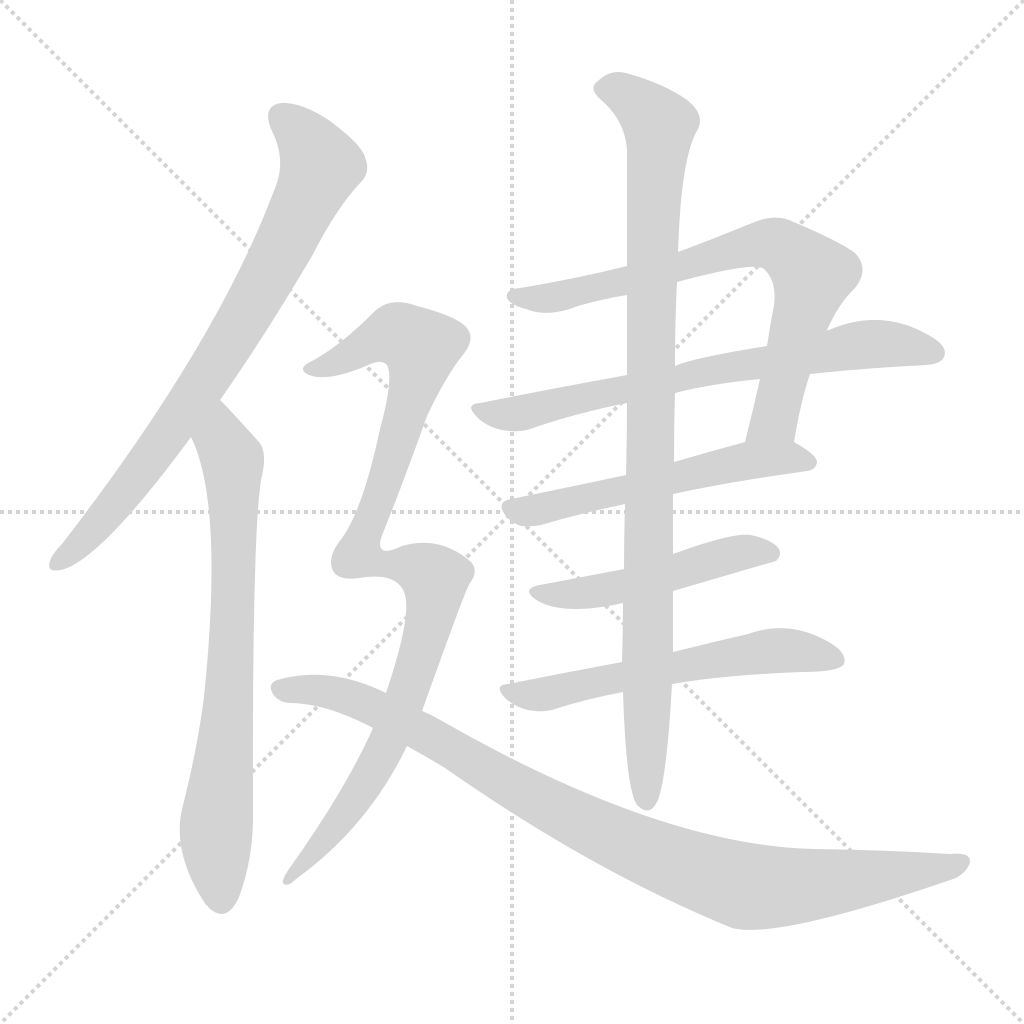
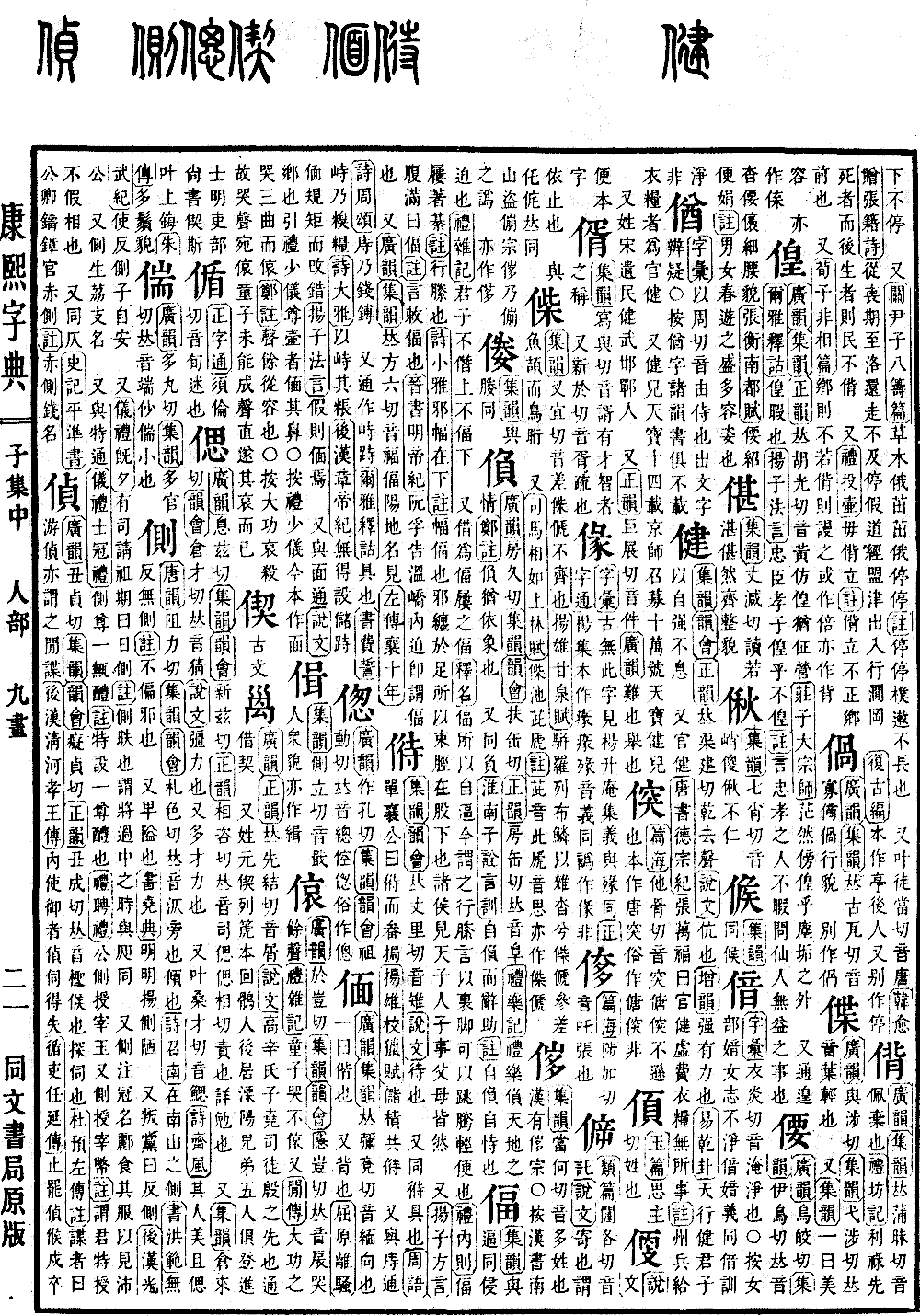
Zi Collection, Middle Volume. Radical: Person (rén). Character: Jian. Kangxi Stroke Count: 11. Page Number: Page 111, Number 11.
According to the Collected Rimes (Jiyun), the Rhyme Summary (Yunhui), and the Correct Rhymes (Zhengyun), the pronunciation is derived from the qu-jian fanqie (a method of indicating pronunciation), read as the departing tone of the sound qian.
Explaining Graphs and Analyzing Characters (Shuowen Jiezi) defines it as kàngjiàn (strong and vigorous). The Supplement to the Rhymes (Zengyun) indicates it refers to being strong and powerful.
The movement of heaven is full of power and vigor; the gentleman, accordingly, strengthens himself without ceasing — Book of Changes (Yijing).
It also refers to guānjiàn (official soldiers). The Book of Tang (Tangshu) in the Annals of Emperor Dezong records Zhang Wanfu stating that official soldiers consume clothing and grain in vain without practical use. A note explains that soldiers provided with clothing and food by the prefectural government are called guānjiàn.
It also refers to jiàn'ér (brave soldiers). In the fourteenth year of the Tianbao era, one hundred thousand men were recruited in the capital and called the Tianbao Brave Soldiers.
It is also used as a surname. Jian Wu, a loyalist of the Song Dynasty (Songdai), was a native of Handan.
Furthermore, according to the Correct Rhymes, it is read as the ju-zhan fanqie, with the same sound as jiàn. The Broad Rimes (Guangyun) states it carries the meanings of hardship or lifting something up.