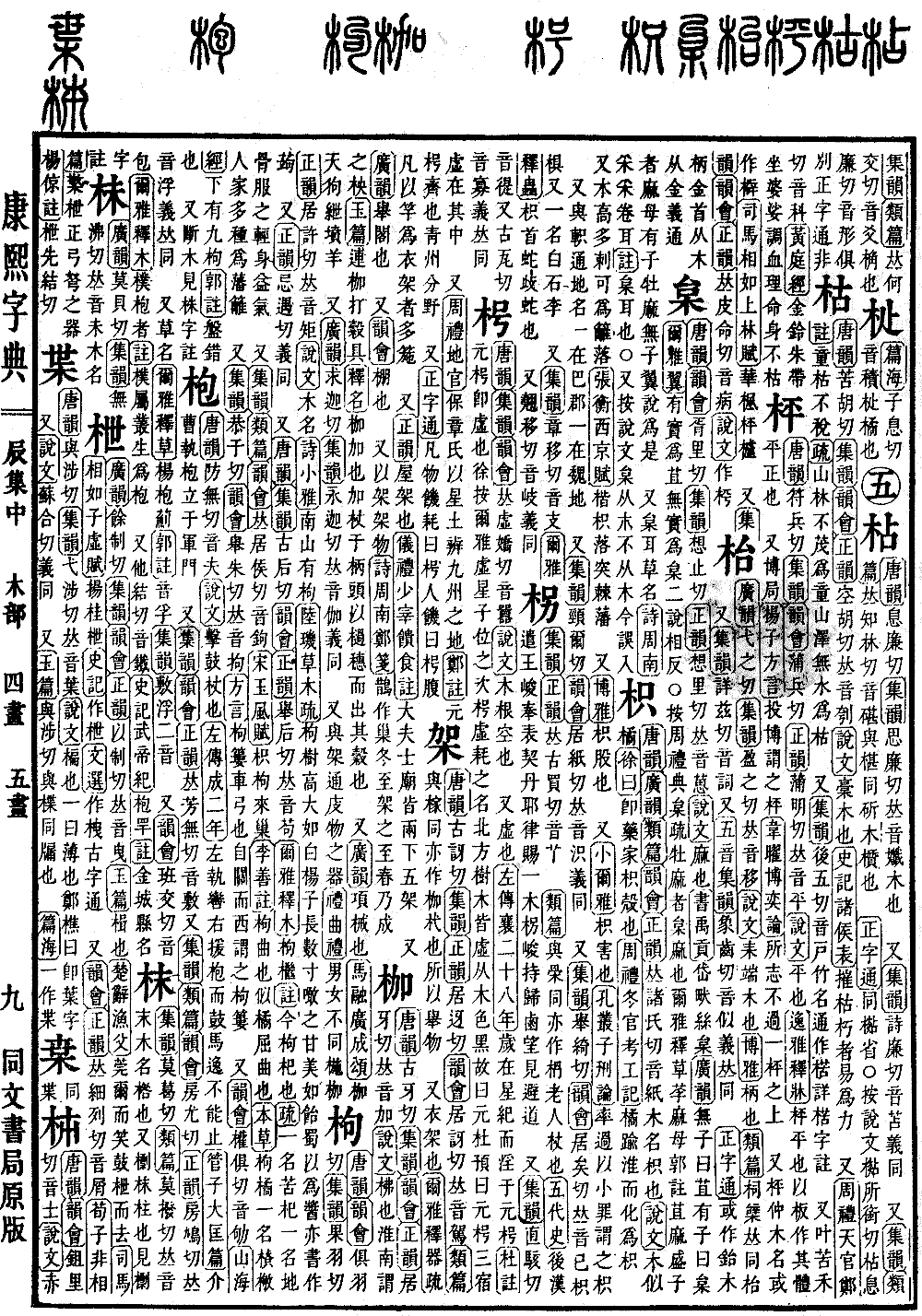
Chen Collection, Middle Volume
Radical: Tree (mù)
Page 517, Entry 10
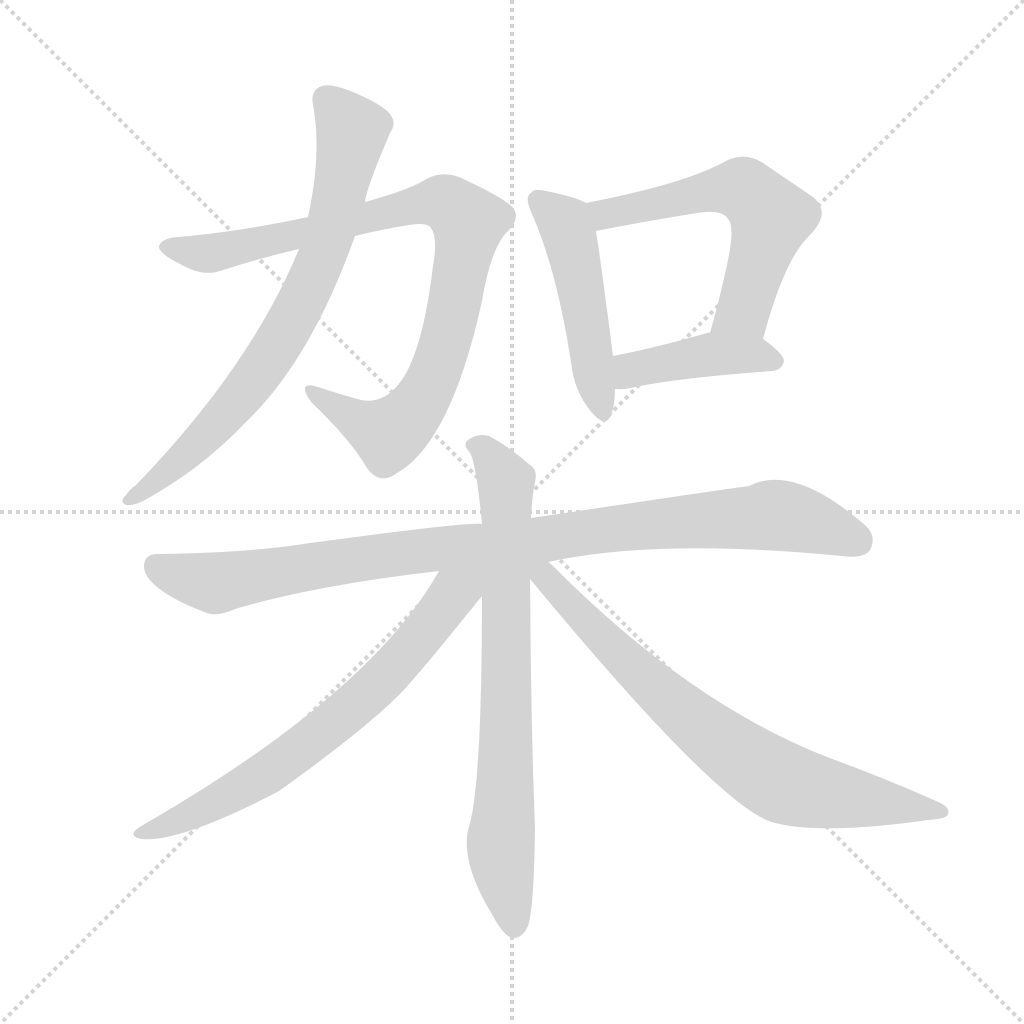
Pronounced jia (falling tone).
According to the Classified Collection (Leipian), it is the same as the character for a wooden rack. It is also written as a variant form (jia). It refers to wooden stakes used to support or hold up objects. It also refers to a clothes rack.
According to the Commentary on the Explanation of Utensils (Er ya - Shi qi shu), items used as clothes racks made of bamboo poles are called shi.
Also, according to the Corrected Rhymes (Zhengyun), it refers to a roof frame. According to the Commentary on the Rituals of the Lesser Meat Offering (Yili - Shaolao kuishi zhu), the ancestral temples of the grand masters and the scholars both featured double-sloping roofs and five roof frames.
Also, according to the Expanded Rhymes (Guangyun), it refers to a rack for placing objects.
Also, according to the Collection of Rhymes (Yunhui), it refers to a trellis. It also refers to using a rack to support items.
According to the Commentary by Zheng Xuan on the Book of Odes (Shijing - Zhounan, Zheng jian), magpies build nests; they begin to construct the framework at the winter solstice and finish in the spring.
Textual research: In the Commentary on the Explanation of Utensils (Er ya - Shi qi shu), the phrase referring to items using poles as clothes racks has been emended according to the original text. In the Commentary on the Rituals of the Lesser Meat Offering (Yili - Shaolao kuishi zhu), the term for the lesser official has been emended to the lesser meat offering according to the original text.