Wei Collection, Lower Volume
Radical: Arrive (zhì)
Kangxi strokes: 12
Page 1001, Entry 24
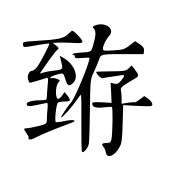
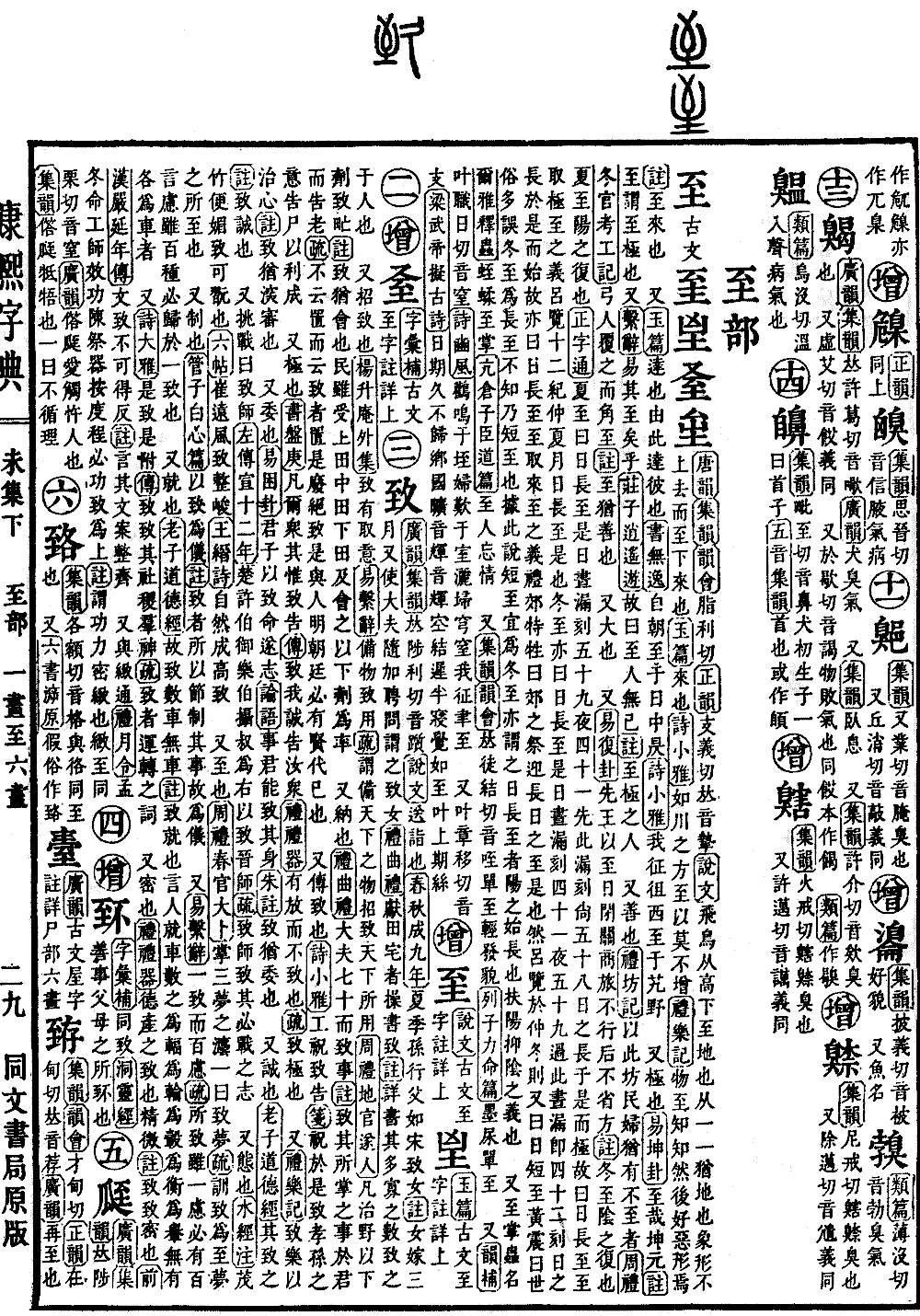
According to the Collection of Rhymes (Jiyun) and the Collection of Rhymes Revisited (Yunhui), pronounced jian (falling tone). According to the Correct Rhymes (Zhengyun), pronounced jian (falling tone). According to the Extensive Rhymes (Guangyun), it means to arrive again. According to the Collection of Rhymes Revisited (Yunhui), it means to repeat. Also used interchangeably with jian. In the Book of Changes (Yijing), Hexagram Kan states, water arrives repeatedly. In the Hexagram Zhen, it states, thunder strikes repeatedly. It is also used interchangeably with jian. In the Zuo Tradition (Zuozhuan), Year 13 of Duke Xi, it states, Jin suffered repeated famine. According to the Literary Expositor (Erya), Chapter on Explaining Heaven, a continued famine is called jian. It is also used interchangeably with jian. In the Book of Odes (Shijing), Greater Odes, it states, Heaven is currently causing repeated illnesses, and famine arrives repeatedly. The commentary states that the meaning of jian is the same. Also, according to the Extensive Rhymes (Guangyun) and the Collection of Rhymes Revisited (Yunhui), pronounced zun (falling tone). An ancient personal name. During the Wei Dynasty, there was a man named Zhang Zun.