Wei Collection, Middle Volume
Radical: Net (wǎng)
Kangxi brush strokes: 25
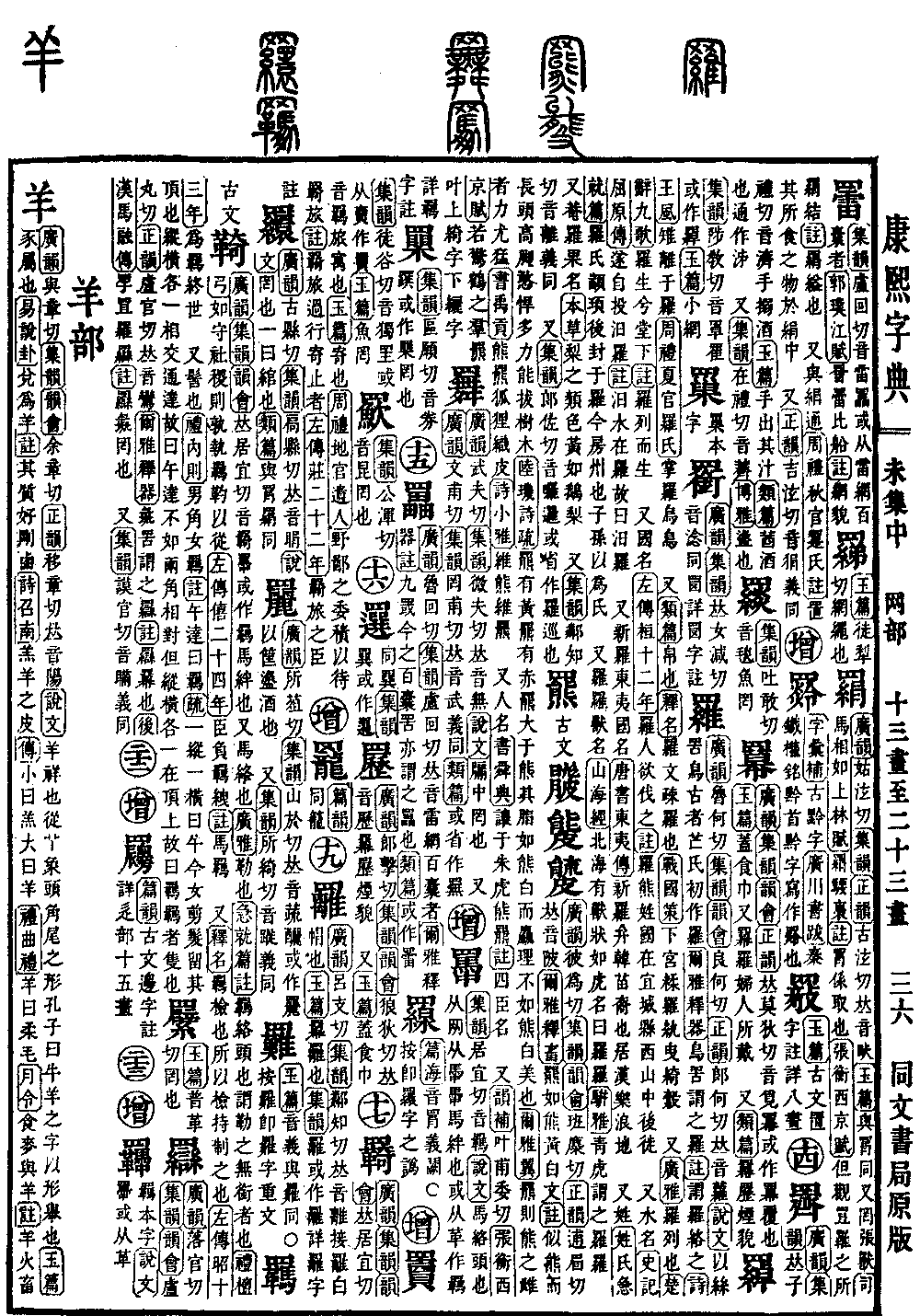
Page 950, Entry 32
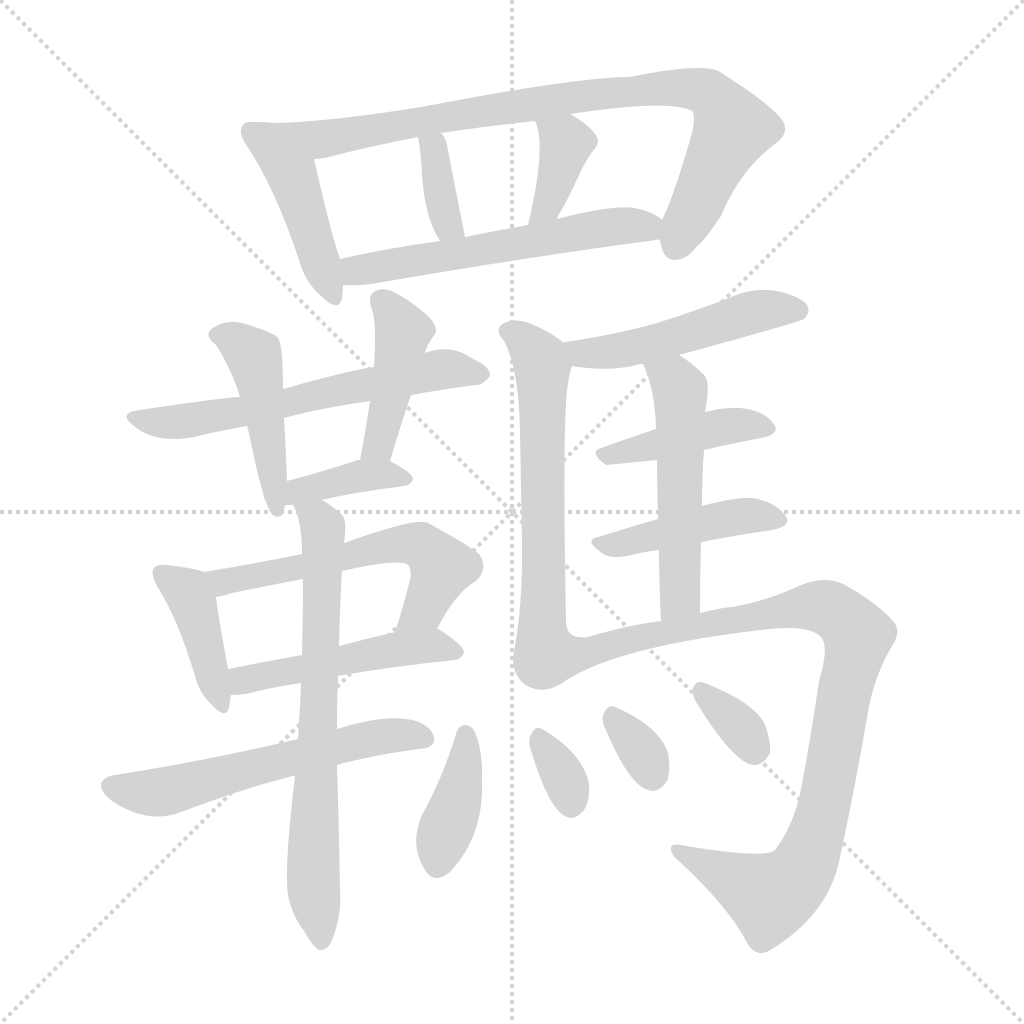
Ancient form. According to Guangyun (Broad Rhymes), Jiyun (Collection of Rhymes), and Yunhui (Collection of Rhymes), pronounced ji. Sometimes also written in a variant form (ji). A hobble for a horse. Also, a horse halter. According to Guangya (Expanded Elegance), a bridle. According to the commentary on the Jijiupian (Quick to Master Chapter), the term refers to a headstall, specifically one without a bit. In the Book of Rites (Liji), specifically the Tan Gong chapter, it is written: If everyone stays to guard the altars of the soil and grain, then who will hold the bridle and reins to follow? In the Zuo Tradition (Zuo Zhuan), under the twenty-fourth year of Duke Xi, it is written: Your servant bears the hobbles and fetters. The commentary notes: These are horse hobbles. According to the Explaining Names (Shiming), the term implies restraint, as it is used to restrain and control. In the Zuo Tradition, under the thirteenth year of Duke Zhao, it is written: To serve as a restraint for one's whole life. It also refers to a hairstyle. In the Book of Rites, specifically the Inner Patterns chapter, it is written: Boys wear horns, girls wear the ji hairstyle. The commentary states: Hair arranged in a cross-wise manner is called ji. The sub-commentary explains: Crossing one strand vertically and one horizontally is called a cross. Girls currently cut their hair, leaving some on the crown of the head in a cross pattern that intersects, hence it is called a cross-wise arrangement. It is not like the two horns that face each other; it is merely one vertical and one horizontal strand on the crown of the head, thus it is called ji. The term ji signifies stopping.
Textual research: In the Book of Rites (Liji), Tan Gong chapter, the original text reads: If everyone stays to guard the altars of the soil and grain, then who will hold the bridle and reins to follow? The character ji has been added here to conform to the original text. In the Book of Rites (Liji), Inner Patterns chapter, the original text reads: Boys wear horns, girls wear the ji hairstyle. In the sub-commentary, the phrase leaving some on the crown of the head has been corrected from the original text to read leaving some on the crown of the head in a cross pattern, to conform to the original text.