Wei Collection, Upper Volume
Radical: Bamboo (zhú)
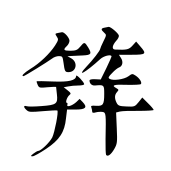
Ji
Kangxi strokes: 12
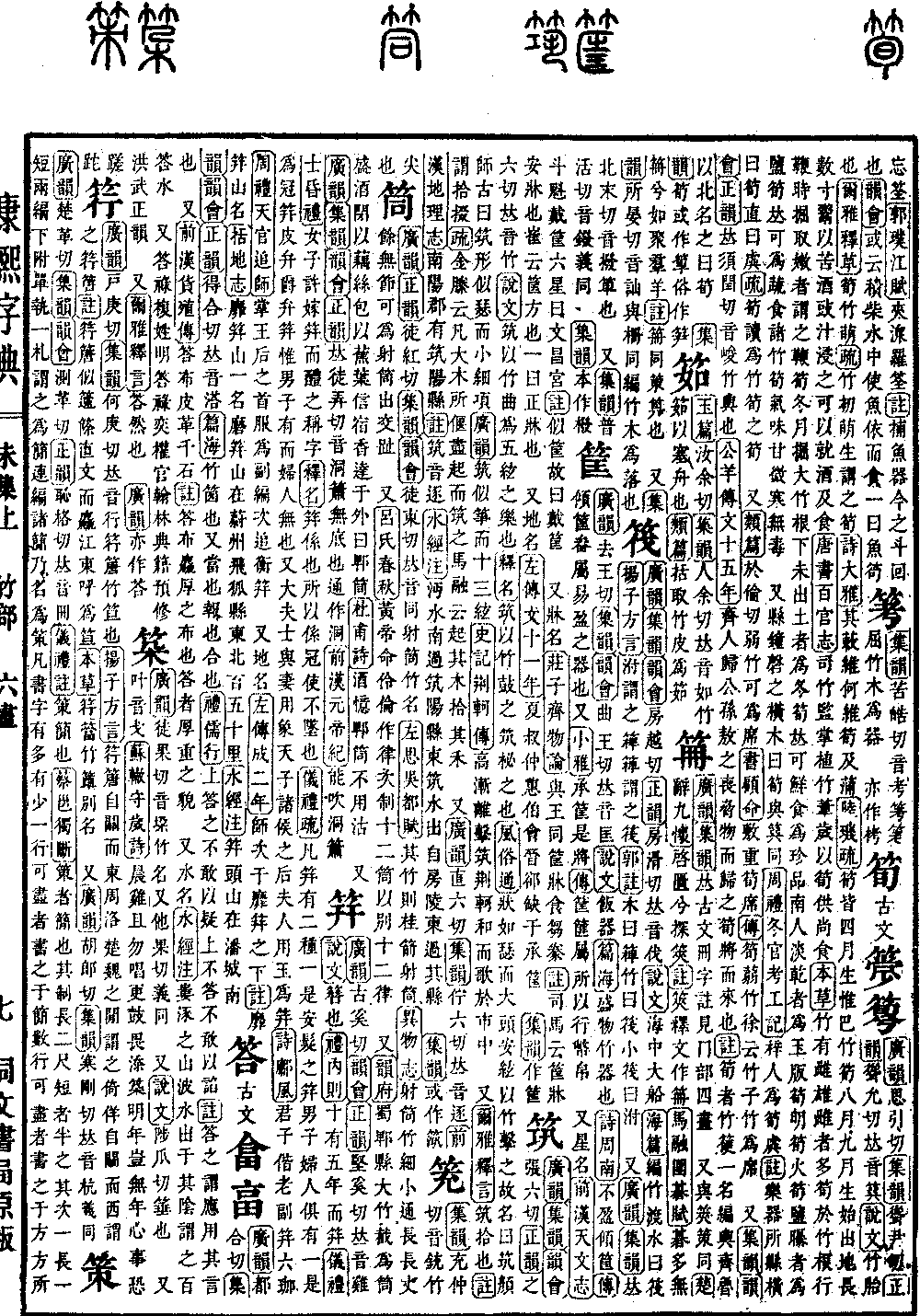
Page 883, Entry 12
Guangyun (Comprehensive Rhymes): Pronounced ji
Yunhui (Collection of Rhymes) and Zhengyun (Correct Rhymes): Pronounced ji
Shuowen (Explaining Graphs and Analyzing Characters): A hairpin.
Book of Rites (Liji), Inner Morality (Neize): A young woman at age fifteen undergoes the ceremony of inserting a hairpin.
Book of Etiquette and Ceremonial (Yili), Marriage Rites for Scholars (Shihunli): After a young woman is betrothed, she undergoes the hairpin ceremony, is offered sweet wine, and is given her courtesy name.
Shiming (Explanation of Names): Ji means to bind. It is used to secure a headpiece so that it does not fall off.
Commentary on the Book of Etiquette and Ceremonial (Yili Shu): There are two types of hairpins: one is for binding the hair, used by both men and women. The other is a ceremonial hairpin used for the leather cap and the noble cap; this is used by men but not by women. Furthermore, grand masters, scholars, and their wives use ivory hairpins, while the emperor, feudal lords, their queens, and wives use jade hairpins.
Book of Odes (Shijing), Odes of Yong (Yongfeng): The nobleman grows old together with his wife; she wears a secondary headdress and a jade hairpin, upon which are six jade beads.
Rites of Zhou (Zhouli), Offices of Heaven (Tianguan), Master of Dressing (Zhuishi): Manages the queen's headgear, crafting secondary, woven, and secondary hair ornaments, as well as jade pendants and jade hairpins.
Also, a place name.
Zuo Tradition (Zuo Zhuan), Second Year of Duke Cheng: The army was stationed below Mount Mijie.
Commentary: Mijie is the name of a mountain.
Kuodizhi (Geography of the Wide Earth): Mount Mijie, also known as Mount Mojie. It is located one hundred and fifty li northeast of Feihu County in Weizhou.
Commentary on the Water Classic (Shuijing Zhu): Mount Jietou is located south of Pancheng.