Chen Collection, Lower Volume
Radical: Weapon (shū)
Kangxi Strokes: 14
Page 587, Entry 10
Pronounced ji.
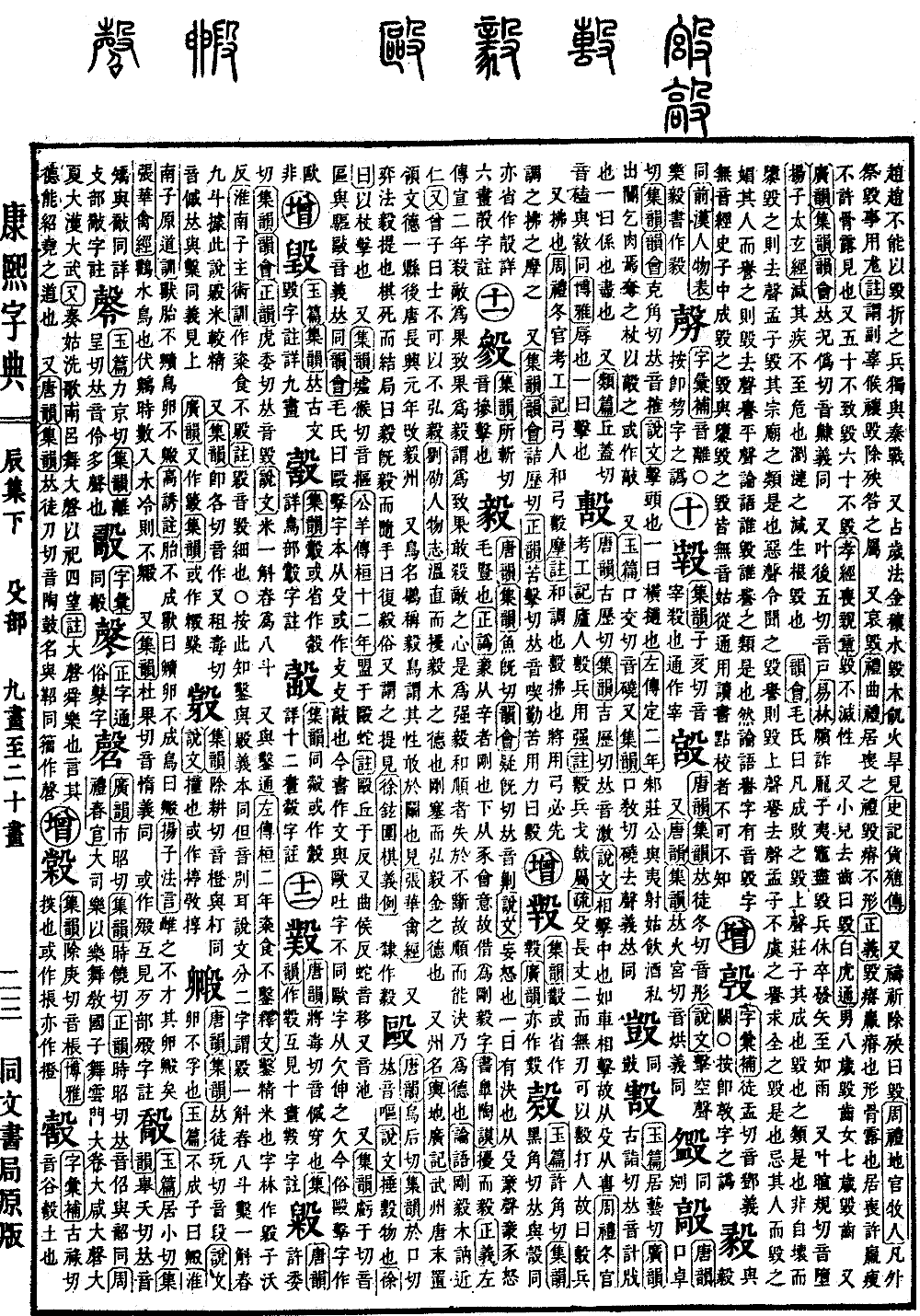
Shuowen Jiezi (Explanation of Writing and Analysis of Characters) defines it as striking one another and making contact. It is like the collision of carriage parts; therefore, the character is composed of the radical for weapon and the character for a carriage axle cap.
Rites of Zhou (Zhouli), Winter Official, Record of Artisans: The weapons of the workshop of the Lu artisans are equally durable. Commentary: Weapons of the workshop refers to weapons such as dagger-axes and halberds. Sub-commentary: The weapon is twelve feet long and lacks a sharp point; it is used to strike people, hence it is called a workshop weapon.
It also carries the meaning of to wipe or to polish. Rites of Zhou (Zhouli), Winter Official, Record of Artisans: The bow-maker adjusts the bow and performs the wiping and friction of the bow. Commentary: To adjust is to tune. To wipe is to polish. Before using a bow, one must adjust it, wipe it, and polish it.
Pronounced qi.
Laborious or strenuous effort is called qi.
Verification of Text: Rites of Zhou (Zhouli), Winter Official, Record of Artisans: The weapons of the workshop of the Lu artisans are durable. Note: In accordance with the original text, the word for use has been amended to the word for same.