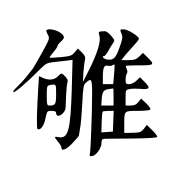
Xu Collection, Middle Volume
Radical: Short-tailed bird (zhuī)
Kangxi Strokes: 13
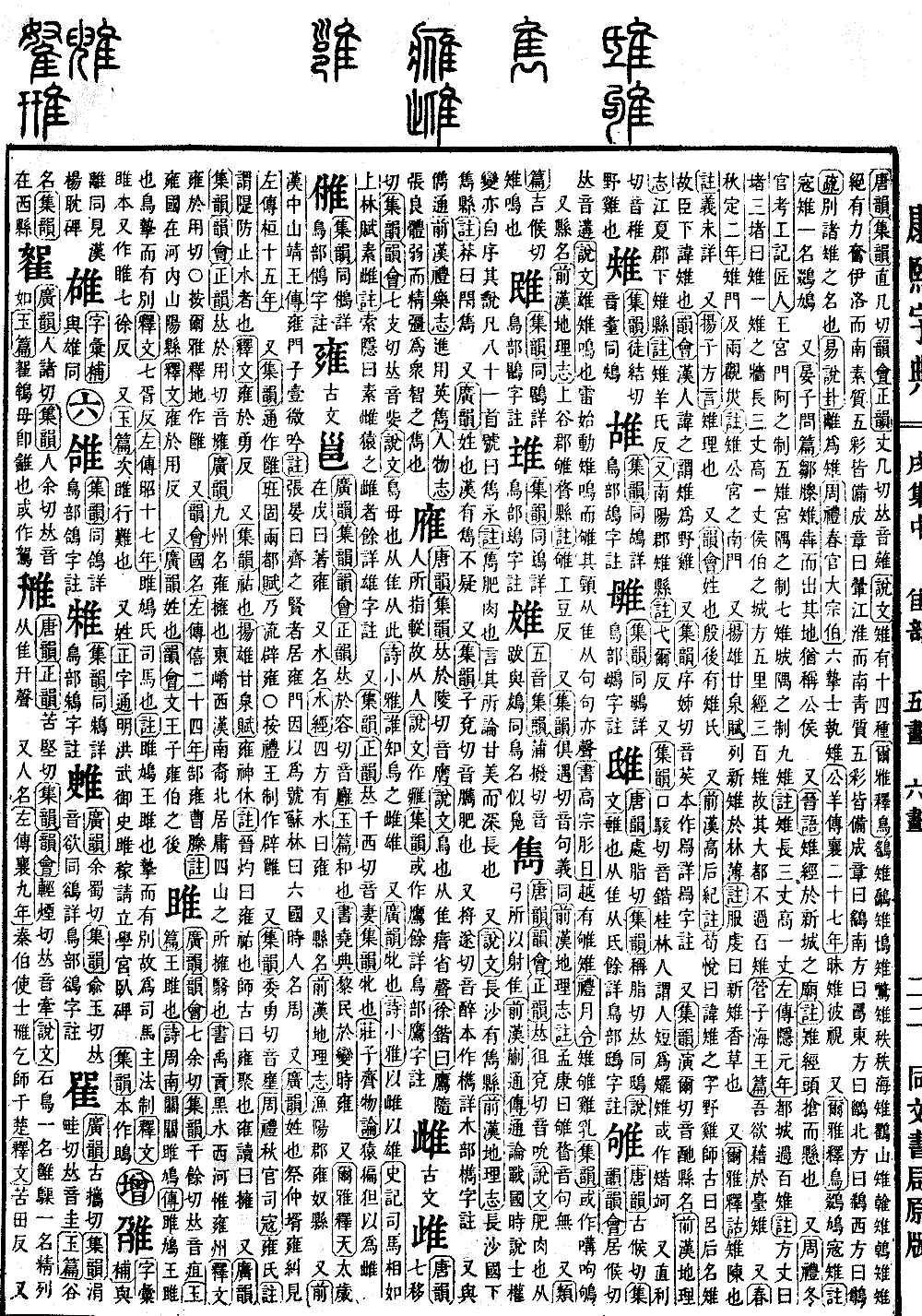
Page 1366, Entry 05
Tang Rhymes (Tangyun): Pronounced gou (falling tone). Collected Rhymes (Jiyun) and Rhyme Anthology (Yunhui): Pronounced gou (falling tone).
According to the Explaining Graphs and Analyzing Characters (Shuowen): The cry of a male pheasant. When the thunder begins to stir, the pheasant cries and its neck makes a sound. Composed of the radicals for short-tailed bird and phrase (gou), with phrase (gou) also providing the phonetic.
Book of Documents (Shangshu), chapter High Ancestor's Sacrificial Day (Gaozong rongri): There was a pheasant crying.
Book of Rites (Liji), chapter Monthly Ordinances (Yueling): The pheasant cries, the chicken hatches.
Collected Rhymes (Jiyun): Sometimes written in a variant form (gouqu).
Also, the name of a county.
History of the Former Han (Qianhan shu), Treatise on Geography: Goumao County in Shanggu Commandery.
Commentary: Gou is pronounced gong-dou.
Also, Collected Rhymes (Jiyun): Pronounced gou (falling tone). Same meaning.
History of the Former Han (Qianhan shu), Treatise on Geography, Commentary: Meng Kang says: Goumao is pronounced gou-wu.
Also, Classified Lexicon (Leipian): Pronounced ji (rising tone). The cry of a pheasant.