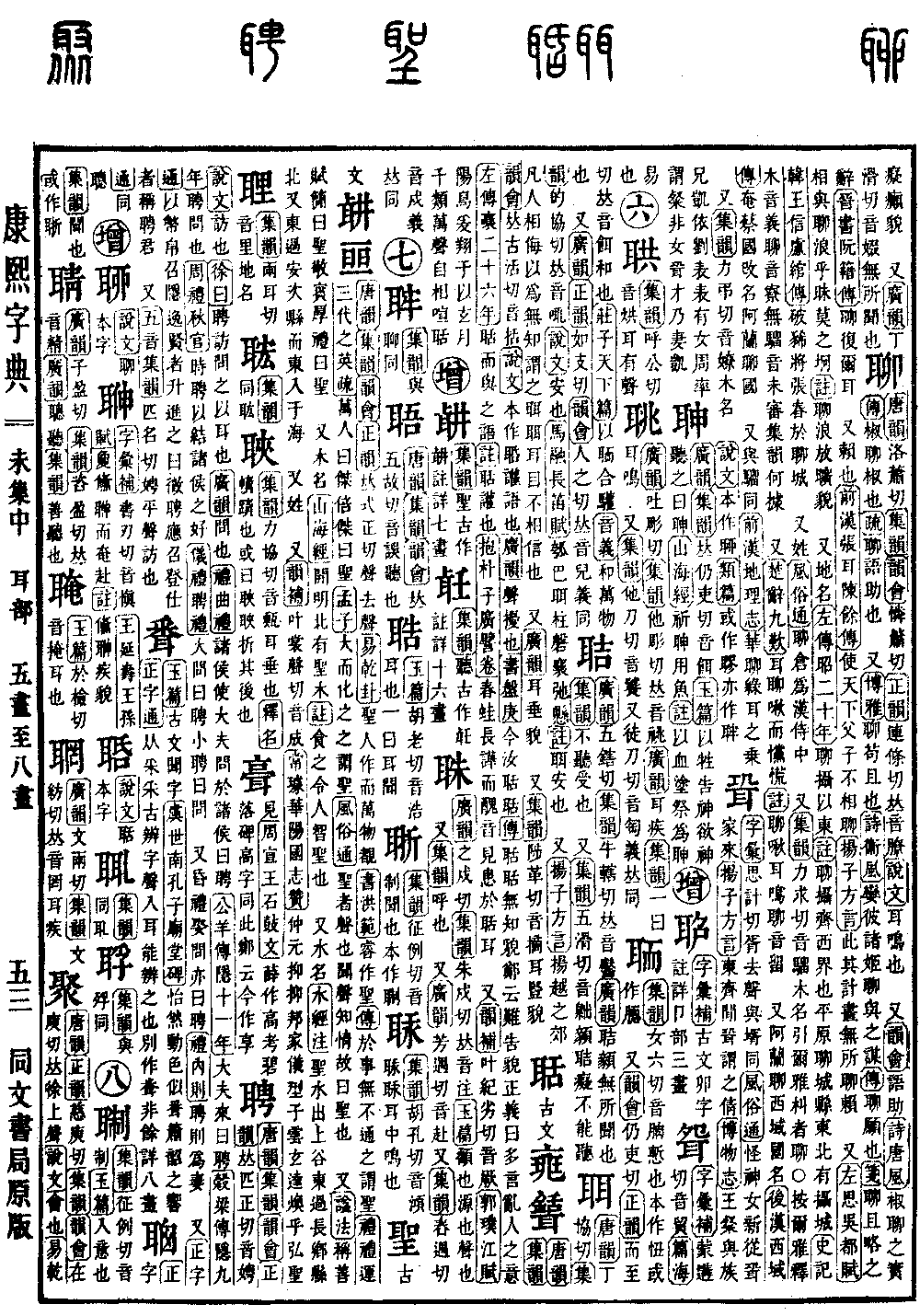
Wei Collection, Lower Volume
Radical: Ear (ěr)
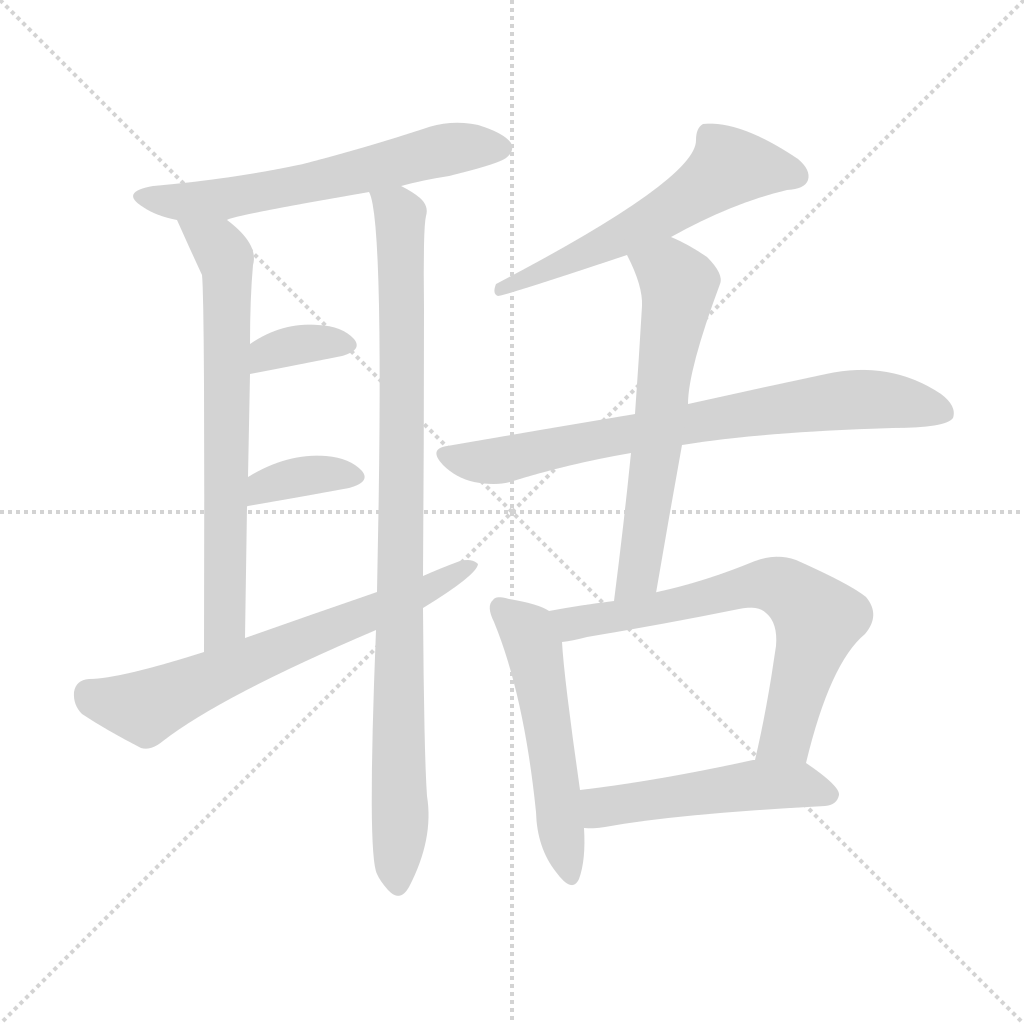
聒
Kangxi Stroke Count: 12
Page 967, Entry 11
Ancient form. From Tang Rhymes (Tangyun), Collection Rhymes (Jiyun), and Rhyme Assembly (Yunhui), the pronunciation is guo (level tone). From Explaining Graphs and Analyzing Characters (Shuowen), it was originally written as this character. It refers to clamorous and noisy speech. From Broad Rhymes (Guangyun), it refers to noise and disturbance. From Book of Documents (Shujing), specifically the Geng of Pan chapter: Now you are noisy and clamorous. The commentary states: Noisy and clamorous, appearing ignorant. Zheng Xuan says: It means difficult to advise. The authoritative commentary states: It refers to excessive speech that disturbs the mind of others. From Zuo Tradition (Zuozhuan), specifically the twenty-sixth year of Duke Xiang: They spoke to him noisily. The commentary states: Clamorous and noisy. From Master Who Embraces Simplicity (Baopuzi), in the Wide Analogies volume: The frogs in spring croak for a long time, and the ugly sound is annoying because it is grating to the ears. Also, according to the Supplement to Rhymes (Yunbu), it is rhymed as jue (falling tone). From Guo Pu's Ode to the Yangtze River (Jiangfu): The sun birds soar, during the dark month. A thousand types and ten thousand sounds, all noisily clamoring together.