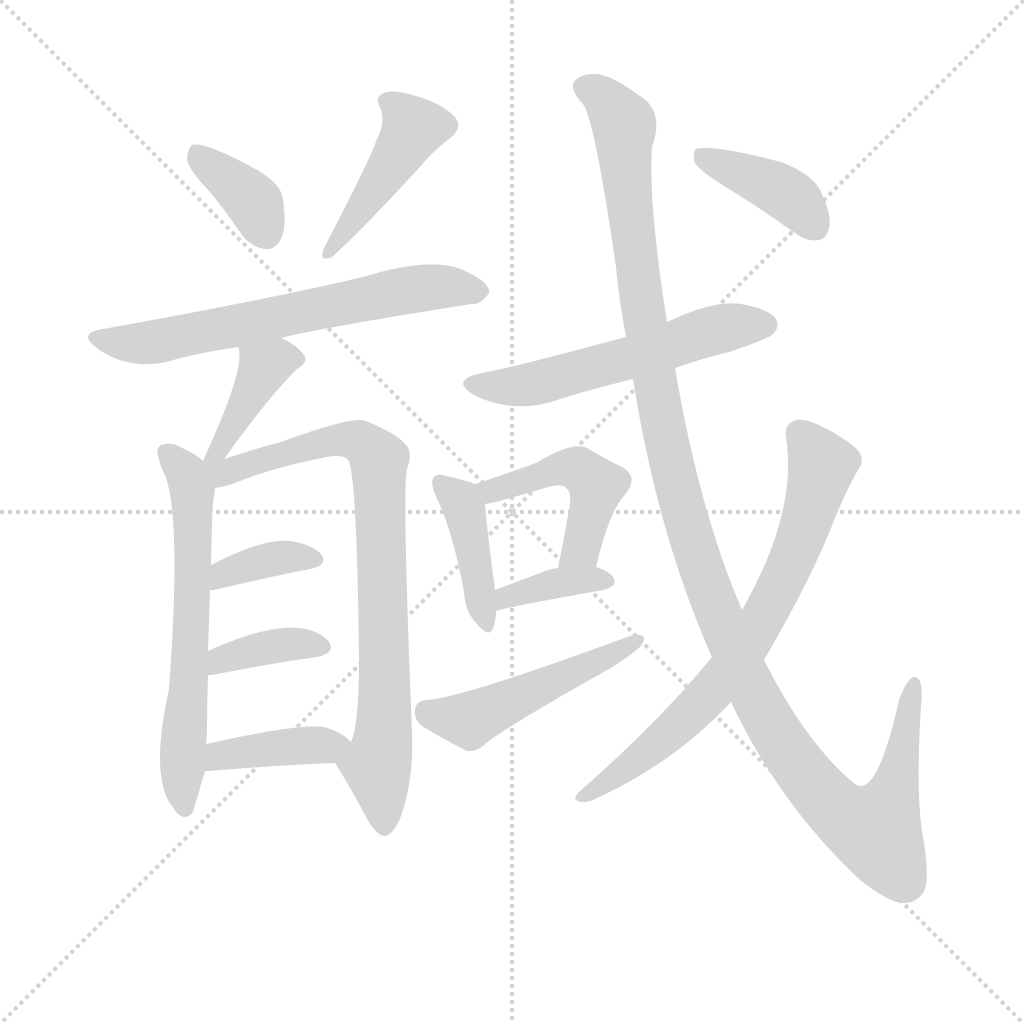
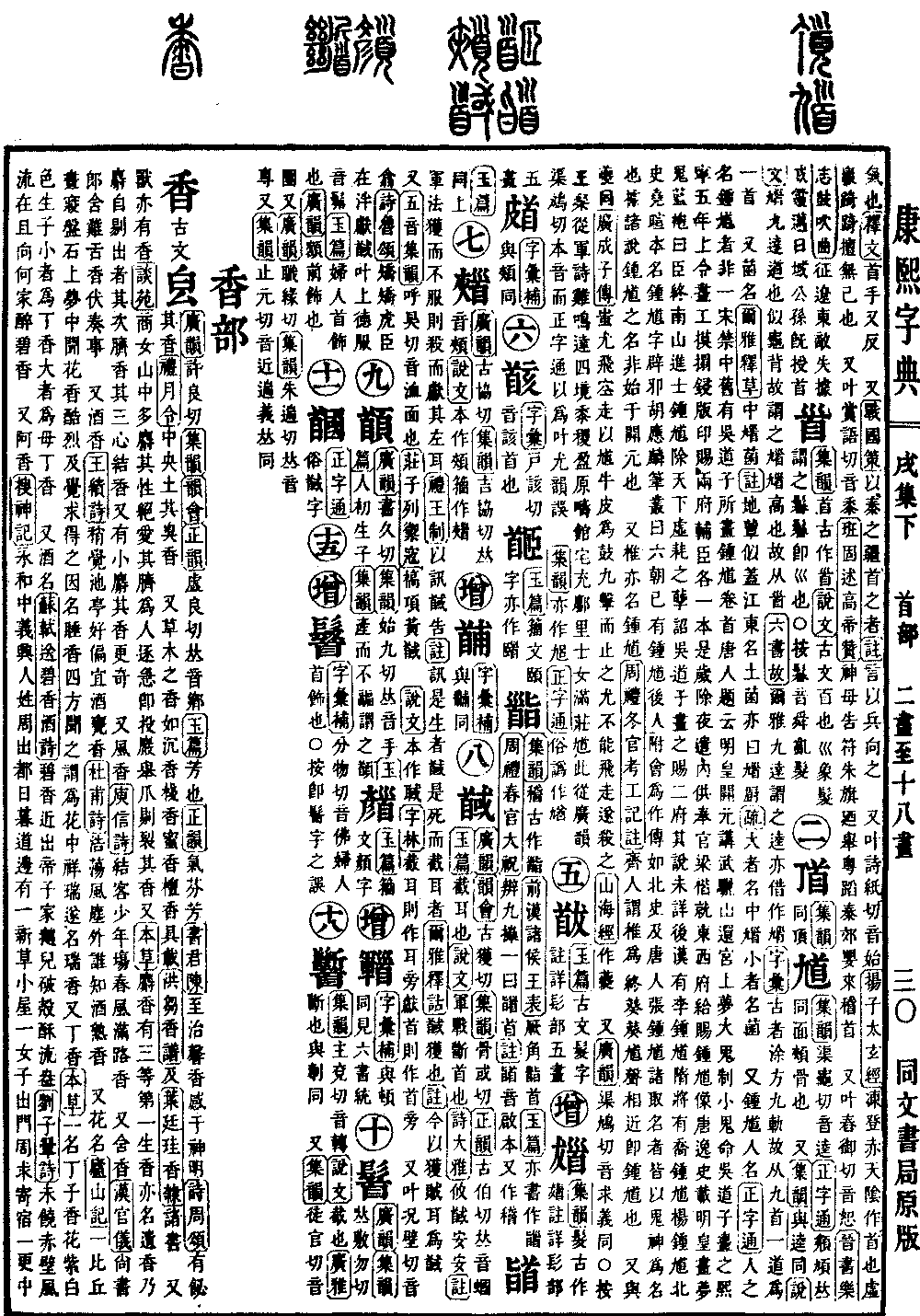
Xu Collection, Lower Volume
Radical: Head (shǒu)
Kangxi Strokes: 17
Page 1428, Entry 13
Pronounced guo.
Jade Chapters (Yupian): To cut off an ear.
Explaining Graphs and Analyzing Characters (Shuowen): In military battle, to cut off the ear.
Book of Odes (Shijing), Greater Odes of the Kingdom (Daya): To take heads and ears (guo) in peace. Note: According to military law, if a captive refuses to surrender, they are killed and their left ear is presented.
Book of Rites (Liji), Royal Regulations (Wangzhi): Reporting by means of interrogation and cutting of ears (guo). Note: Interrogation refers to live captives, while cutting of ears refers to enemies killed and having their ears removed.
Approaching Propriety (Erya), Explaining Ancient Words (Shigu): Guo means to capture. Note: Nowadays, taking the ear of an enemy is referred to as guo.
Five Sounds Collected Rhymes (Wuyin Jiyun): Pronounced xu. Meaning face.
Zhuangzi, Lie Yukou: Withered neck and yellow face (guo).
Explaining Graphs and Analyzing Characters (Shuowen): Originally written with the ear radical.
Word Forest (Zilin): To cut an ear is written with the ear radical; to present a severed head is written with the head radical.
Also follows the rhyme for xi.
Book of Odes (Shijing), Sacrificial Odes of Lu (Lusong): Valiant are the tiger-like ministers, presenting ears (guo) at the semicircular pool. Rhymes with de and fu.
Textual Research: Explaining Graphs and Analyzing Characters (Shuowen) states that in military battle it means cutting off the head. Following the original text, this has been corrected from cutting off the head to cutting off the ear.