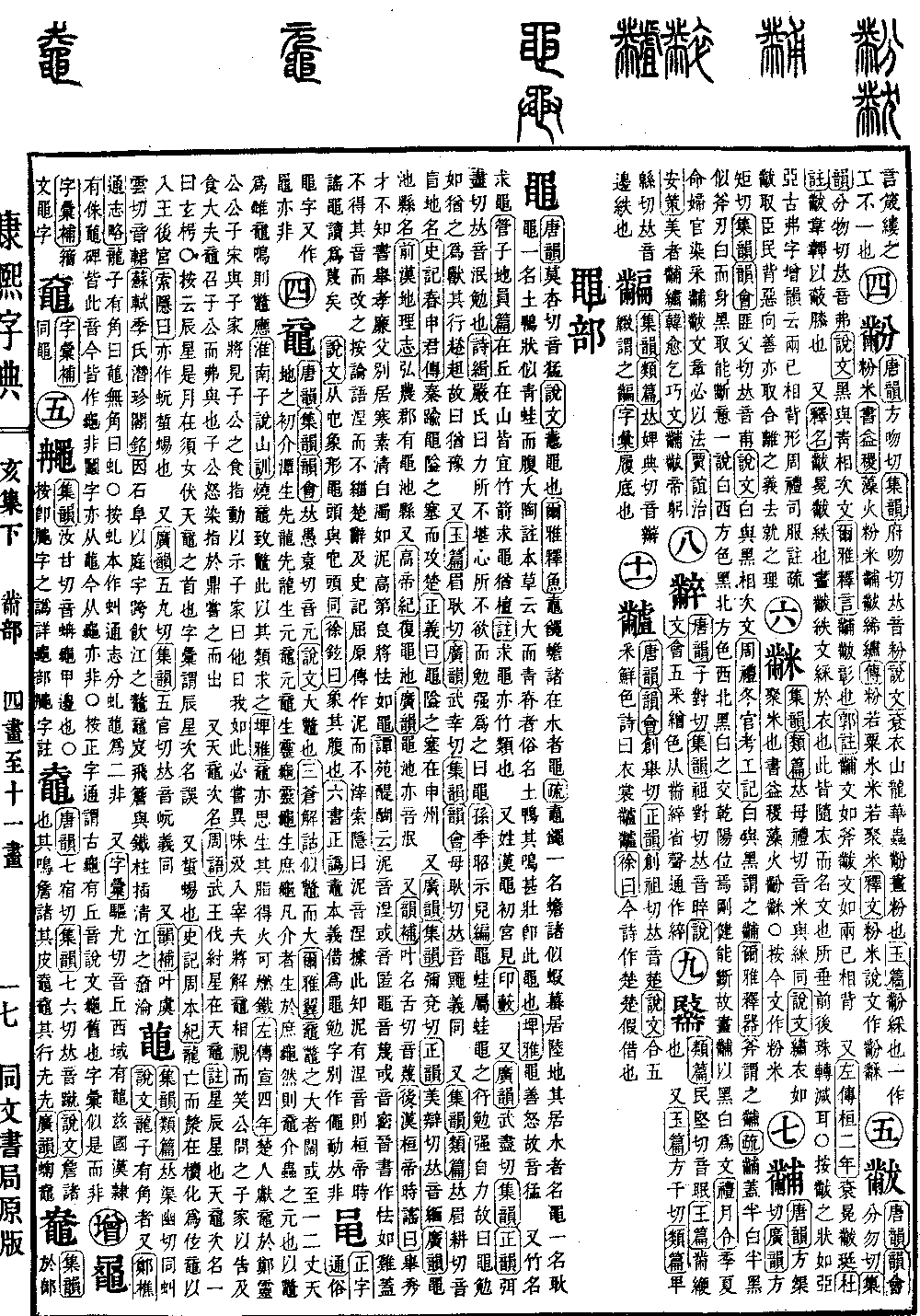
Hai Collection, Lower Volume
Radical: Embroidery (zhǐ)
Kangxi Strokes: 19
Page 1523, Entry 04
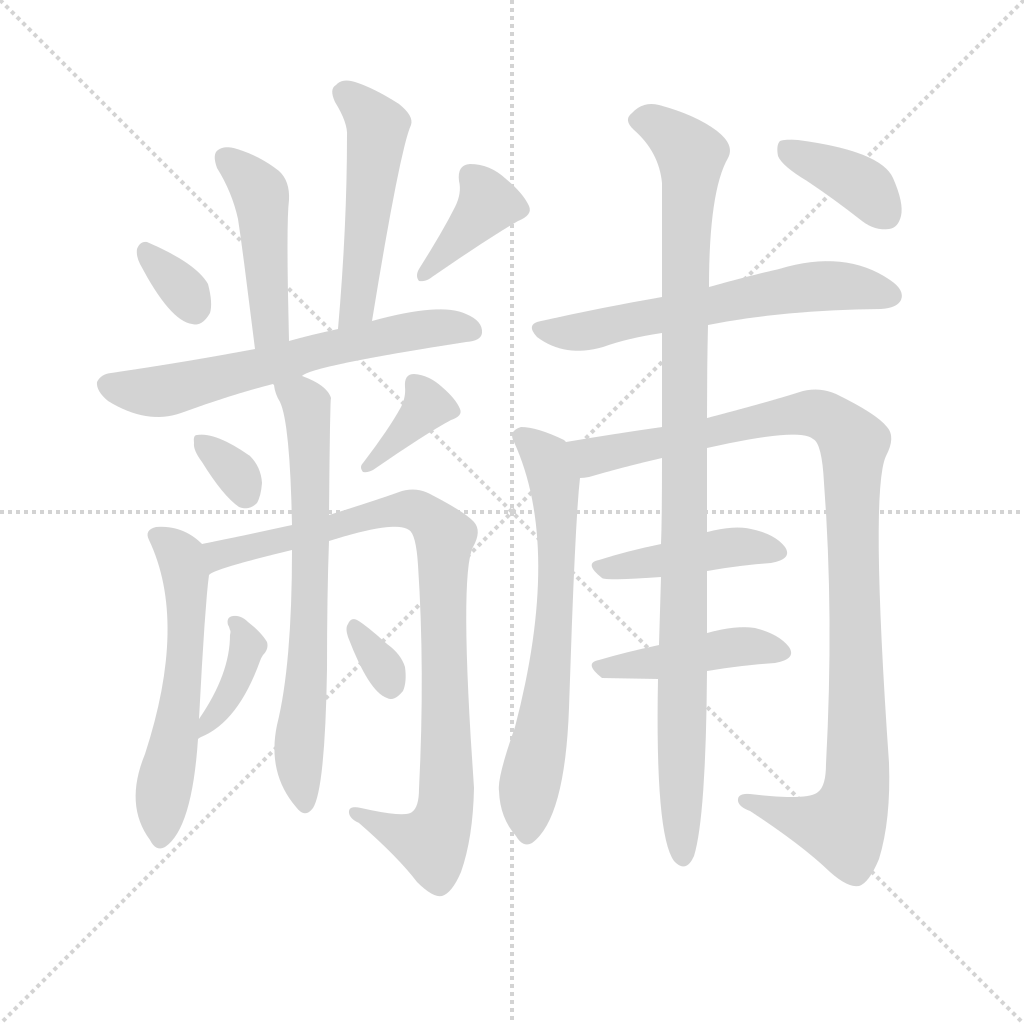
Pronounced fǔ.
As defined in the Analytical Dictionary of Characters (Shuowen): A pattern formed by alternating white and black colors.
Book of Rites (Zhouli), section Winter Officials, Artificers Record: A combination of white and black is called fu.
Approximations of Objects (Erya): An axe-shaped pattern is called fu.
Commentary: Fu likely represents colors that are half white and half black, resembling an axe with a white blade and a black body, symbolizing the power to cut or sever. Another theory suggests that white is the color of the west and black is the color of the north; the northwest is where black and white meet, symbolizing the position of the Qian hexagram's strength, representing firmness and the ability to make decisive judgments, hence why the fu pattern is composed of these two colors.
Book of Rites (Liji), section Monthly Ordinances: In the last month of summer, orders are given to female officials to dye colored silk, and patterns such as fu and fu must be created according to ancient regulations.
Jia Yi, Policy on Peace and Order: Splendid embroidered fu patterns.
Han Yu, Petition for Skill: Embroidering fu and fu patterns for imperial attire.
Textual Research: In the Book of Rites (Liji), section Monthly Ordinances, it states that in the last month of summer, female officials are ordered to dye colors, and the fu and fu patterns must follow the regulations. According to the original text, the word old has been added after the word law.