Wei Collection, Middle Volume
Radical: Silk (mì)
Kangxi strokes: 10
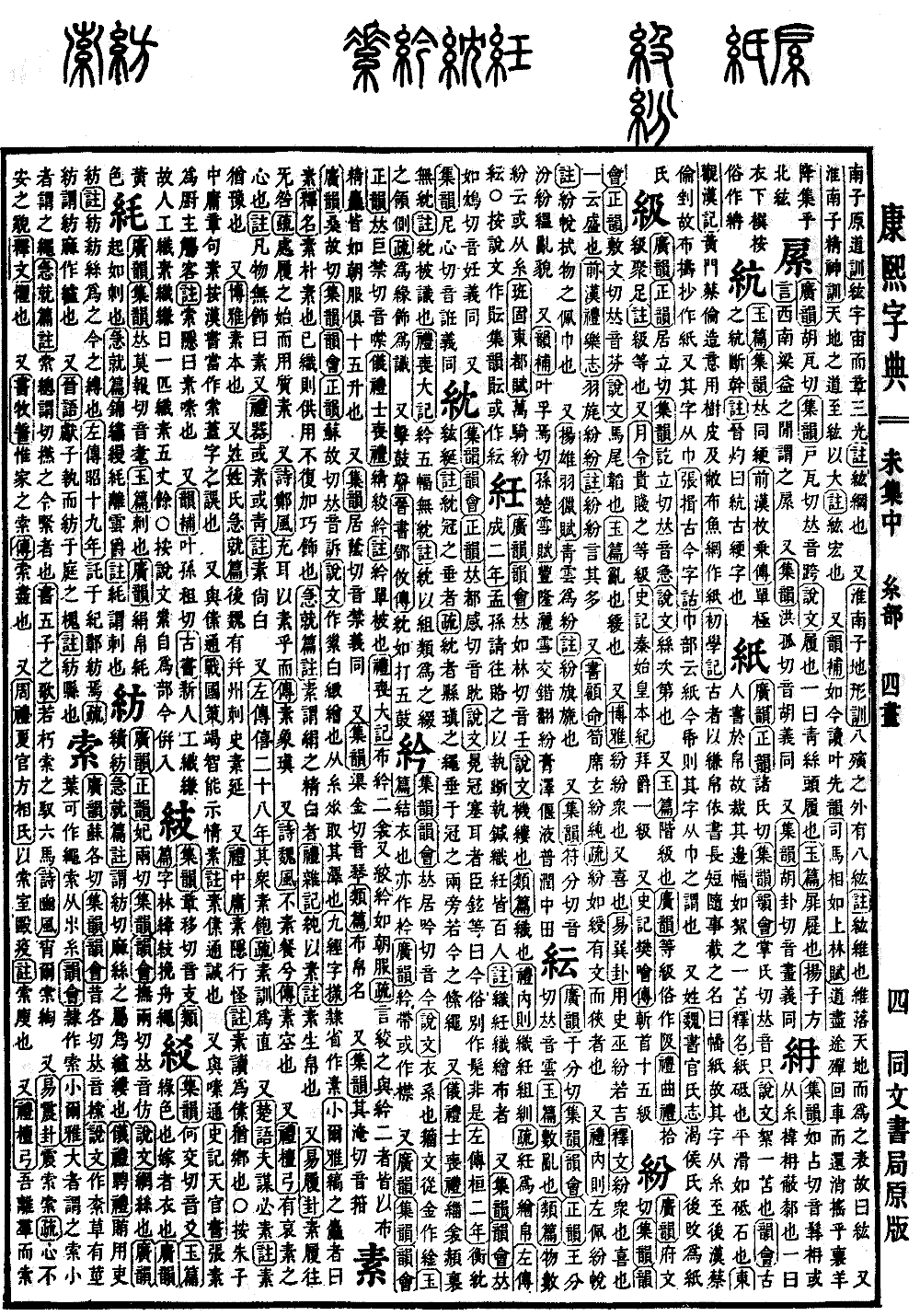
Page 918, Entry 01
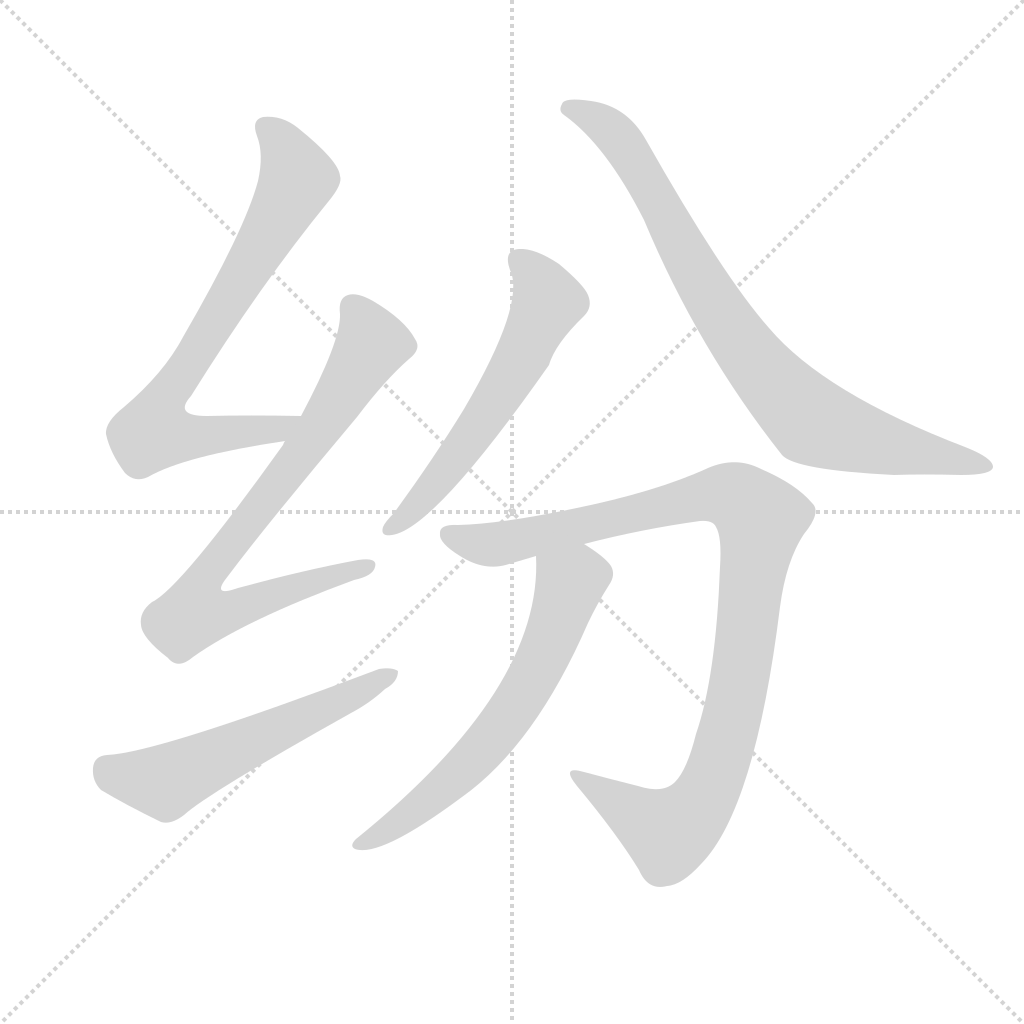
Pronounced fen.
In the Explanation of Characters (Shuowen Jiezi), it refers to a horse tail covering.
In the Jade Chapters (Yupian), it means disordered or loose.
Furthermore, in the Notes on Erudition (Guangya), it denotes a multitude, or joy.
In the Book of Changes (Yijing), it is written: use the ritual archivist and shamans in a flourishing (fen) manner, which is auspicious.
In the Explanation of Texts (Shiwen), it notes that it signifies a multitude or joy; another source says it means abundant.
In the History of the Former Han (Qianhan Shu), Records on Rites and Music: feathers and banners fluttered in abundance. The commentary notes that this refers to their great number.
In the Book of Documents (Shujing), Testamentary Charge: bamboo mats with decorative borders. The commentary explains that this means borders like ribbons, which are patterned and narrow.
In the Book of Rites (Liji), Inner Teachings: wearing a sash and wiping-towel on the left. The commentary explains that these are towels for wiping objects, worn as an accessory.
In Yang Xiong’s Rhapsody on the Feathered Hunt (Yulie Fu): blue clouds acted as banners. The commentary explains that this refers to the streamers of a banner.
Pronounced fen.
Used in the compound describing a chaotic appearance.
Pronounced fu (falling tone).
Sun Chu’s Rhapsody on Snow (Xue Fu): The god of thunder scatters snow, interlaced and fluttering. The rich moisture settles and flows, moistening the fields throughout.