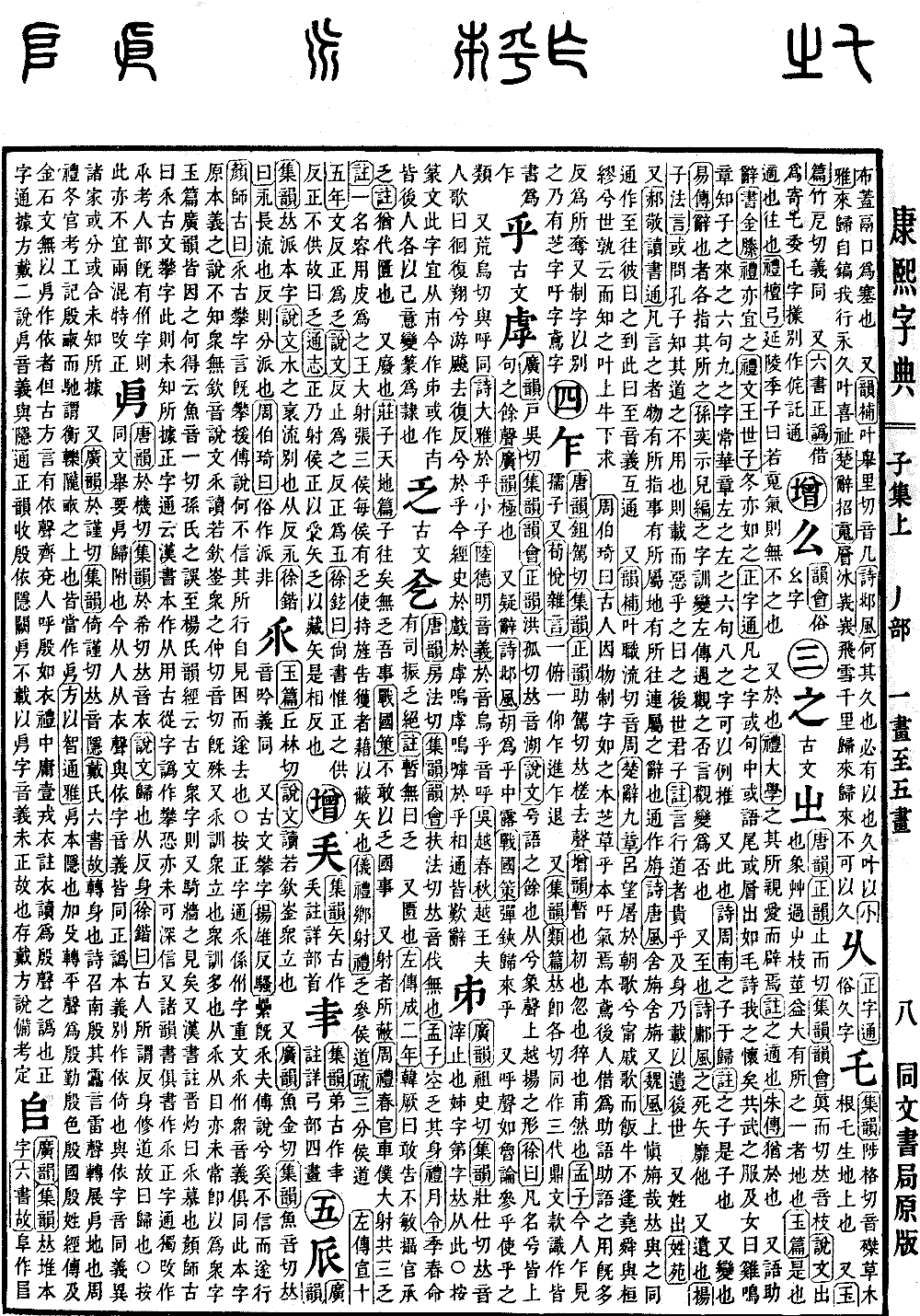
Zi Collection, Page Position: Upper. Radical: Slash (piě). fá. Kangxi Dictionary Stroke Count: 5. Page 82, Line 10.
Ancient Phonetic Records: Tang Dynasty Rhymes (Tangyun): fáng and fǎ cut. Collected Rhymes (Jiyun) and Rhyme Collection (Yunhui): fú and fǎ cut. Pronounced the same as fá.
Meanings:
1. To be without, to lack. "Causing his own person to be impoverished and lacking" — Mencius (Mengzi). "In the last month of spring, orders are given to the relevant officials to provide relief to those who are impoverished and have lost their means of livelihood" — Book of Rites (Liji). Commentary: A temporary lack is called fá.
2. Scarcity, insufficiency. Han Jue said: "I venture to inform you that I am not clever, and I merely hold this office to fill a vacancy" — Zuo Commentary (Zuozhuan). Commentary: It is like supplementing an insufficiency.
3. To neglect, to delay. "Begone, do not delay my work" — Zhuangzi. "Daring not to neglect the great affairs of the state" — Strategies of the Warring States (Zhanguoce).
4. A protective screen used in archery. "The Chariot Attendants provide three screens during the Great Archery Rite" — Rites of Zhou (Zhouli). Commentary: Also called róng, made of leather. When the King holds the Great Archery Rite, three targets are set up, each with one screen, allowing people to hold banners to report hits while using it to shield themselves from arrows. "The screen is placed at one-third of the archery range" — Book of Etiquette and Ceremonial (Yili). Sub-commentary: Refers to the position one-third of the way along the archery path from the target.
5. Character analysis: "The character zhèng (proper) written in reverse is fá" — Zuo Commentary. "The reverse of zhǐ (stop) is an ancient form of fá, and the reverse of zhèng is fá" — Explaining Graphs and Analyzing Characters (Shuowen Jiezi). Commentary by Xu Xuan: The Book of Documents (Shangshu) says "supplying only what is proper"; the reverse of proper is "not supplying," hence it is called fá. Comprehensive Treatises (Tongzhi): zhèng refers to the target used to receive arrows; fá is used to hide from or block arrows; the two functions are opposites.