Hai Collection, Lower Volume
Radical: Embroidery (zhǐ)
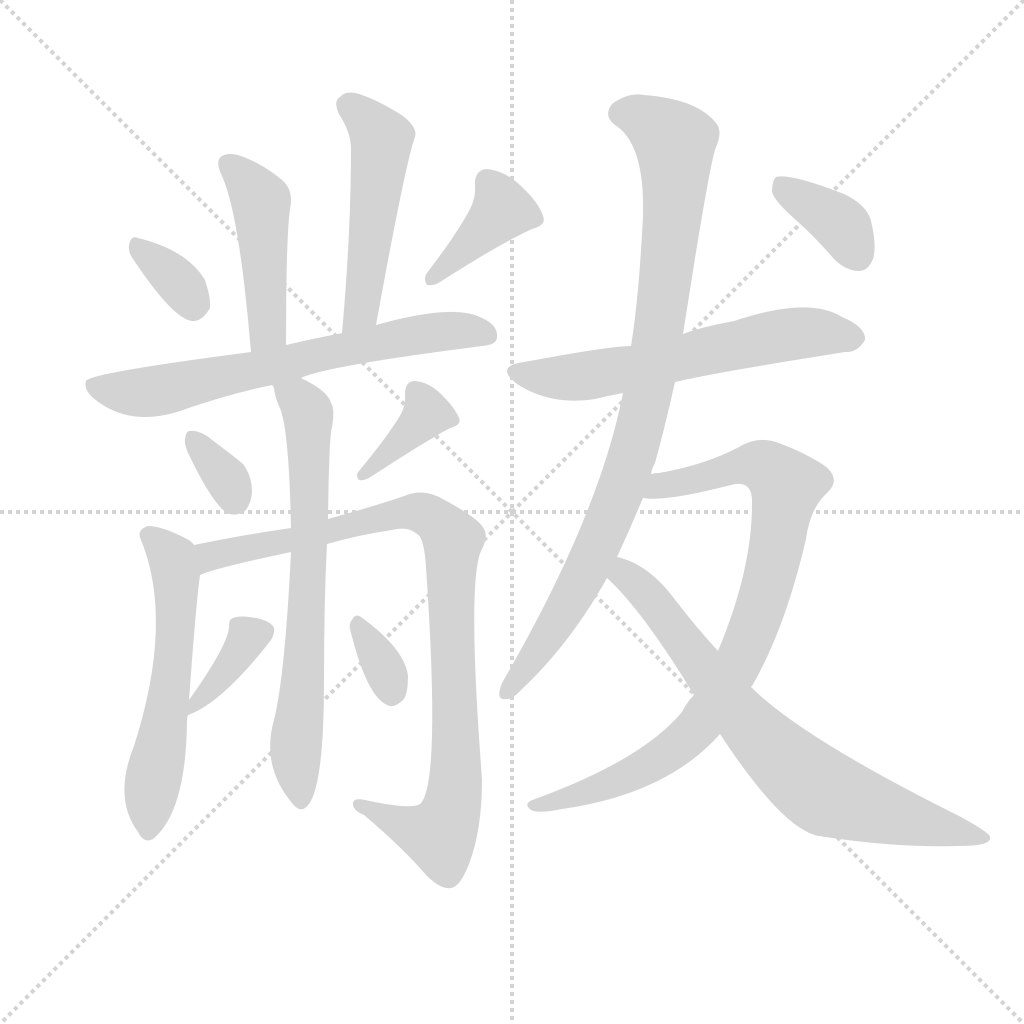
Fu
Kangxi Strokes: 16
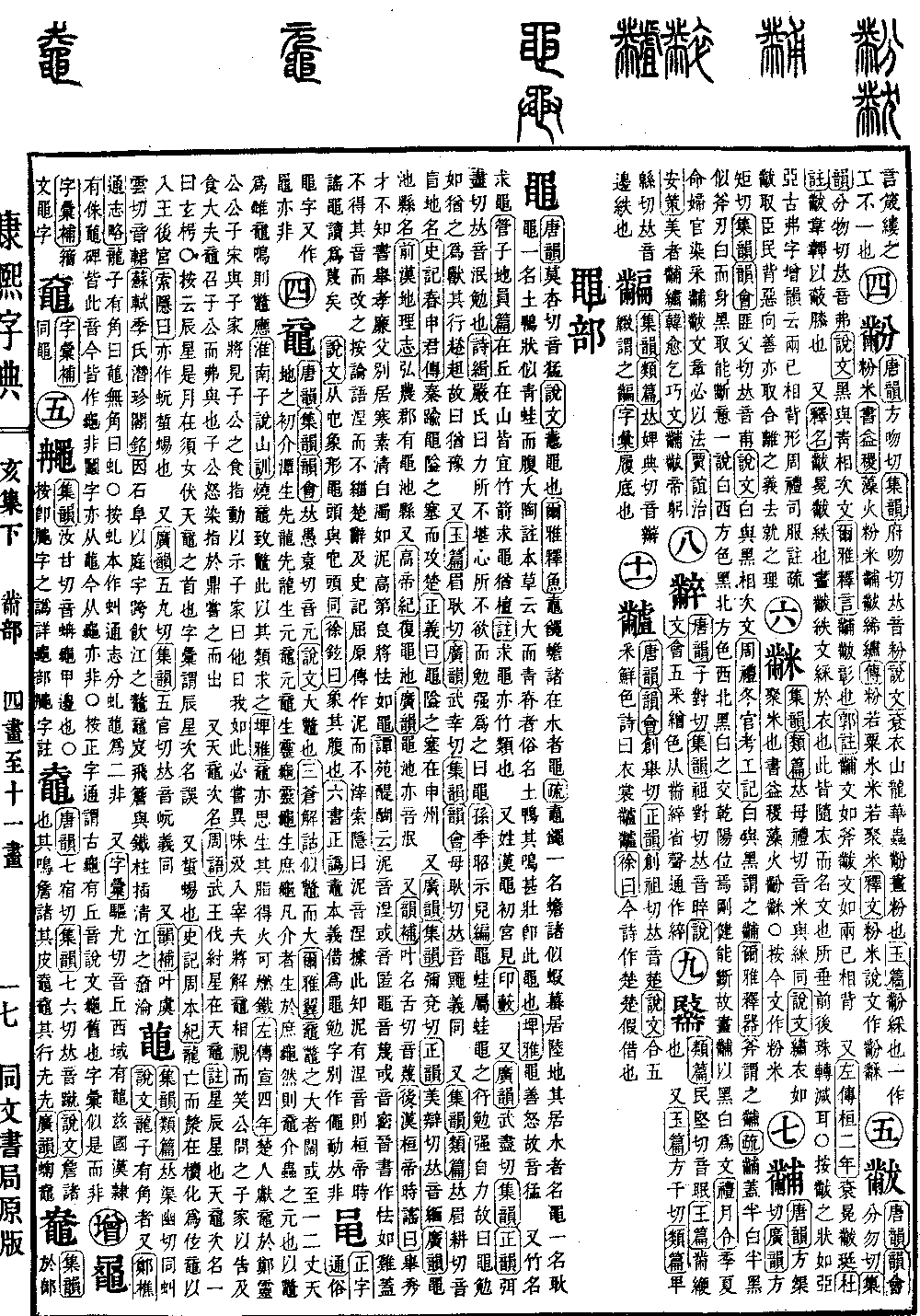
Page 1523, Entry 02
Pronounced fu. According to the Shuowen Jiezi (Shuowen), it refers to patterns featuring an alternation of black and blue colors. According to the Erya (Erya), the term fu-fu refers to that which makes things manifest or clear. The commentary by Guo Pu states that the pattern of the fu (axe-shaped embroidery) resembles an axe, while the pattern of the fu (bow-shaped embroidery) resembles two characters meaning oneself, placed back-to-back.
Also, in the Zuo Zhuan (Zuozhuan), it is mentioned in relation to ceremonial robes. The commentary by Du Yu notes that the fu is a leather knee-cover used to shield the knees.
According to the Shiming (Shiming), the term refers to embroidery. It describes the practice of embroidering fu patterns onto clothing with colored thread, and these names are derived from the garments themselves. The number of pearl strings hanging from the front and back decreases in sequence.
Note: The shape of the fu resembles a character. This is the ancient form of the character meaning not. The Zengyun (Zengyun) states that it is the shape of two characters meaning oneself, placed back-to-back. The commentary on the Zhou Rites (Zhouli) suggests that the fu signifies subjects turning their backs on evil and moving toward goodness; it also carries the implications of separation, union, departure, and approach. This character is composed of two characters meaning bow, placed back-to-back.
Textual Research: Concerning the statement that these are all named based on clothing, I have corrected the original text from the Shiming to reflect that these are named as such.