Hai Collection, Middle Volume
Radical: Bird (niǎo)
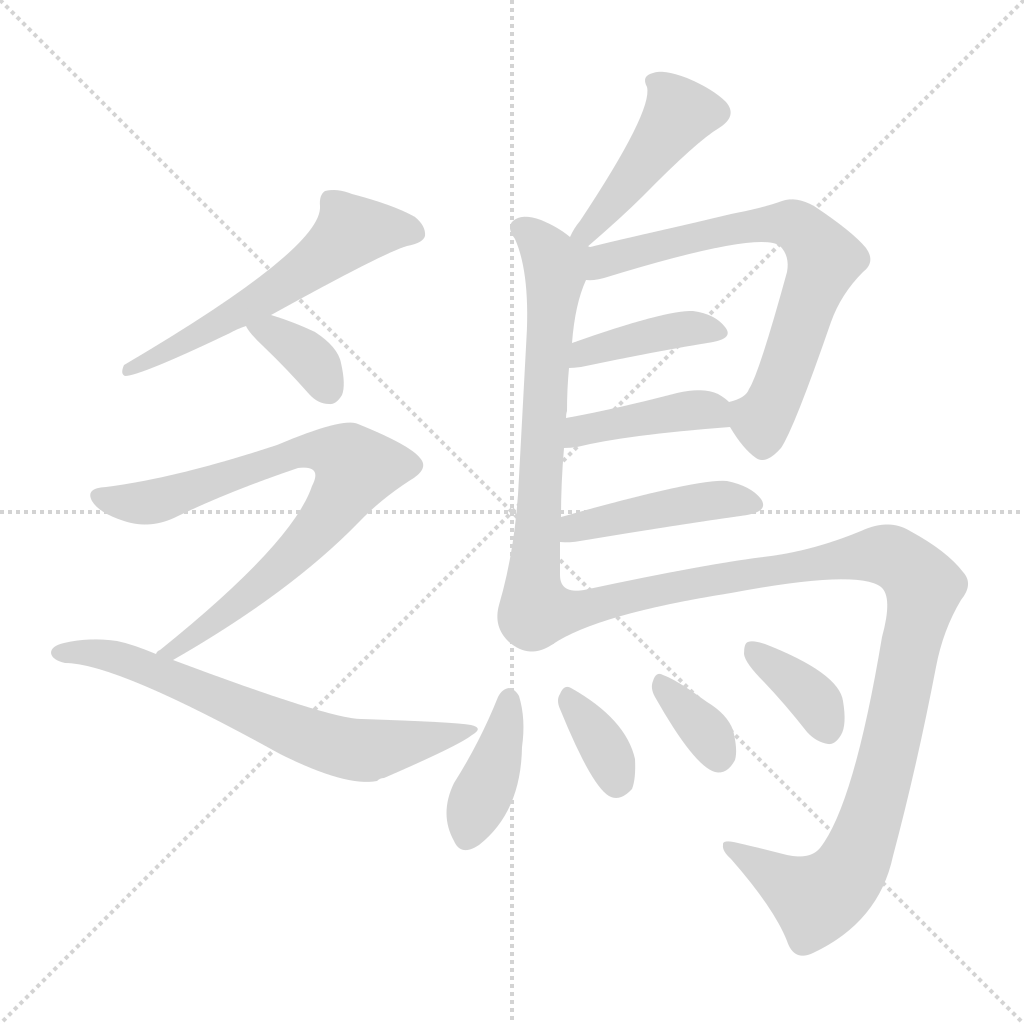
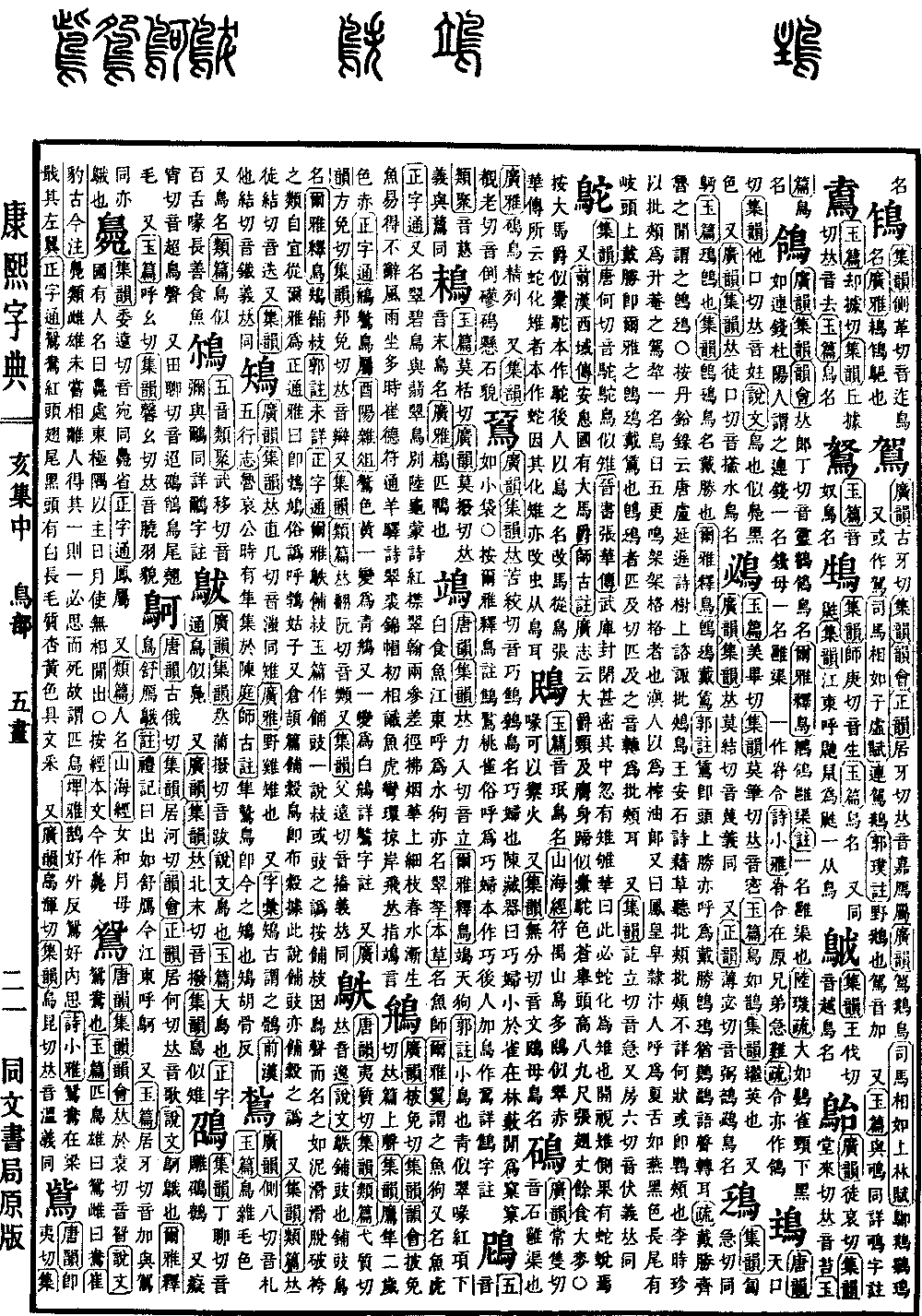
Character: 鴔
Kangxi stroke count: 16
Page 1485, Entry 11
According to the Sound Collectanea (Jiyun), pronounced ji. This is a variant of the same character.
According to the Jade Chapters (Yupian), 鴔 refers to 鵖鴔.
According to the Sound Collectanea (Jiyun), 鵖鴔 is the name of a bird, also known as the hoopoe (daisheng).
According to the Literary Expositor (Erya), in the section Explanation of Birds, 鵖鴔 is the hoopoe (dai-reng).
Guo’s commentary states that the reng refers to the crest on the head, which is also called the hoopoe. 鵖鴔 is similar to 鶝; the sound has merely shifted.
The sub-commentary states that in the regions of Qi and Lu, the hoopoe is called 鵖鴔.
According to the Record of Red Lead (Danqian Lu), Tang dynasty poet Lu Yanxun wrote: In the trees, the bird calls. Wang Anshi wrote: Listen to the bird on the grass. The term for this bird is not clearly understood, though it may be a variant of 鵯颊. Li Shizhen considered this bird to be the same as the one mentioned by Sheng'an, also known as the wujiu, which calls in the fifth watch with a repetitive sound. People in Yunnan call it the oil-presser. It is also called the servant of the phoenix. In Bian, it is called the summer tongue; it resembles a swallow, is black in color, has a long forked tail, and a crest on its head, which is the hoopoe described in the Literary Expositor (Erya). 鵖鴔 is pronounced pi; the sound of pi has shifted to become the term for this bird.
According to the Sound Collectanea (Jiyun), also pronounced ji.
Also pronounced fu. The meaning is the same.