You Collection, Middle Volume
Radical: Foot (zú)
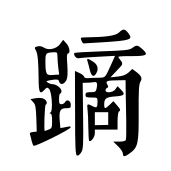
Character: 蹢
Kangxi Stroke Count: 18
Page 1232, Entry 35
Ancient text. According to Tang Rhymes (Tangyun) and Collected Rhymes (Jiyun), it is pronounced zhi. According to Correct Rhymes (Zhengyun), it is pronounced zhi. The sound is zhi (falling tone).
According to Explaining Graphs and Analyzing Characters (Shuowen), it means to stop the feet. Another definition is to pace back and forth (tie-zhu). Jia Shizhong states it refers to filth on the feet.
According to Broad Elegance (Boya), the character means to stumble or walk unsteadily.
In Book of Changes (Yijing), regarding the Gou hexagram: A thin pig that trusts to pacing about. According to the Explanatory Text (Shiwen), the term denotes a lack of stillness. One version uses the variant form (chong). According to the Cheng Commentary (Chengzhuan), it means to leap and pace.
In Book of Rites (Liji), Three Years of Mourning: It lingers and hesitates. According to the Explanatory Text (Shiwen), the term denotes a lack of movement.
According to Collected Rhymes (Jiyun), it is pronounced zhe (entering tone). The meaning is the same.
According to Broad Rhymes (Guangyun), Collected Rhymes (Jiyun), Rhyme Compilation (Yunhui), and Correct Rhymes (Zhengyun), it is pronounced di (entering tone).
In Book of Odes (Shijing), Lesser Odes of the Kingdom (Xiaoya): There is a pig with white hooves. According to the Commentary (Zhuan), the term denotes hooves.
In Er Ya, Explaining Domestic Animals: A horse with all four hooves white is called a shou.
In Zhuangzi, Xu Wugui: A man of Qi who fled to Song. According to Sound and Meaning (Yinyi), the character means to cast or throw.