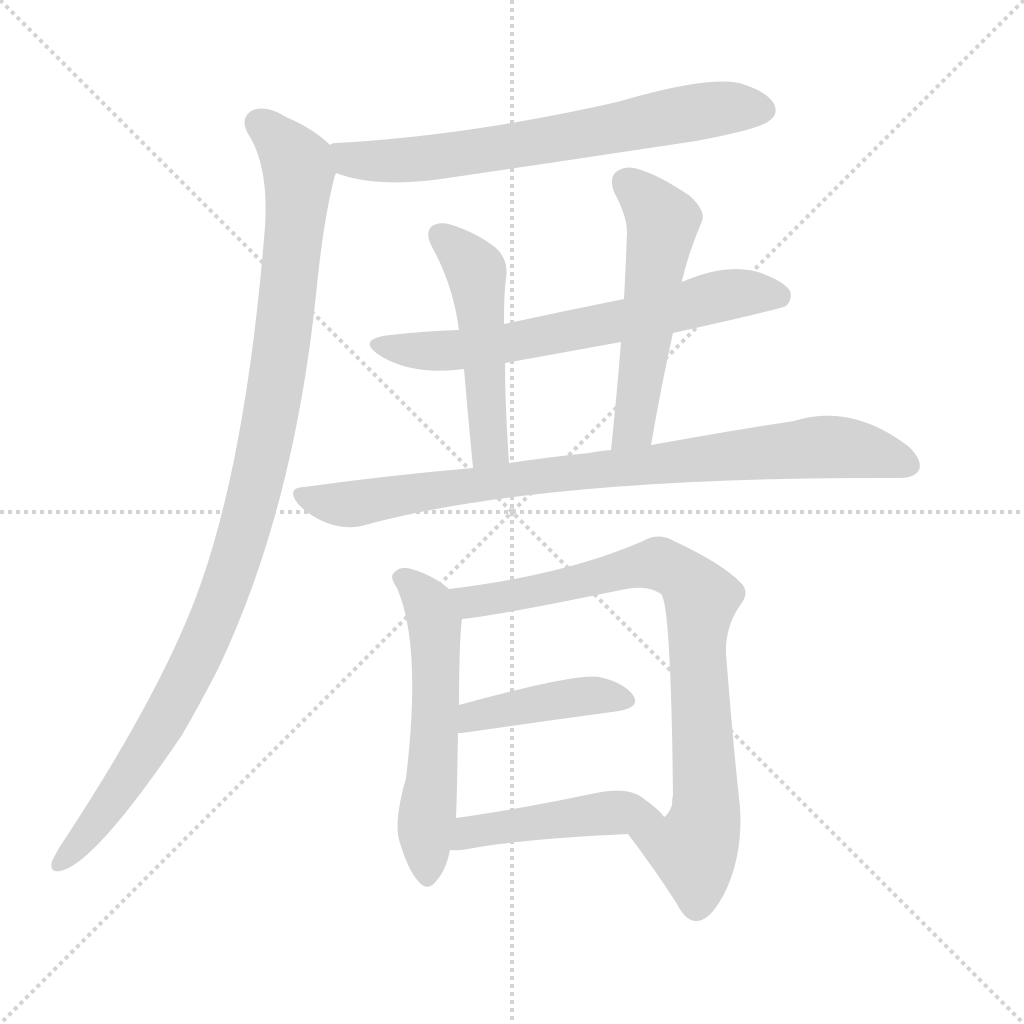
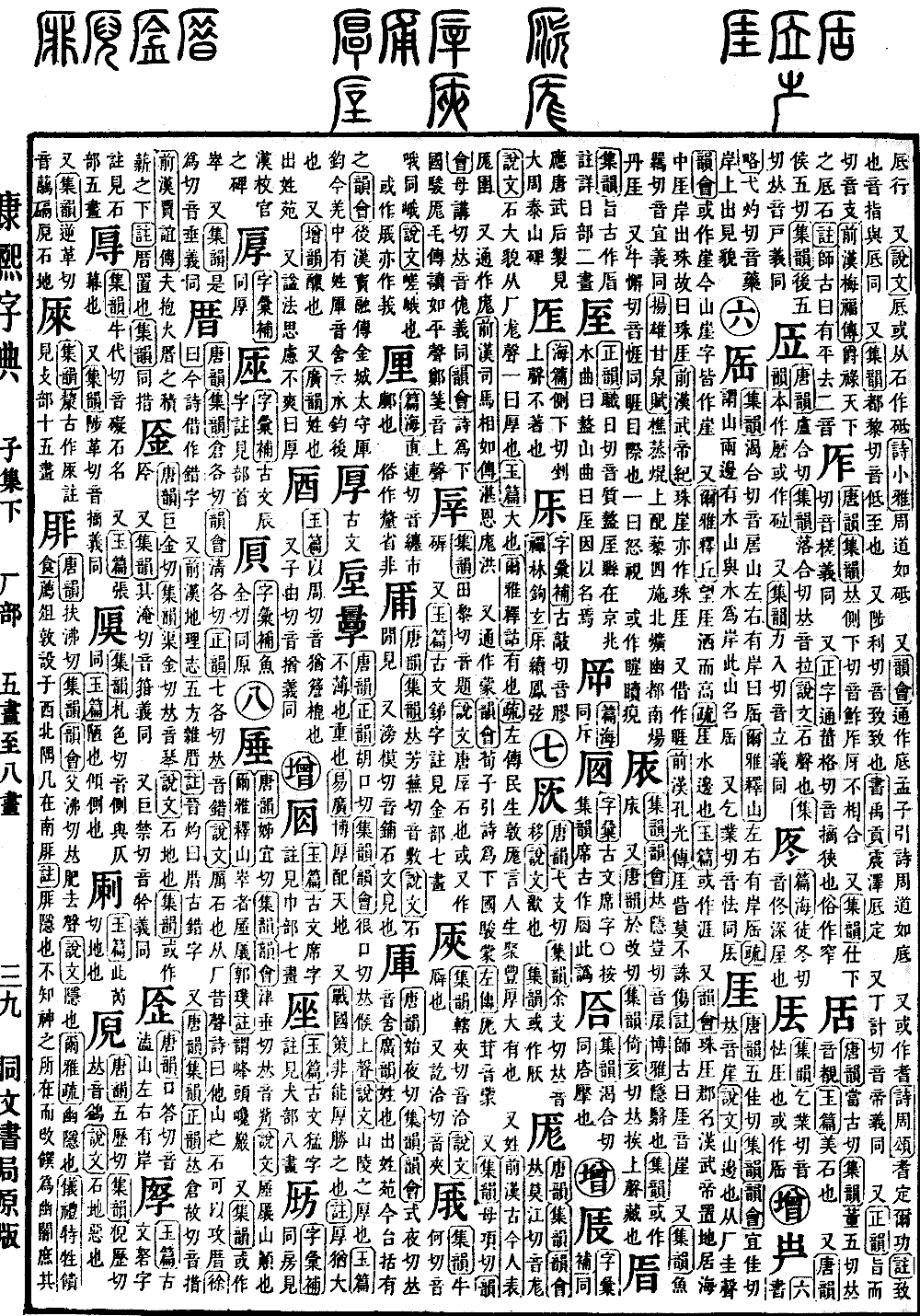
Zi Collection, Page Position: Lower. Radical: Cliff (han). Character: cuo. Kangxi Dictionary stroke count: 10. Page 161, Entry 37.
Tang Dynasty Rhymes (Tangyun) and Collected Rhymes (Jiyun) indicate the fanqie phonetic pronunciation using the initial of cang and the final of ge. Rhyme Meeting (Yunhui) uses the initial of qing and the final of ge. Correct Rhymes (Zhengyun) uses the initial of qi and the final of ge. The pronunciation is the same as the character cuo.
Explaining Graphs and Analyzing Characters (Shuowen Jiezi) defines the character as a whetstone. The character uses the Cliff (han) radical as the semantic component and xi as the phonetic component. The Book of Odes (Shijing) states: The stones of other hills may serve as whetstones.
Note by Xu Kai: In modern editions of the Book of Odes (Shijing), this character is used as a phonetic loan for the character cuo.
Also found in the Geography Section (Dilizhi) of the Book of Han (Hanshu): People from five directions were mixed and intermingled.
Note: Jin Zhuo says that cuo is an ancient form of the character cuo.
Furthermore, Tang Dynasty Rhymes (Tangyun), Collected Rhymes (Jiyun), and Correct Rhymes (Zhengyun) indicate a fanqie phonetic pronunciation using the initial of cang and the final of gu. The pronunciation is the same as the character cuo.
The Biography of Jia Yi (Jia Yi Zhuan) in the Book of Han (Hanshu) records: It is like carrying fire and placing it beneath a stack of firewood.
Note: Cuo means to place.
Collected Rhymes (Jiyun) explains that in this sense, the meaning is identical to the character cuo.