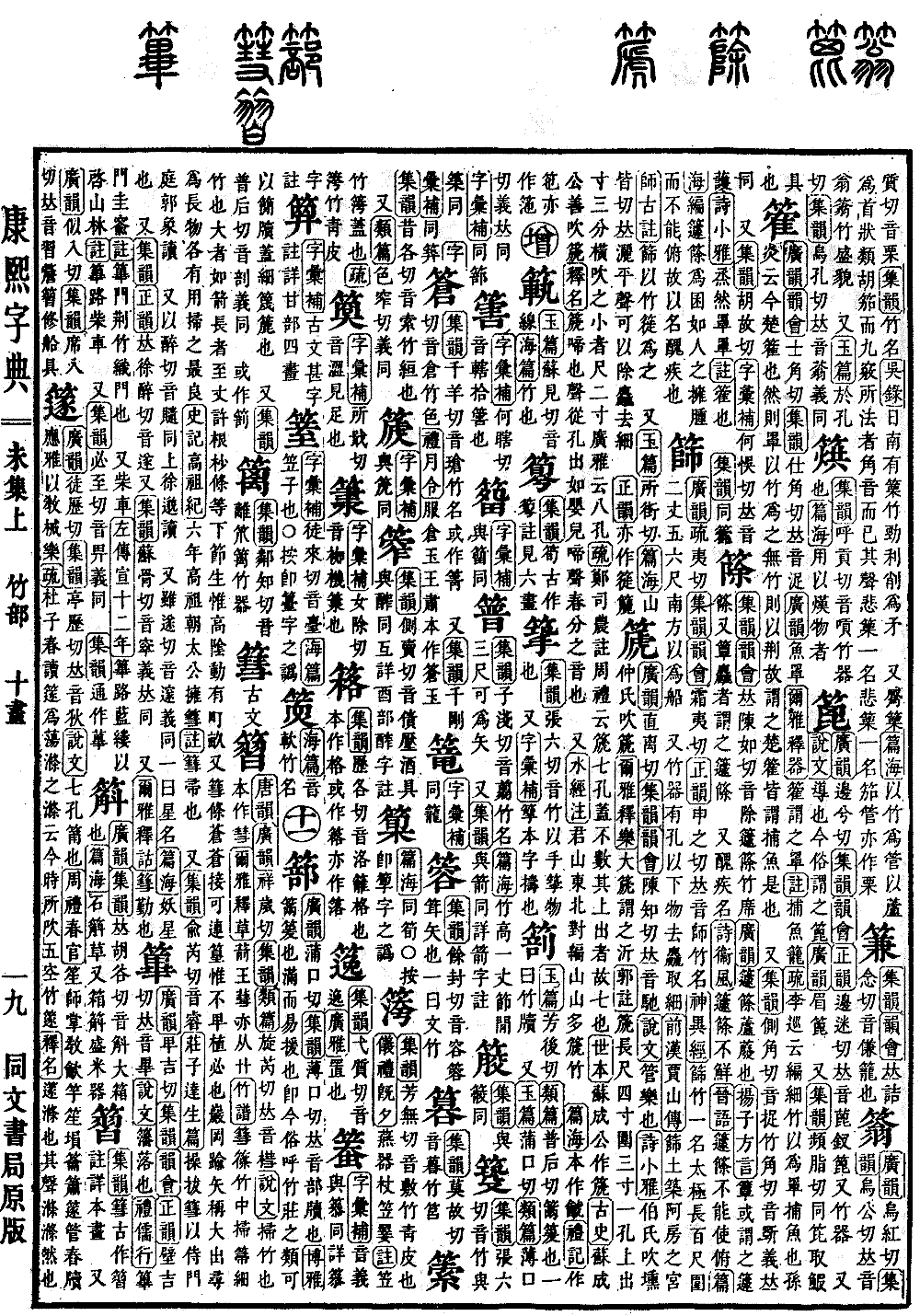
Wei Collection, Upper Volume
Radical: Bamboo (zhú)
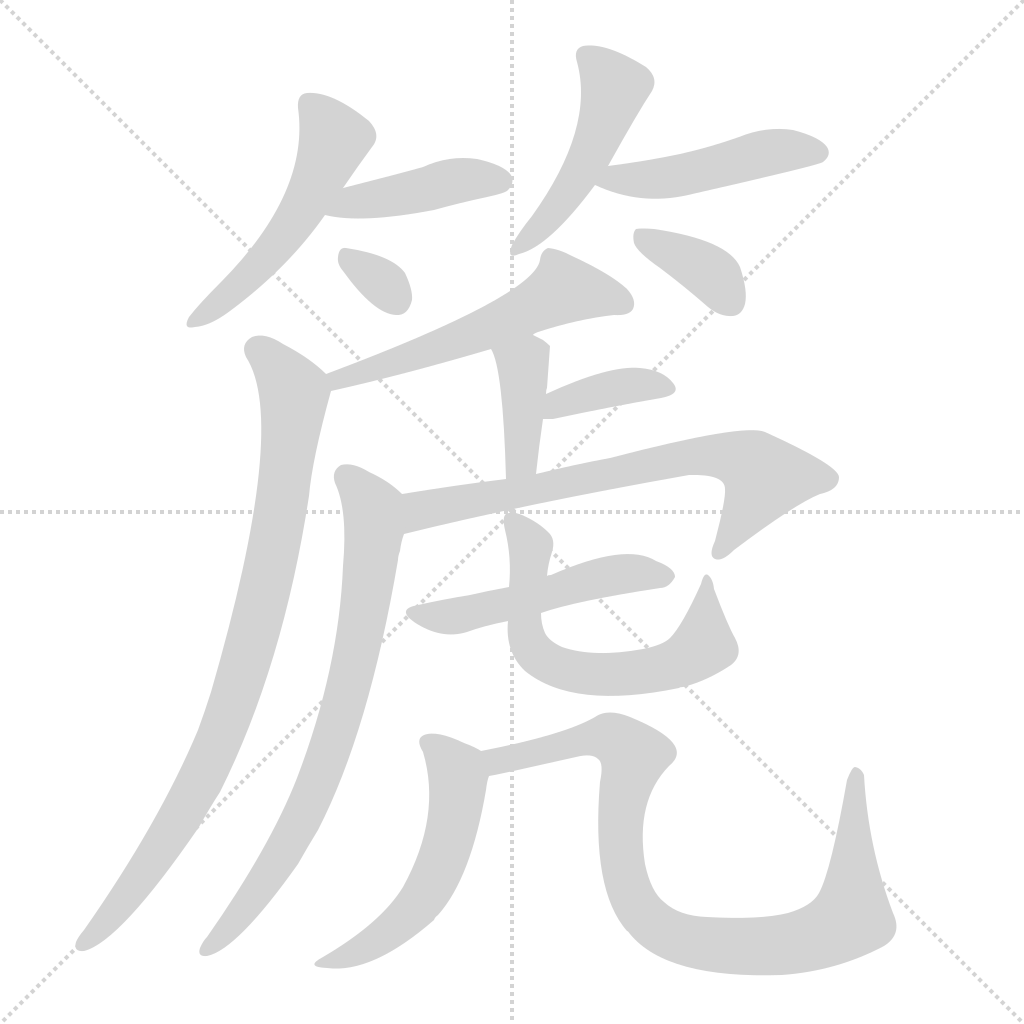
Chi
Kangxi stroke count: 16
Page 895, Entry 08
Pronounced chi.
Shuowen Jiezi (Shuowen): A bamboo wind instrument.
Book of Odes (Shijing), Lesser Odes of the Kingdom: The elder brother blows the xun (earthenware instrument), the younger brother blows the chi.
Erya, Explanation of Music: A large chi is called yi.
Guo Pu commentary: The chi is one foot four inches long and three inches in circumference. It has one hole opening upward, which is one inch and three tenths high, and it is played by blowing horizontally. Smaller versions are one foot two inches long. The Guangya states it has eight holes.
Kong Yingda sub-commentary: Zheng Sinong’s commentary on the Rites of Zhou (Zhouli) states that the chi has seven holes. This likely does not count the hole that opens upward, which is why it is cited as seven.
Shiben: Su Chengong created the chi.
Gushi: Su Chengong was skilled at playing the chi.
Shiming: The chi represents the sound of crying. The sound emerges from the holes like the crying of an infant, representing the musical sound of the spring equinox.
Commentary on the Water Classic (Shuijing Zhu): Northeast of Mount Jun lies Mount Bian, which produces many chi bamboo.
Pianhai: Originally written as the variant form.
Book of Rites (Liji): Written as a variant form. Also written as a variant form.