Xu Collection, Lower Volume
Radical: Eat (shí)
Kangxi stroke count: 14
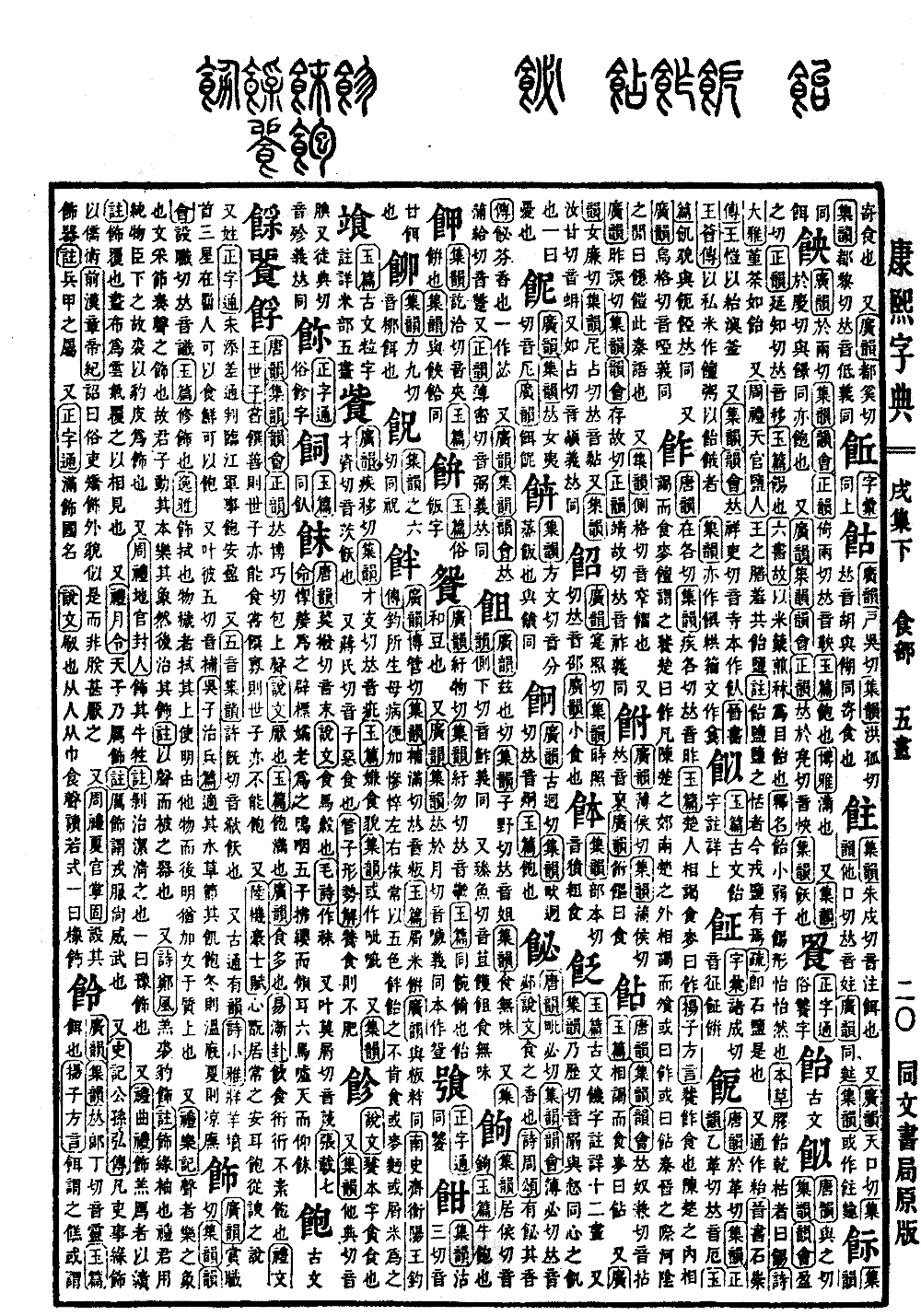
Page 1418, Entry 01
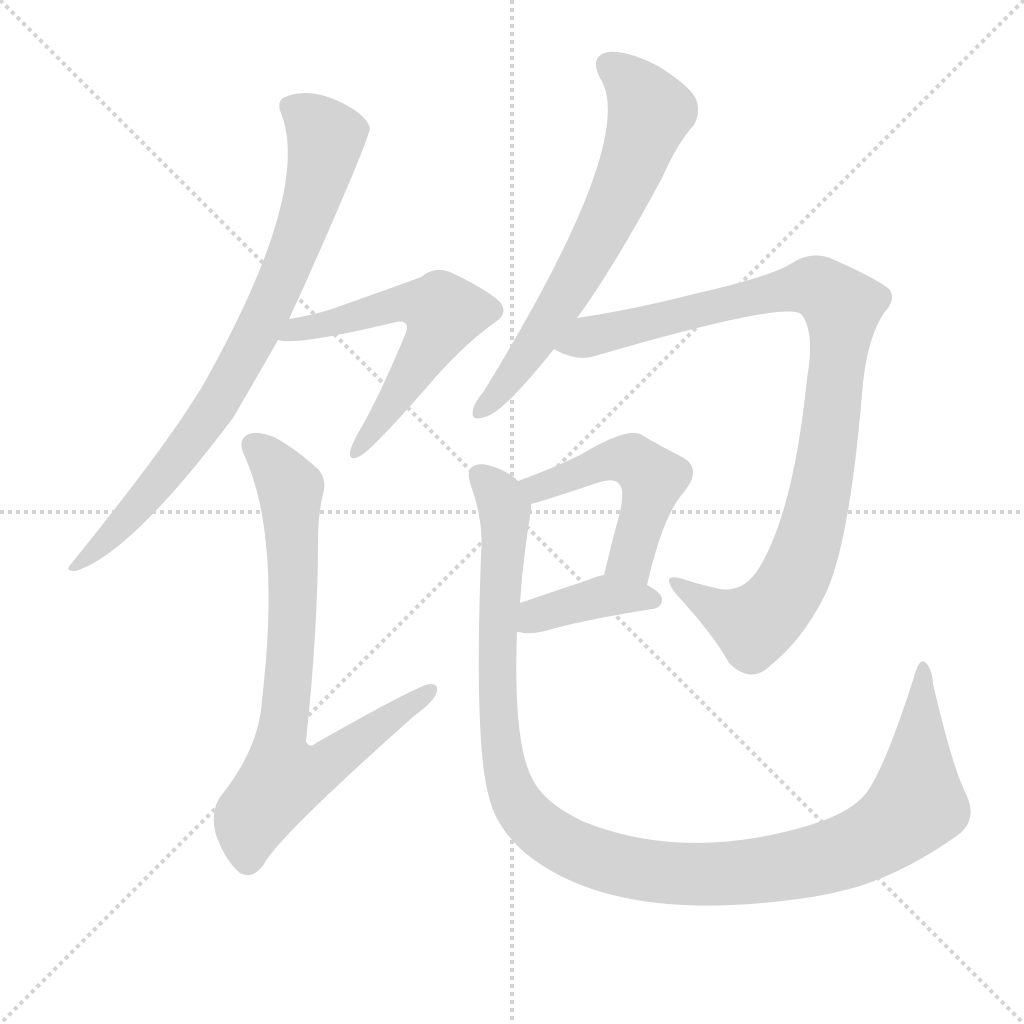
Ancient form. Pronounced bao (rising tone).
From Shuo Wen Jie Zi (Explaining Graphs and Analyzing Characters): To be satiated.
From Yu Pian (Jade Chapters): To be full.
From Guang Yun (Broad Rhymes): To eat much.
From Book of Changes (Yijing), Gradual hexagram: To eat and drink happily, not eating without merit.
From Book of Rites (Liji), Wen Wang Shi Zi (The Heir Apparent of King Wen): If the tasting of food is good, the heir can also eat; if the tasting of food is scant, the heir cannot be satiated.
Also, from Lu Ji, Rhapsody on Heroic Men (Haoshi Fu): The mind enjoys the peace of staying in the normal, the ear is sated with the talk of sycophants.
Also a surname. From Zheng Zi Tong (Correct Character Mastery): Bao Anying, a Song dynasty probationary assistant prefect in the Linjiang military commandery.
Also, from Wu Yin Ji Yun (Five Tones Collected Rhymes): Pronounced xi. To be surfeited.
Also, in ancient times interchangeable with the you rhyme. From Book of Odes (Shijing), Xiao Ya: Ewes with fat heads, three stars in the fish trap. People can eat, but seldom can be satiated.
Also, rhyming with bu. Pronounced bu (rising tone). From Wu Zi (Master Wu), Governing the Army section: Suit their water and grass, regulate their hunger and satiety. In winter, have warm stables; in summer, have cool verandas.
Research notes: In Book of Rites, The Heir Apparent of King Wen, the phrase if the tasting of food is scant, the heir cannot be satiated has been corrected to remove the word then following the word scant to conform to the original text.