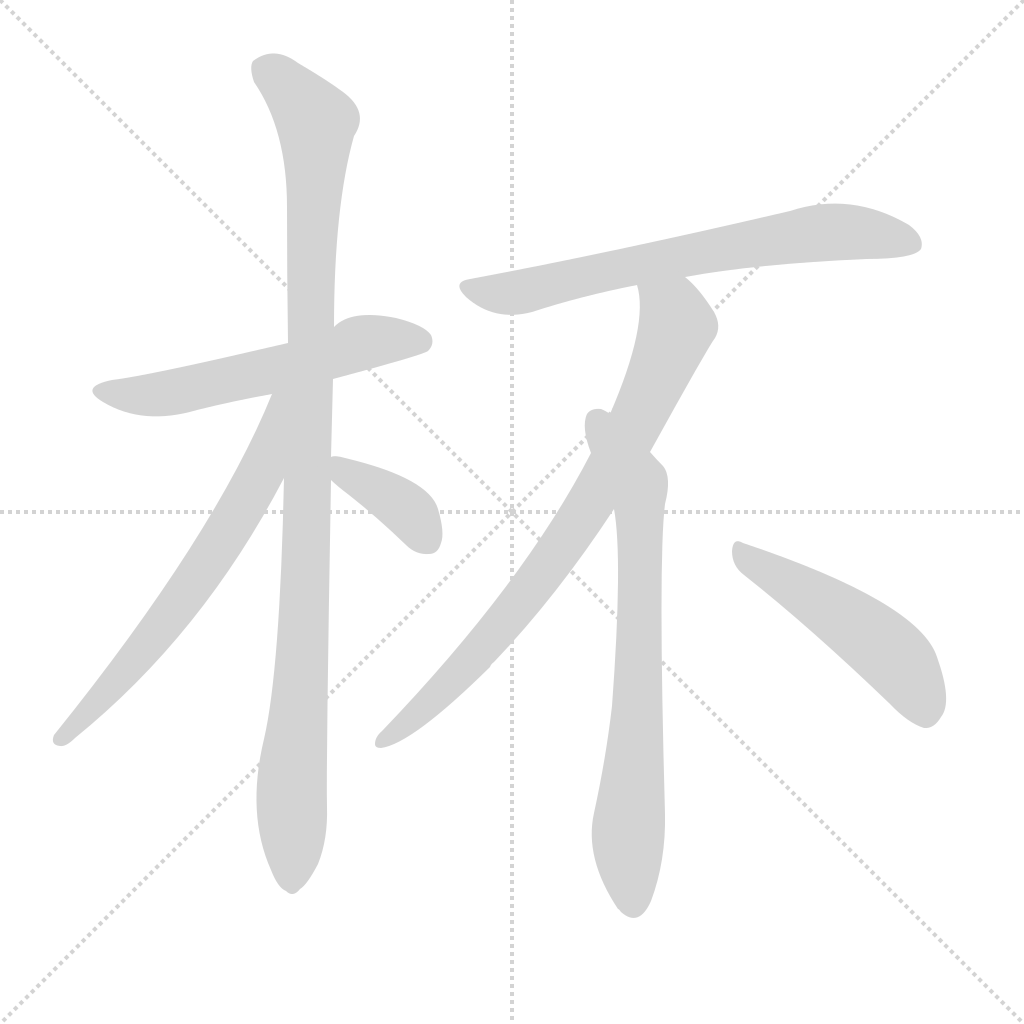
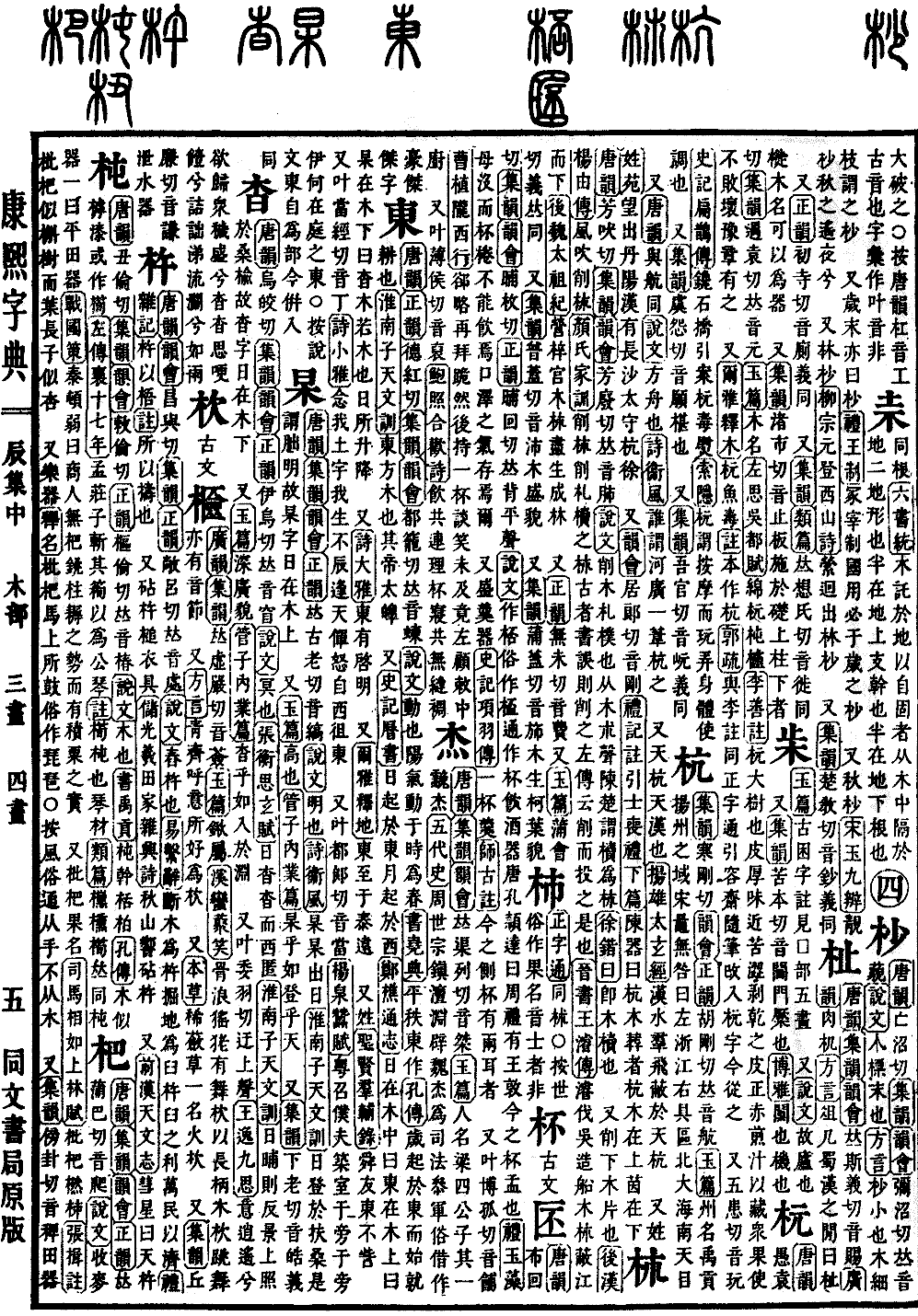
Chen Collection, Middle Volume
Radical: Tree (mù)
Kangxi stroke count: 8
Page 513, Entry 09
Ancient form. Pronounced bei (level tone).
Shuowen Jiezi (Explanation of Simple and Compound Characters) writes it as bei. It is commonly written as bei, and interchangeably used as bei. A vessel for drinking wine. Kong Yingda of the Tang dynasty stated: The Rites of Zhou (Zhouli) mentions the royal dun, which is the cup or bowl of the present day. Book of Rites (Liji), section Jade Decorations (Yuzao): When the mother has passed away, one cannot drink from her cup and ring, for the scent of the moisture from her lips still lingers there. Also, a vessel for holding soup. History of the Former Han (Qian Hanshu), Biography of Xiang Yu: Luckily share with me a cup of soup. Shigu note: The side-handled cups of the present day have two ears.
Also pronounced bu (level tone). Cao Zhi, Longxi Xing: Retiring and kneeling again, then holding a cup. Before the conversation was finished, looking left, he ordered the central kitchen.
Also pronounced pou (level tone). Bao Zhao, Hehuan Shi: Drinking together from the joined-branch cup, sleeping together under the seamless quilt.
Textual research: History of the Records of the Grand Historian (Shiji), Biography of Xiang Yu, A cup of soup. Shigu note: The side-handled cups of the present day have two ears. I humbly observe that the note by Shigu belongs to the History of the Former Han, and I have corrected the reference from the Records of the Grand Historian to the History of the Former Han. I have also added the three characters luckily share with me in accordance with the original text.