Shen Collection, Upper Volume
Radical: Grass (cǎo)
Bao; Kangxi strokes: 11; Page 1023, Entry 04
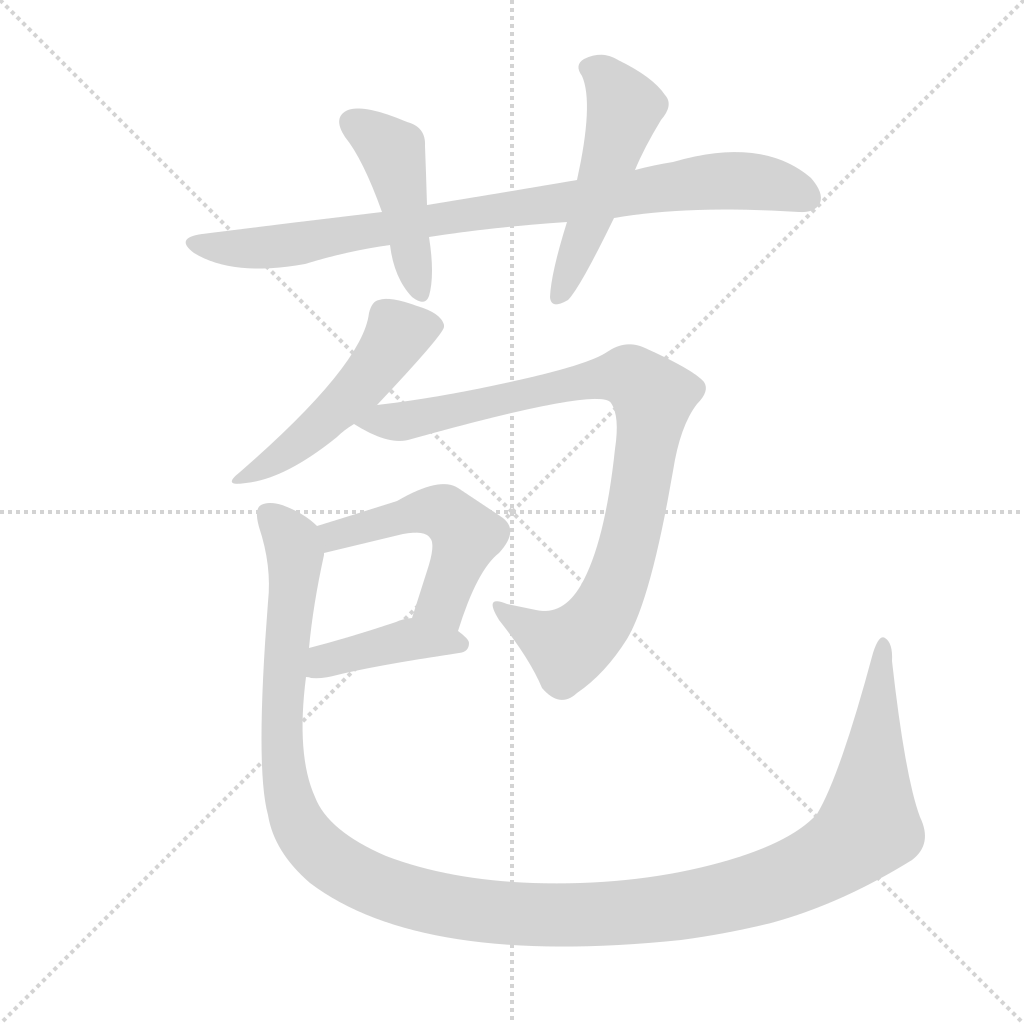
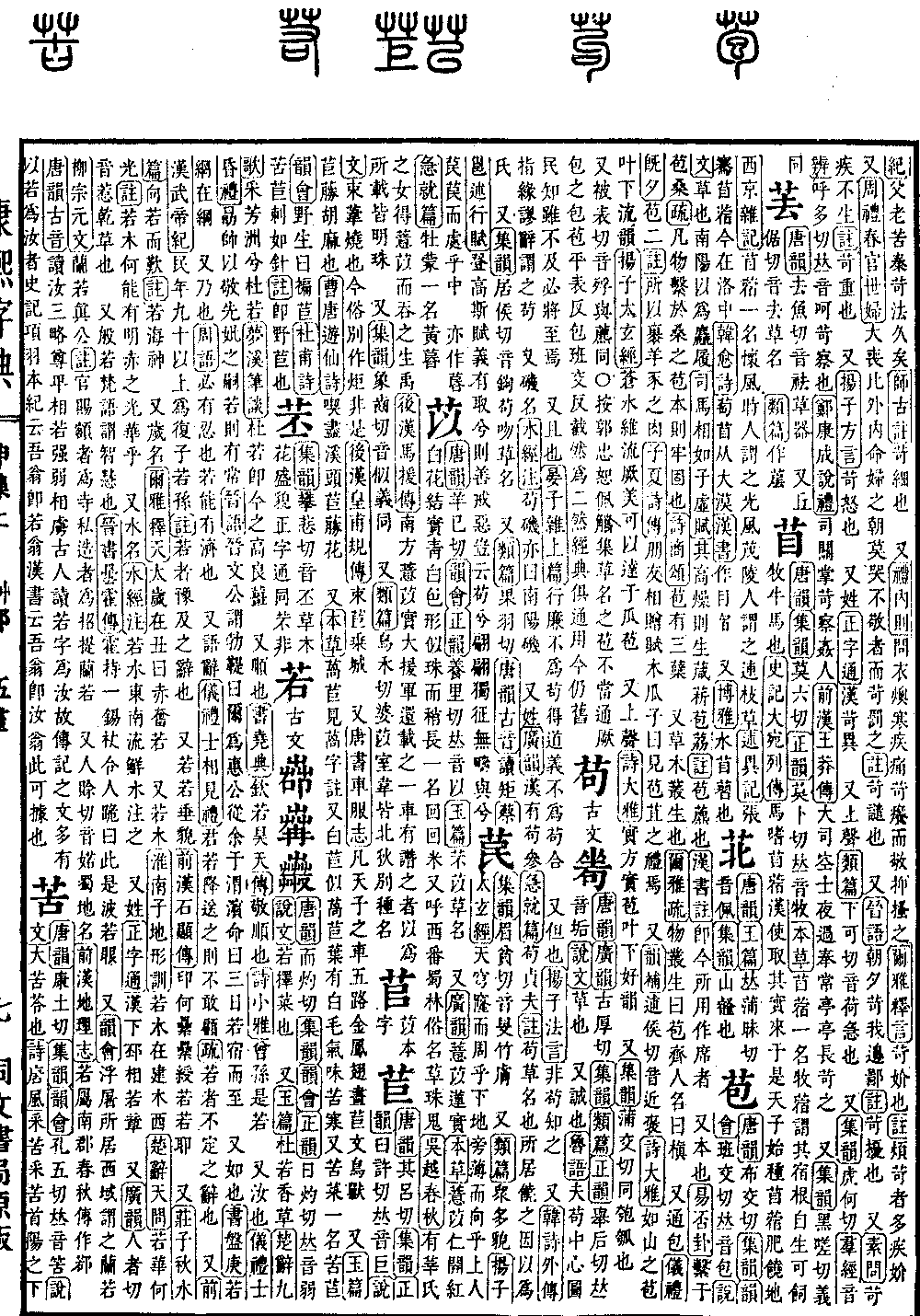
Pronounced bao. According to the Shuowen Jiezi (Explanation of Writing and Analysis of Characters), it is a type of grass; in Nanyang, it is used to make coarse footwear. In the Rhapsody on the Sir of the Void (Zixu Fu) by Sima Xiangru, it is written: Where it is high and dry, there grow zhen, xi, bao, and li grasses. The commentary notes: Bao is the same as biao. The commentary to the History of the Han (Hanshu) states: It is what is used today to make mats. It also means root or base. In the Book of Changes (Yijing), regarding the Hexagram of Stagnation (Pi Gua), it says: Tied to the roots of the mulberry tree. The sub-commentary states: When objects are tied to the roots of a mulberry tree, they are firm and secure. In the Book of Odes (Shijing), in the Odes of Shang, it is written: There are many sprouts in the thicket. It also refers to plants growing in clumps. The sub-commentary to the Erya (Approaching Elegance) states: Things growing in clumps are called bao; people of Qi call them zhen. It is also used interchangeably with bao (to wrap). In the Book of Etiquette and Ceremonial (Yili), in the chapter on the eve of the funeral, it is written: Bao two. The commentary notes: Used to wrap the meat of sheep and pigs. In the Poetry Commentary of Zigong (Zigong Shizhuan), it is written: Friends give each other papayas; Confucius said: This shows the ritual of baoju (a gift given to influence someone). Also, according to the Rhyme Supplement (Yunbu), it is pronounced bu hou (rising tone), with a sound close to bao. In the Book of Odes (Shijing), in the Greater Odes (Daya), it is written: Like the bao of a mountain. It rhymes with the following line containing liu. In the Taixuan Jing (Great Mystery) by Yang Xiong, it is written: The azure waters flow, their beauty can reach the bao of the melon. Also in the rising tone: In the Book of Odes (Shijing), in the Greater Odes (Daya), it is written: They are lush and thick. It rhymes with the following line containing hao. Also, according to the Jiyun (Collection of Rhymes), it is pronounced pu jiao; it is the same as pao (gourd). Also pronounced bei biao, with the sound piao; it is the same as biao. Note: In the Peixi Ji (Collection of Gems) by Guo Zhongshu, it is argued that the bao referring to a grass name should not be used interchangeably with the bao meaning to wrap. Bao is pronounced ping biao; bao is pronounced ban jiao. They are strictly two separate things. However, the classical texts use them interchangeably, and this usage continues to the present day. Textual Research: The Poetry Commentary (Shizhuan) attributed to Zixia mentions: Friends give each other papayas; Confucius said: This shows the ritual of baoju. I have carefully examined this; the Poetry Commentary was written by Zigong, and I have corrected it to Zigong accordingly.