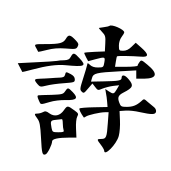
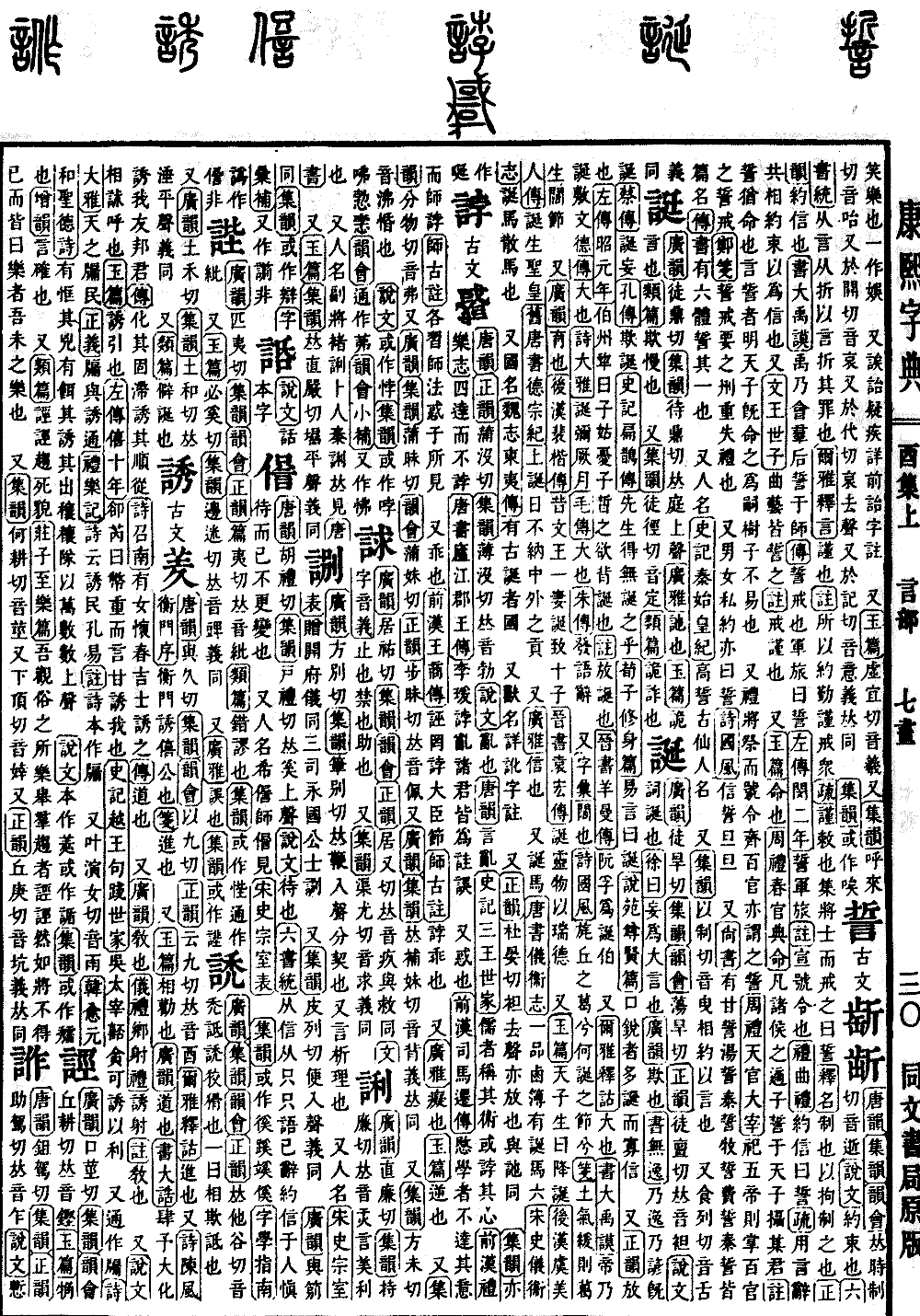
You Collection, Upper Volume
Radical: Speech (yán)
Kangxi Strokes: 14
Page 1162, Entry 06
Ancient script
Tang Rhyme (Tangyun), Orthodox Rhymes (Zhengyun): Pronounced bo. Collected Rhymes (Jiyun): Pronounced bo.
Explanation of Graphs (Shuowen): Disorderly.
Tang Rhyme (Tangyun): Disorderly speech.
Records of the Grand Historian (Shiji), Biography of the Three Kings: Scholars praise his methods, or their hearts are in disorder.
Book of Han (Qianhan), Treatise on Rites and Music: Extending in all directions without disorder.
History of the Tang Dynasty (Tangshu), Biography of the Prince of Lujiang: Li Yuan caused disorder among the lords, and they were all misled.
Also means to be confused.
Book of Han (Qianhan), Biography of Sima Qian: Grieving that scholars do not reach the true meaning and that the masters are confused.
Shigu Commentary: Each follows their own master's method, confused by what they see.
Also means to be contrary.
Book of Han (Qianhan), Biography of Wang Shang: Slandering and acting contrary to the conduct expected of a high minister.
Shigu Commentary: Contrary means perverse.
Also Broad Exegesis (Guangya): Idiocy.
Jade Chapters (Yupian): Rebellious.
Also Collected Rhymes (Jiyun): Pronounced fu.
Also Broad Rhymes (Guangyun), Collected Rhymes (Jiyun): Pronounced pei. Rhyme Compendium (Yunhui): Pronounced pei. Orthodox Rhymes (Zhengyun): Pronounced pei.
Also Broad Rhymes (Guangyun), Collected Rhymes (Jiyun): Pronounced bei. Meaning is the same.
Also Collected Rhymes (Jiyun): Pronounced fei. Dazed.
Explanation of Graphs (Shuowen): Sometimes written as a variant form (bei).
Collected Rhymes (Jiyun): Sometimes written as variant forms (bo), (fu), or (bei).
Rhyme Compendium (Yunhui): Generally written as (fu).
Small Additions to the Rhyme Compendium (Yunhui xiaobu): Also written as (fu).