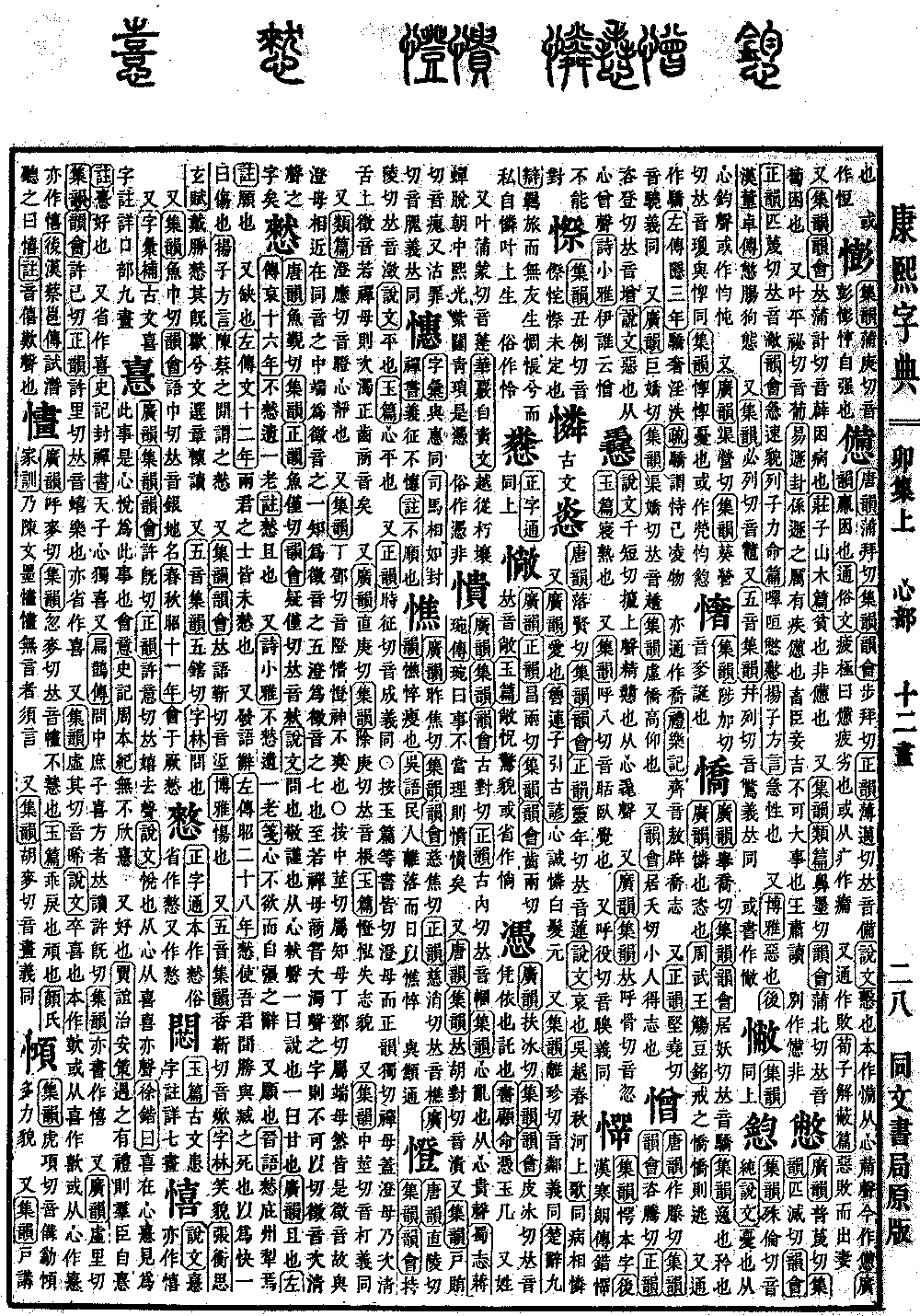
Mao Collection, Upper Volume
Radical: Heart (xīn)
憊
Kangxi Strokes: 16
Page 402, Entry 02
Pronounced bei (falling tone).
According to the Explaining Graphs and Analyzing Characters (Shuowen): to be exhausted. Originally written as a character with the heart radical and a phonetic component, now written as bei.
According to the Expanded Rhymes (Guangyun): to be weak and weary.
According to the Common Words (Tongsuwen): to be extremely fatigued is called bei, which also means weak or inferior. Sometimes written with the disease radical. It is also interchangeably used with the word for defeated.
According to the Xunzi (Xunzi), Chapter on Dispelling Blindness (Jiebi pian): Hate defeat and divorce one's wife.
Also pronounced bi (falling tone). To be distressed or ill.
According to the Zhuangzi (Zhuangzi), Chapter on Mountain Tree (Shanmu pian): Poverty. It is not exhaustion.
Also pronounced bu (falling tone). To be distressed.
Also reads as pu (falling tone), matching the rhyme of the following line.
According to the Book of Changes (Yijing), Hexagram of Retreat (Dun gua): Tethered retreat is dangerous, there is illness and exhaustion. To raise subjects and concubines is auspicious, one cannot conduct great affairs. Wang Su reads it as such. Also written with the heart radical below.