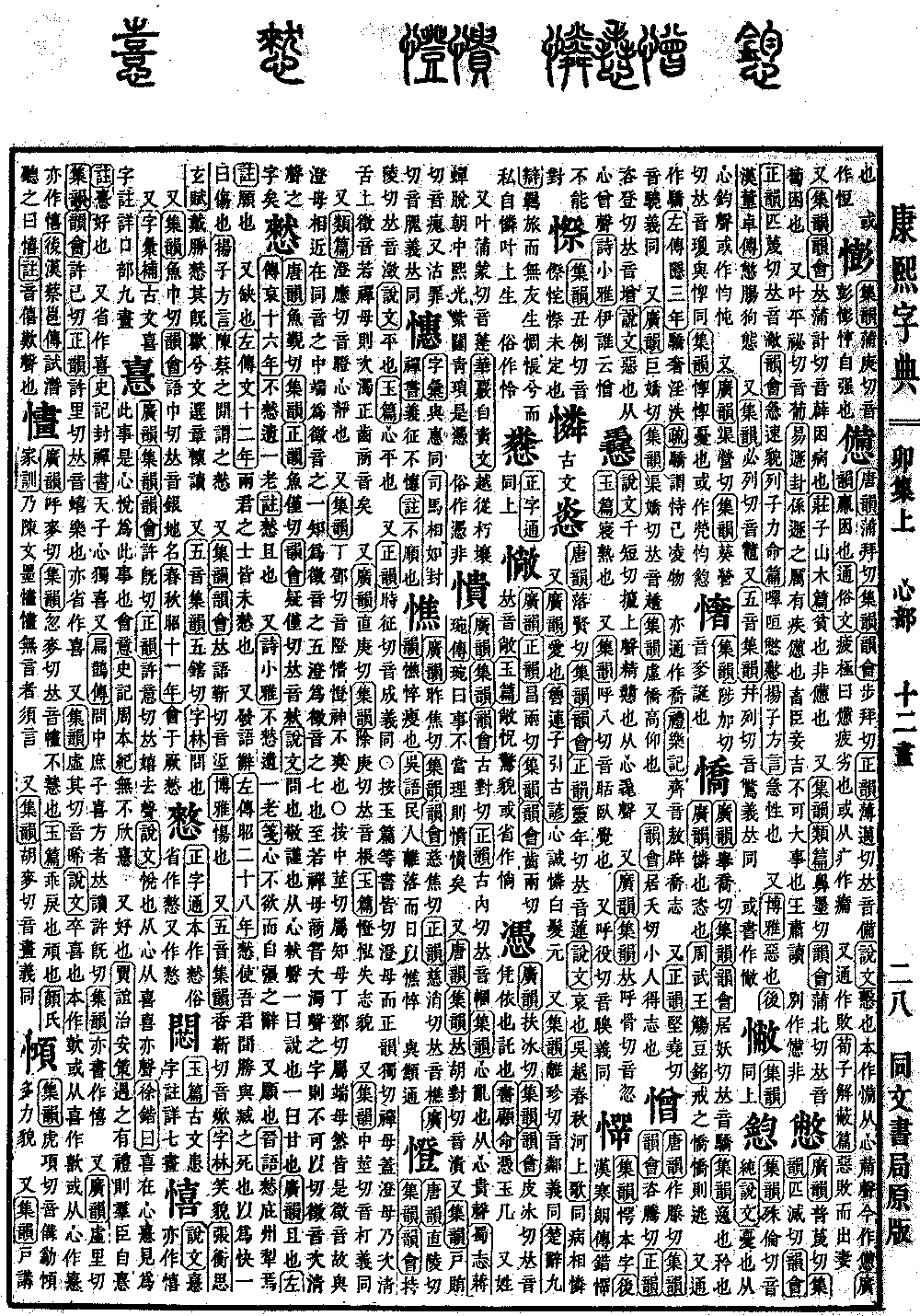
Mao Collection, Upper Volume
Radical: Heart (xīn)
憊
Kangxi strokes: 16
Page 402, Entry 01
Pronounced bei (falling tone).
According to the Shuo Wen Jie Zi (Explaining Graphs and Analyzing Characters), it means to be exhausted. Originally written as a character with heart and the sound element, it is now written as 憊.
According to the Guang Yun (Broad Rhymes), it means to be weak and tired.
According to the Tong Su Wen (General Vulgar Writings), being extremely tired is called bei, which means tired and inferior. Sometimes it is written with the sickness radical. It is also commonly written as bai (to be defeated).
In the Xunzi (Xunzi), there is the phrase, hating defeat and divorcing one's wife.
Also pronounced bi (falling tone). It means to be ill and exhausted.
According to the Zhuangzi (Zhuangzi), it means to be poor, not exhausted.
Also pronounced bo (entering tone). It means to be exhausted.
Also rhymed as pu (falling tone).
In the I Ching (Book of Changes), in the Dun hexagram, it says: Tied to the retreat, the danger brings illness and exhaustion. To store up servants is auspicious, but one cannot engage in great affairs. Wang Su reads it this way. Another form is written with the heart radical below.